Ice Machine Service in Glendale, CA
Restaurants, cafes, hotels, and medical facilities keep Glendale's ice demand steady. Hot afternoons raise condenser temperatures, which cuts ice production and strains compressors, particularly in enclosed back-of-house spaces. Scale and bin contamination are common too. Service includes sanitation, filtration checks, and condenser cleaning, with a documented history for each machine so a manager can show consistent care at inspection time. Hospital and clinic kitchens near the Central Avenue area have the strictest sanitation expectations.
Brand Boulevard retail and mixed-use, entertainment and animation offices, hospital campuses, and the Glendale Galleria area at the edge of the San Fernando Valley.
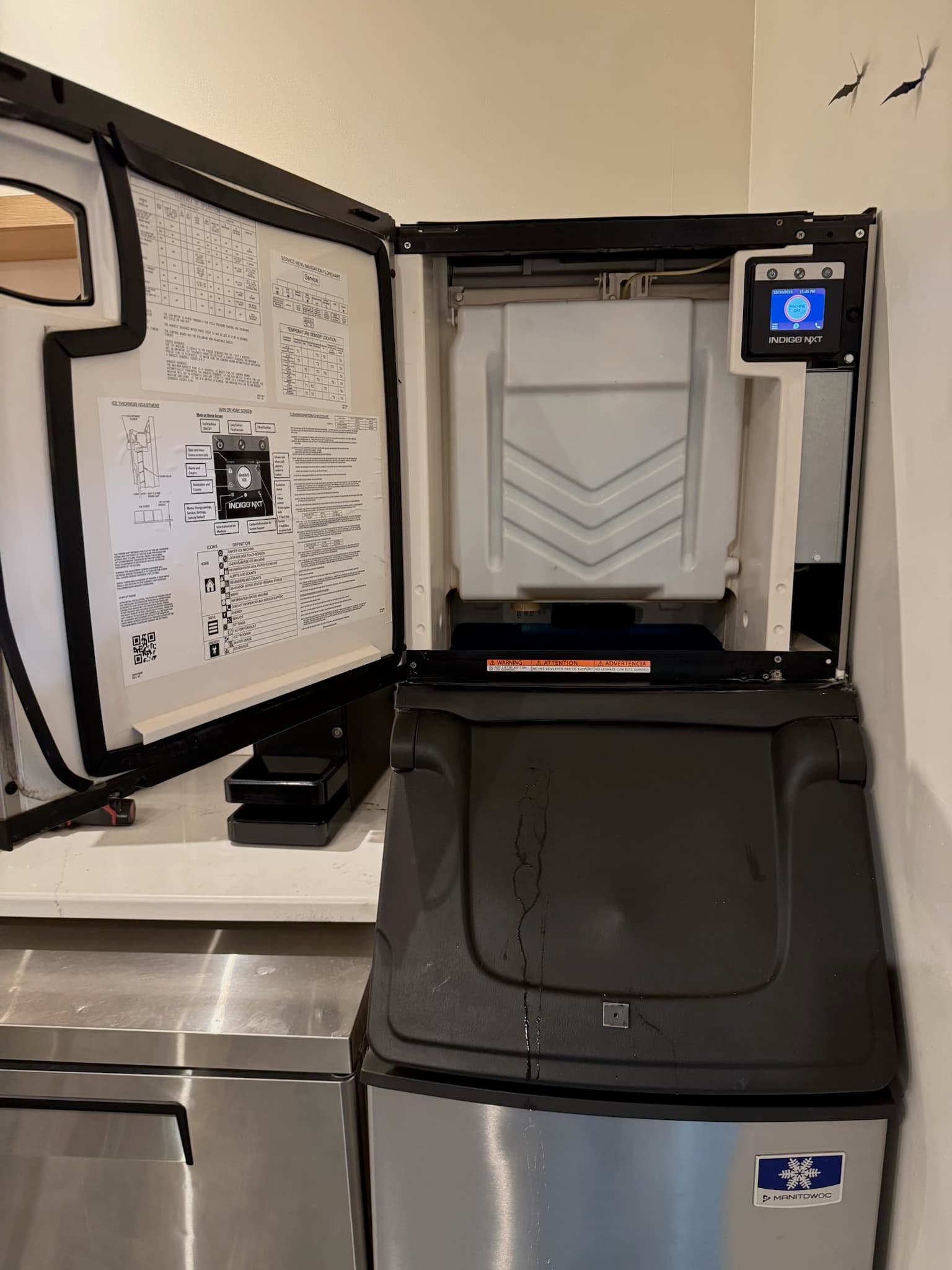
How ice machine service work plays out in Glendale
Ice demand in Glendale peaks exactly when ice machines struggle most. Cafes and restaurants on Brand Boulevard and around the Americana run through bins during hot afternoons and evening service, hotel properties near the 134 keep machines running for guests around the clock, and the hospital campuses on Wilson Terrace and Central Avenue need clean ice for patient care every hour of the year. Most of these machines live in enclosed back-of-house rooms or alcoves with little ventilation, and when the room climbs into the 90s the condenser cannot shed heat, harvest cycles stretch, and production drops just as demand rises.
Water quality adds a second layer. Scale accumulates on evaporator plates and in water lines, and a machine that is not cleaned on a regular schedule develops slime in the bin and distribution tube. Health inspectors in restaurants and infection-control staff in medical settings both look at the same thing: a clean, documented machine. The service we provide is sanitation and descaling, filter replacement, condenser cleaning, and verification of harvest and production against the nameplate, with the condenser location and room ventilation noted when they are limiting output.
The schedule is built around the business. A Brand Boulevard restaurant gets a morning visit before the lunch rush; a hospital kitchen gets a window agreed with the facilities team and a written record afterward. Each visit is logged in the DaVinci Portal with photos and readings so the manager has proof of care when an inspector asks. For high-volume users, a maintenance cadence that cleans before summer and again before the holidays prevents most of the emergency calls. The ice machine guide describes the sanitation and performance checks in more depth.
Glendale's climate and what it does to this equipment
Glendale is warmer than the coast, with hot, dry summers shaped by its position against the Verdugo Mountains and the edge of the San Fernando Valley. Summer afternoons regularly reach the 90s, with heat waves that go higher, and nights offer less relief than coastal cities. Santa Ana winds bring dry air, dust, and fire-season smoke that clog filters and coils. Hillside and foothill conditions also deposit leaves and debris in outdoor equipment, and long cooling seasons make efficient airflow essential.
For the equipment background behind this page, read our commercial ice machine guide or the full Ice Machines — Service & Sanitation service page.
- Downtown Glendale, Brand Boulevard, and AmericanaMixed-use retail, restaurants, offices, and residential-adjacent commercial space with central equipment rooms and extensive rooftop packages.
- Glendale Galleria areaLarge-format retail, food courts, and parking structures with long operating hours and high cooling demand.
- Entertainment and animation officesCreative campuses and studio-style offices with irregular schedules, server and edit rooms, and specialized comfort needs.
- Hospital campuses and medical officesMedical buildings where filtration, redundancy, and careful scheduling shape every service visit.
- Scale removal, deep sanitation, and filter change-out programs
- Bin sensors, harvest cycles, pumps, and valves checked
- OEM-spec readings taken against manufacturer PM intervals
- DaVinci Portal: photo-logged cleanings and reminder scheduling
What a ice machine service visit includes, and the problems we most often find
- Check ice quality, production rate, and bin sensor operation
- Full descale of water lines and evaporator plate
- Sanitize all food-contact surfaces per manufacturer spec
- Inspect water filtration and replace if due
- Photo-document the cleaning for your compliance records
- Scale buildup from hard water slowing production and clouding ice
- Bin sensors misreading and causing over- or under-production
- Water filters overdue for change, affecting both taste and machine health
- Visible slime or mold in the bin — the most common health-inspection flag