Chiller & Central Plant Service in Glendale, CA
Larger Glendale buildings, including some downtown towers, hospital campuses, and big creative or institutional properties, use chilled water systems. Long hot seasons mean cooling towers and chillers work for many hours, so tube fouling, water treatment gaps, and pump wear matter. Davinci Mechanical tracks plant trends so owners can schedule overhauls or replacements during milder months instead of reacting during a valley heat wave. Hospital and office plants near the Verdugo foothills collect debris in towers, so basin cleaning is part of the routine.
Brand Boulevard retail and mixed-use, entertainment and animation offices, hospital campuses, and the Glendale Galleria area at the edge of the San Fernando Valley.
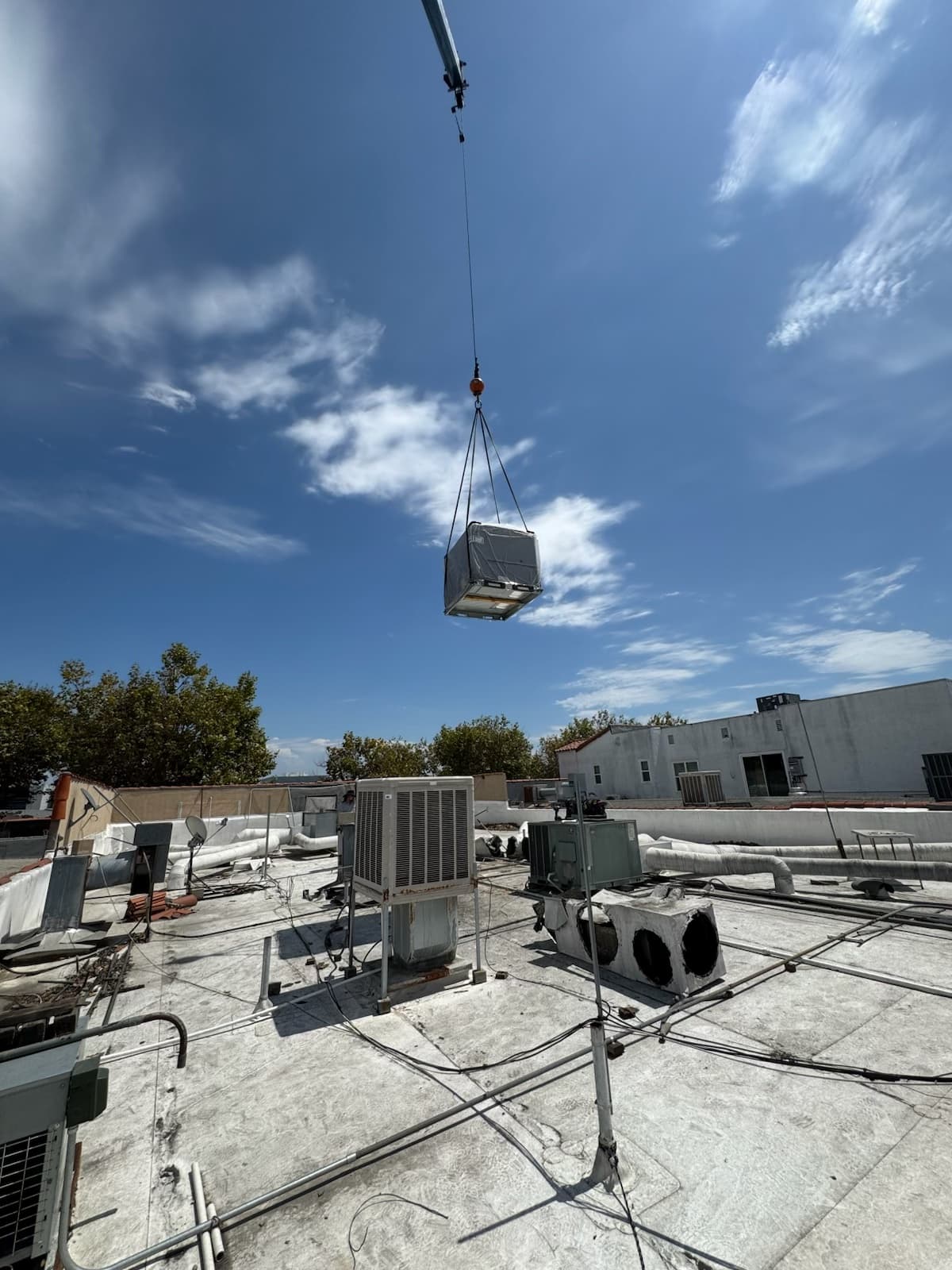
How chiller & central plant service work plays out in Glendale
Central plants in Glendale sit in a small number of large buildings: the office towers along Brand Boulevard and North Central Avenue, the hospital campuses, large retail structures around the Galleria, and the bigger media and creative campuses near the 134 and San Fernando Road. Most of these plants were installed when the buildings went up and have been maintained by rotating staff ever since. The equipment itself is often sound; what drifts is the data. Approach temperatures creep up, tower water treatment lapses, and pump seals and bearings wear in ways that nobody notices until a hot week in September.
The foothill location makes towers work harder than they would near the coast. Dust and leaf litter from the Verdugo Mountains settle in basins, Santa Ana events load fill with grit, and dry summer air means high evaporation and concentrated water chemistry if blowdown is not managed. We start every plant engagement with a baseline: chiller log data, tower condition, water treatment records, and pump performance, then compare to design so the owner can see how far the plant has moved from where it should be.
Planning is the goal, not emergency work. Hospital engineering teams need replacement or tube cleaning scheduled around census and redundancy; office landlords want chiller downtime in mild months when the building can coast on economizers; retail wants nothing touched between Thanksgiving and New Year. With trend data in the DaVinci Portal and a clear picture of plant health, those windows can be chosen rather than forced. The chillers and central plant page and the chillers and hydronic systems guide cover the service and replacement process.
Glendale's climate and what it does to this equipment
Glendale is warmer than the coast, with hot, dry summers shaped by its position against the Verdugo Mountains and the edge of the San Fernando Valley. Summer afternoons regularly reach the 90s, with heat waves that go higher, and nights offer less relief than coastal cities. Santa Ana winds bring dry air, dust, and fire-season smoke that clog filters and coils. Hillside and foothill conditions also deposit leaves and debris in outdoor equipment, and long cooling seasons make efficient airflow essential.
For the equipment background behind this page, read our chillers and hydronic systems guide or the full Chillers & Central Plant Service service page.
- Downtown Glendale, Brand Boulevard, and AmericanaMixed-use retail, restaurants, offices, and residential-adjacent commercial space with central equipment rooms and extensive rooftop packages.
- Glendale Galleria areaLarge-format retail, food courts, and parking structures with long operating hours and high cooling demand.
- Entertainment and animation officesCreative campuses and studio-style offices with irregular schedules, server and edit rooms, and specialized comfort needs.
- Hospital campuses and medical officesMedical buildings where filtration, redundancy, and careful scheduling shape every service visit.
- Chiller, tower, pump, and VFD service with logged operating data
- Trend-based diagnosis: approach, delta-T, amp draw, and pressures
- Replacement planning with rigging, power, and temporary cooling considered
- Water-treatment and Legionella-control coordination for water-cooled plants
What a chiller & central plant service visit includes, and the problems we most often find
- Review the plant: chillers, pumps, towers, controls, and recent operating history
- Take full operating readings and compare against design and prior visits
- Inspect and test safeties, strainers, VFDs, valves, and control sequences
- Report findings with prioritized repairs and a forward capital outlook
- Document the plant by asset in the DaVinci Portal for the next visit
- Falling delta-T pushing chillers to run more than the load requires
- Fouled condenser tubes or coils raising approach temperature and amp draw
- Neglected water treatment causing scale, corrosion, and biological growth
- Controls overridden to manual and never returned to automatic
Chiller & Central Plant Service in Glendale: questions we get
Our Brand Boulevard tower has one chiller and no backup. How do we plan a tube cleaning or overhaul without losing the building?
Glendale's shoulder seasons are the answer. March and April, and late October through November, usually give enough mild days that a building with working economizers and a sound air side can run for a planned outage without tenant complaints. We confirm economizer function first, pick a window with a forecast margin, and stage parts and labor so the outage is as short as possible. Temporary cooling is an option for critical floors if the building cannot tolerate any gap.
Our cooling tower near the Verdugo foothills needs basin cleaning constantly. Is that normal here?
More than in most of Los Angeles County. Towers on buildings near the hills collect leaves, dust, and seasonal ash, and dry summer air concentrates the basin chemistry quickly. More frequent basin cleaning is part of the answer, but so is reviewing blowdown and water treatment, strainer condition, and whether the tower location or intake screening can be improved. Keeping the basin clean also protects the chiller condenser tubes, which is where fouling really costs you.
Do you service both air-cooled and water-cooled chillers?
Yes. We work on air-cooled and water-cooled plants and the equipment around them: pumps, towers, VFDs, valves, and controls.
Can you help plan a chiller replacement?
Yes. Replacement planning covers load verification, refrigerant choice, rigging and power, temporary cooling, and phasing so the building stays comfortable.
Do you bid central plant projects?
Yes, as prime or mechanical subcontractor, in Orange County and beyond on a project-by-project basis.