Building Controls & Automation in Burbank, CA
Studio and media buildings in Burbank often have unusual operating patterns, with production crunches, late nights, and rooms that must stay cool regardless of the schedule. Standard timers and setpoints do not always fit. Verifying sensors, rebuilding schedules around actual use, and confirming economizer function can reduce waste while protecting sensitive rooms. Clear documentation of every change helps the next engineer understand what was done and why. Server rooms and edit bays should never depend on a schedule meant for ordinary office hours.
Studio and media campuses, airport-area industrial buildings, a restaurant-rich Magnolia Park, and hospital facilities in the heat of the San Fernando Valley.
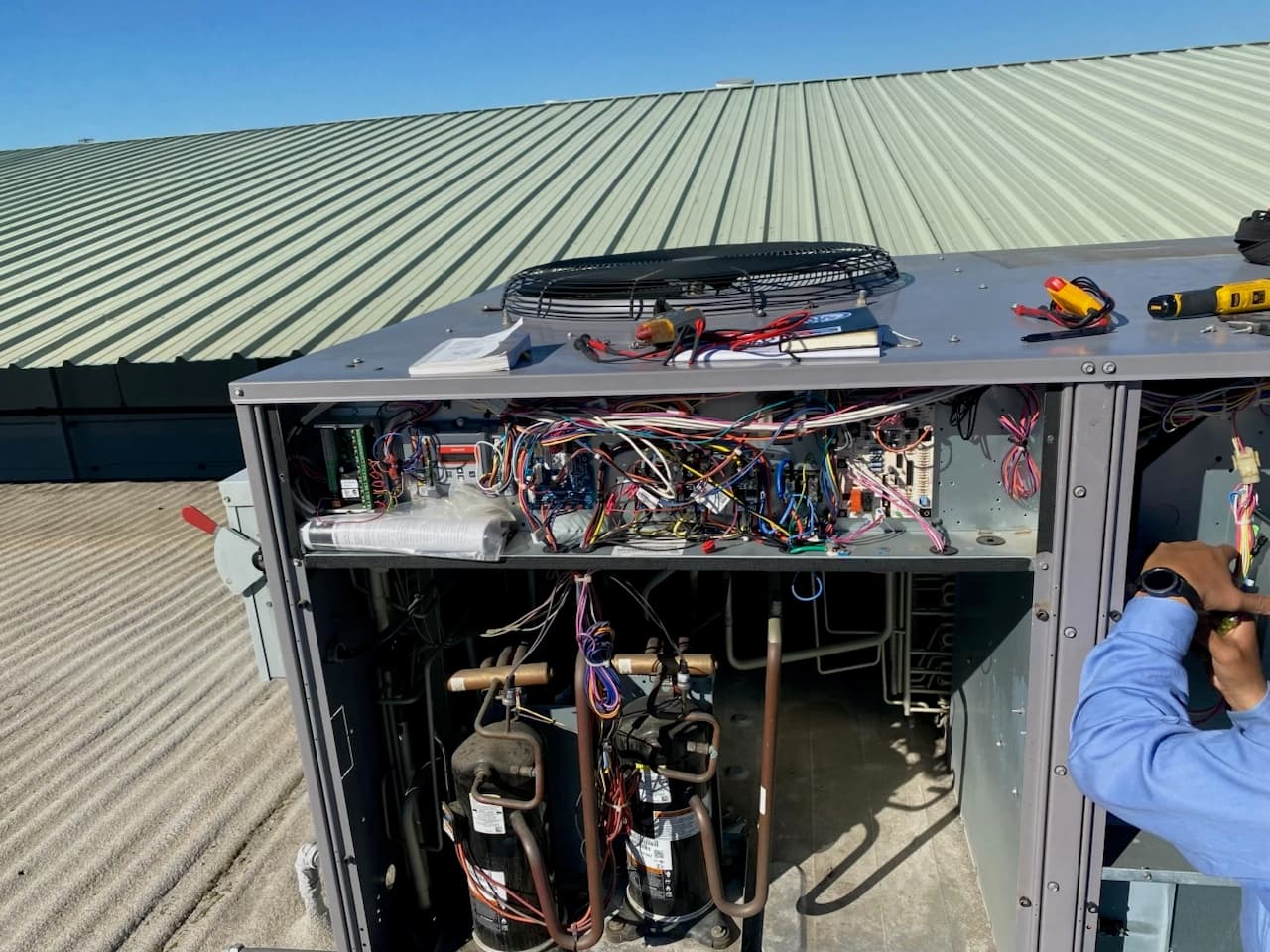
How building controls & automation work plays out in Burbank
Studios do not keep office hours, and that is the root of most controls problems in Burbank. Buildings in the Media District were often fitted out as conventional offices with nine-to-five schedules and then filled with post-production, machine rooms, and teams that work through the night on a delivery. Someone overrides a thermostat during a crunch and it never gets undone, or the opposite happens and a server room follows a schedule meant for empty desks. The fix is to separate critical rooms onto their own setpoints, rebuild general schedules around actual use with time-limited overrides, and write down every change.
Airport-area industrial buildings have a different pattern: warehouse floors and office mezzanines sharing a thermostat, or packaged units whose economizers were never commissioned. Burbank's dry nights and long shoulder seasons give economizers a lot of useful hours, and a damper stuck closed or an outdoor sensor reading wrong wastes all of them while the compressor runs. Downtown office buildings and hotels tend to have building automation that has been layered over the years, with schedules nobody remembers setting and sensors that have drifted out of calibration.
In clinical space around Providence Saint Joseph, setpoint and schedule changes are made with facilities staff and documented with before-and-after values. Everywhere, verification is the first step: sensor accuracy, damper travel, schedule logic, and economizer changeover, with findings and changes logged in the DaVinci Portal. The building controls page explains the process, and the data center and server room sector page covers the machine-room side that so many Burbank buildings have.
Burbank's climate and what it does to this equipment
Burbank sits in the San Fernando Valley, and the valley holds heat. Summer days regularly reach the upper 90s and into the 100s during heat waves, with warm nights that limit equipment recovery. The marine layer that cools coastal cities rarely reaches this far, so cooling seasons are long and intense. Santa Ana winds add dry air, dust, and fire-season smoke that load filters and coils. In these conditions, rooftop condensers and chillers work close to their limits more often than elsewhere in the county.
For the equipment background behind this page, read our building controls and energy guide or the full Building Controls & Automation service page.
- Media District and studio campusesProduction lots, office buildings, edit suites, and server areas with steady cooling loads and limited tolerance for interruption.
- Magnolia ParkIndependent restaurants, cafes, and shops in older commercial buildings, where kitchens, coolers, and rooftop equipment are compact.
- Airport-area industrial and business parksLarge industrial and light-industrial buildings near Hollywood Burbank Airport with substantial rooftop equipment counts.
- Downtown Burbank and hospital campusesOffices, retail, and medical buildings where comfort, filtration, and scheduling around clinical or business hours are essential.
- Schedule, setpoint, and sequence review across rooftop and central equipment
- Sensor calibration and economizer verification
- Alarm and trend setup so problems surface early
- Programmable and networked thermostat installation
What a building controls & automation visit includes, and the problems we most often find
- Inventory controllers, thermostats, and any building automation system
- Compare schedules and setpoints to how the building is actually used
- Verify sensors, actuators, and economizer logic against measured conditions
- Correct overrides, sequences, and alarms; document the changes
- Review trends after adjustment to confirm savings and stability
- Schedules left at default so equipment runs when nobody is there
- Equipment overridden manually and never returned to automatic
- Drifting or miswired sensors producing comfort complaints
- Economizers that never actually modulate