Building Controls & Automation in El Segundo, CA
Many El Segundo campuses already have a building automation system, but years of tenant changes leave schedules, setpoints and sensors out of step with how the space is used. We verify that sensors read correctly, economizers actually open and close, and occupancy schedules match real hours, which matters in a mild coastal climate where free cooling should carry much of the year. Alarm points are reviewed so that real problems stand out from noise, and trend data is used to support decisions, not just to fill a dashboard.
Aerospace, technology and corporate campuses wedged between LAX, the refinery and the Pacific Coast Highway corridor, with salt-laden coastal air shortening equipment life.
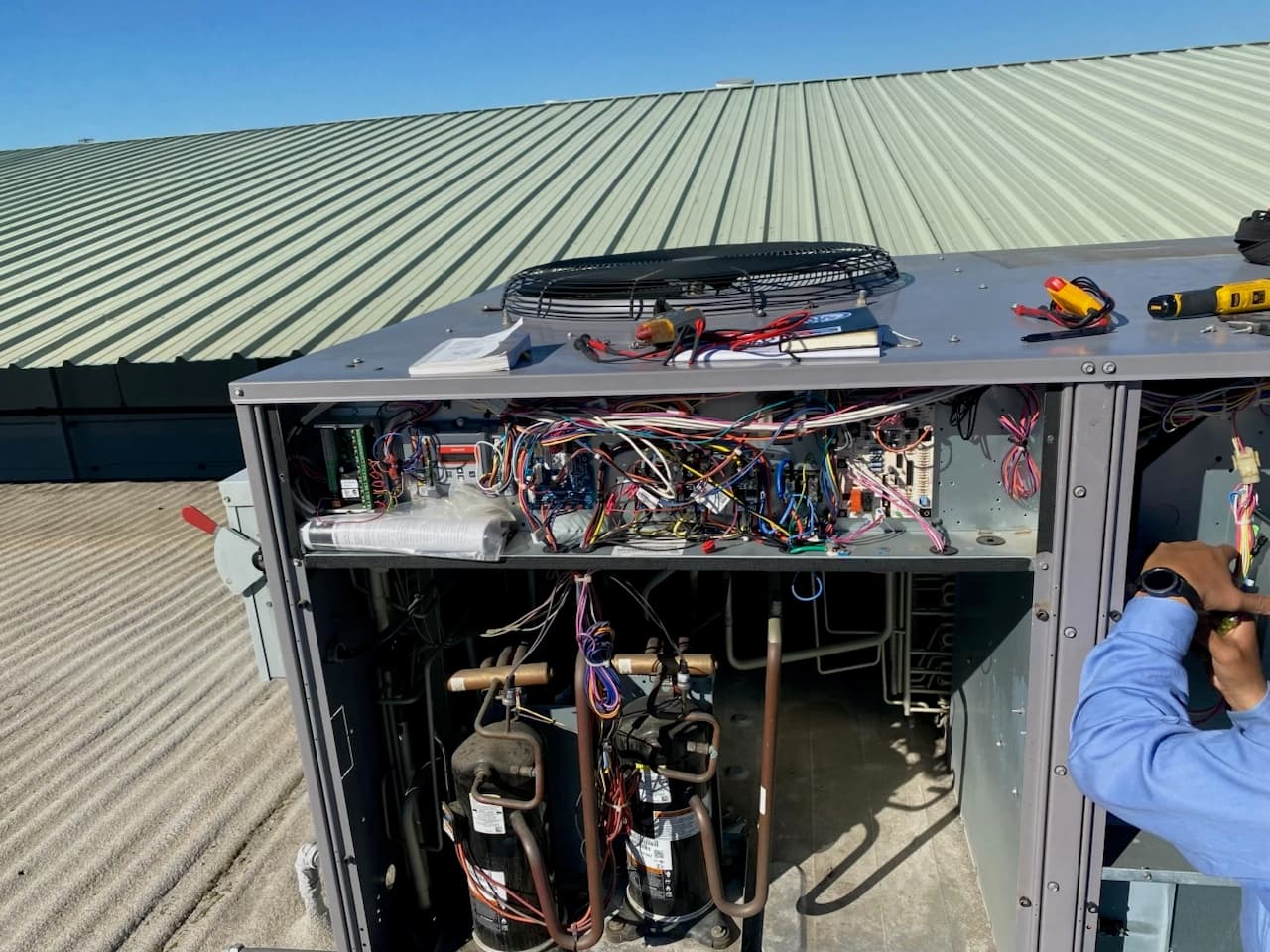
How building controls & automation work plays out in El Segundo
Most El Segundo campuses already have a building automation system, and the problem is rarely the lack of one. Years of tenant moves, lab reconfigurations, and after-hours test schedules have left occupancy schedules that do not match how floors are used, setpoints that were changed to settle a complaint and never reverted, and sensors that have drifted in the salt air. Alarm lists have grown so long that nobody reads them. On the Sepulveda Boulevard office towers, the pattern is similar on a smaller scale. In Smoky Hollow and downtown, the equipment is simpler but the controls are a mix of thermostats, VRF controllers, and a few legacy panels with no shared schedule.
The climate makes one task stand out. El Segundo's marine-layer mornings and mild afternoons mean economizers should supply a large share of cooling with outside air for most of the year, and a VAV system with working economizers and a correct supply air reset can cut compressor hours dramatically. In practice, outdoor air sensors corrode and read high, dampers seize, and the sequence stays in mechanical cooling. Verifying economizer operation and sensor accuracy is the first thing we check on any El Segundo controls engagement.
After that comes schedule and setpoint cleanup, alarm rationalization so real faults stand out, and trend setup so the facility team can see plant and air handler behavior over time rather than reacting to complaints. For labs and critical rooms, we confirm that control sequences hold the conditions the tenant actually needs and that alarms reach someone. Setpoints and findings are documented in the DaVinci Portal. See building controls and automation and the data centers and telecom sector page.
El Segundo's climate and what it does to this equipment
El Segundo sits at the edge of Santa Monica Bay, so mornings often open under the marine layer and afternoons rarely reach the extremes seen inland. That mildness hides the real stress: constant salt-laden air attacks condenser fins, copper tubing, fan guards and rooftop cabinets, and airport and refinery particulates load coils and filters faster than inland offices. Humidity runs higher than most of Los Angeles County, which affects economizer behavior and condensate management. Equipment is rarely heat-stressed, but coating failure and coil corrosion cut service life well short of inland counterparts.
For the equipment background behind this page, read our building controls and energy guide or the full Building Controls & Automation service page.
- Campus and corporate row (Douglas, Continental and Nash)Aerospace, entertainment-tech and corporate campuses with chilled-water plants, VAV systems and tight uptime expectations for labs and data rooms.
- Sepulveda and Imperial hotel and office stripAirport-serving hotels and mid-rise offices with continuous hot water demand, rooftop plant and strict noise limits at night.
- Downtown El Segundo (Main Street)Older low-rise buildings with restaurants, cafes and small retail, where walk-ins, makeup air and shared roofs are the main challenges.
- Smoky Hollow and the southern industrial blocksOlder creative-office conversions and light industrial buildings mixing legacy packaged units with newer tenant-driven mini-splits.
- Schedule, setpoint, and sequence review across rooftop and central equipment
- Sensor calibration and economizer verification
- Alarm and trend setup so problems surface early
- Programmable and networked thermostat installation
What a building controls & automation visit includes, and the problems we most often find
- Inventory controllers, thermostats, and any building automation system
- Compare schedules and setpoints to how the building is actually used
- Verify sensors, actuators, and economizer logic against measured conditions
- Correct overrides, sequences, and alarms; document the changes
- Review trends after adjustment to confirm savings and stability
- Schedules left at default so equipment runs when nobody is there
- Equipment overridden manually and never returned to automatic
- Drifting or miswired sensors producing comfort complaints
- Economizers that never actually modulate
Building Controls & Automation in El Segundo: questions we get
Our BAS alarm list has hundreds of active alarms and the team ignores it. Can that be fixed without a new system?
Yes. Most alarm floods come from nuisance points: sensors that alarm on normal fluctuations, points left in alarm after equipment was removed, and thresholds set too tight years ago. We review every active alarm, clear or disable the ones that no longer mean anything, adjust thresholds and delays on the chattering ones, and prioritize the remaining set so critical rooms and plant faults stand out. The system stays; the alarm list becomes something the team can actually use.
Our economizers show as working in the BAS, but the compressors still run on cool mornings. Which do we believe?
Believe the measurements. A BAS can report a damper at 100 percent open while the actuator is disconnected or the linkage is broken, and a corroded outdoor air sensor can tell the sequence it is too warm for free cooling when it is not. We command each damper and watch it move, compare mixed-air temperature against outdoor and return, and check the sensor against a calibrated reference. The results tell you which units are really economizing and which just say they are.
Do you install building automation systems?
We install and service thermostats and controls on rooftop and mechanical equipment, and work with larger automation systems on a project basis.
Can better controls really cut energy use?
Often. Correct schedules, setpoints, and economizer operation are among the cheapest efficiency gains in an existing building.
Can you connect to our existing system?
In most cases. Send us what is installed and we will confirm the integration approach.