Commercial Refrigeration in Corona, CA
Corona's food and beverage tenants, grocery pads near the 91, and restaurants along Main Street all use walk-ins and reach-ins that sit in hot ambient air. Condenser location is a recurring issue, particularly where units are mounted in enclosed alcoves or on dusty industrial roofs. We check condenser clearance and cleanliness, defrost performance, and evaporator airflow, and we flag boxes that cannot hold temperature without an elevated head pressure condition.
A manufacturing and industrial-park city along the 91 and 15 with retail centers, Temescal Canyon heat, and plenty of mid-size rooftop and process cooling loads.
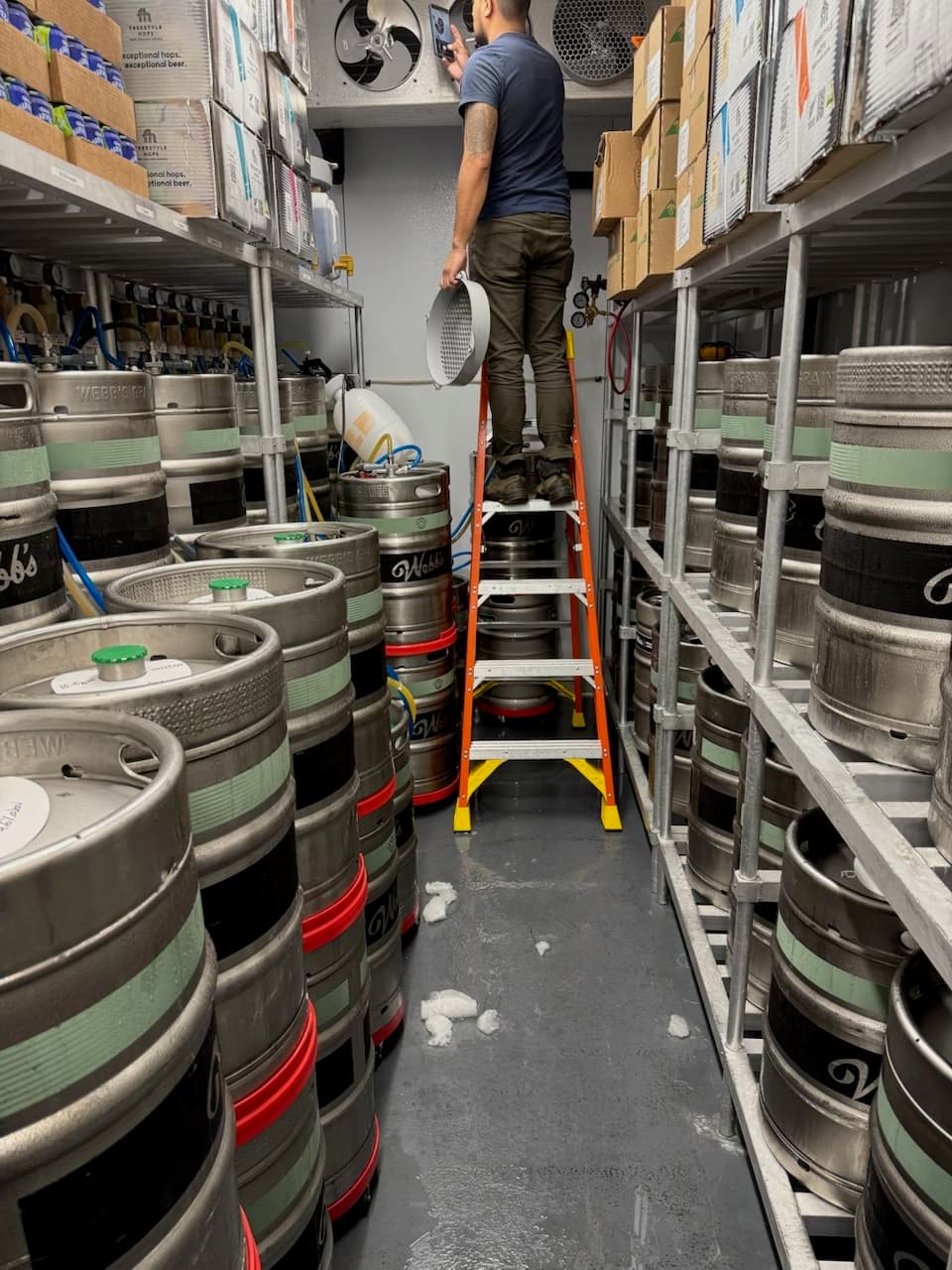
How commercial refrigeration work plays out in Corona
Corona's refrigeration is split between the food and beverage tenants in its industrial parks and the grocers and restaurants on its retail corridors. The industrial side includes beverage and food production, packaging, and distribution operations where a walk-in or a process cooler is part of the production line, not a convenience. The retail side runs from the supermarket pads near McKinley Street and Ontario Avenue to the restaurant rows at Dos Lagos and around The Circle on Main Street. In both cases the condensing unit is somewhere hot, because in Corona everything outdoors is somewhere hot from June to October.
On industrial roofs, the condenser faces dust from the Prado Basin and open land to the west, Santa Ana wind debris from the northeast, and whatever the neighboring process exhausts. A coil that was clean in April is coated by July, and head pressure climbs quietly until the compressor gives up. In restaurants, condensers in enclosed back-of-house areas or against a hot west-facing wall see the same effect for different reasons. We measure the air entering the condenser against the ambient, read the pressures, check evaporator airflow and defrost, and inspect gaskets and door closers, because a production walk-in with forklift traffic through its doors loses more capacity to infiltration than to anything else.
What a plant manager or store owner should expect is a system that holds setpoint through September with documented margin, a trend of readings in the DaVinci Portal that shows when something is drifting, and a plain statement when a condenser is in the wrong place or a box is undersized for the way it is now being used. For food production, the record also supports the quality and audit questions that follow any temperature excursion. The food manufacturing and cold storage page covers how we document for those customers, and the commercial refrigeration guide covers the system types.
Corona's climate and what it does to this equipment
Corona is a heat pocket at the mouth of Temescal Canyon. Daytime temperatures can reach well past 100 degrees for long stretches, and when onshore flow weakens the 91 corridor traps both heat and smog. Santa Ana winds from the northeast drive dust and debris across industrial rooftops and into condenser coils, and wildfire smoke from the surrounding hills and nearby counties can load filters rapidly. The result is equipment that runs at high head pressure much of the summer, with coil fouling and belt or bearing wear that arrives earlier than the manufacturer's schedule suggests.
For the equipment background behind this page, read our walk-in cooler and freezer guide or the full Refrigeration: Walk-In & Reach-In Coolers/Freezers service page.
- Sampson and Rimpau industrial parksManufacturing and warehouse buildings with a mix of rooftop packaged units, process cooling, and office suites sharing one mechanical footprint.
- Temescal Canyon corridorBusiness parks and industrial space along the canyon, fully exposed to heat, wind, and dust funneling toward the 15 interchange.
- Corona Mall and Auto Center areaRetail, restaurants, and big-box tenants along the 91 frontage, where rooftop equipment is dense and operating hours are long.
- Main Street and downtown CoronaThe Circle, civic buildings, older commercial storefronts, and small restaurants with aging split systems and compact rooftop units.
- Evaporator/condenser coil cleaning and defrost checks
- TXV/EEV, superheat, subcool, and pressure readings logged
- Door seals, drains, heaters, and fan packages inspected
- DaVinci Portal: temps and pressures logged by asset over time
What a commercial refrigeration visit includes, and the problems we most often find
- Check current box temperature against setpoint and recent trend
- Inspect door seals, drains, and evaporator/condenser coils for buildup
- Take superheat, subcool, and pressure readings against manufacturer spec
- Address the root cause — not just a temporary recharge
- Log readings to the asset so drift is caught early next visit
- Door seals and hinges that no longer hold a tight close
- Evaporator coils iced over from a defrost cycle issue
- Condenser coils caked with grease or debris, especially near kitchen exhaust
- Slow refrigerant leaks that show up as gradual temperature drift, not sudden failure
Commercial Refrigeration in Corona: questions we get
Our Corona production walk-in cannot hold temperature during the afternoon shift but is fine overnight. Why?
Should refrigeration condensers on a Corona industrial roof get coated coils?
Can you service equipment during business hours?
Do you handle health-department documentation?
Other services in Corona
Commercial Refrigeration nearby in Inland Empire (Riverside & San Bernardino Counties)
Commercial HVAC and refrigeration across Inland Empire (Riverside & San Bernardino Counties)