VRF & Split System Service in Corona, CA
Server and electrical rooms, small medical suites, and office additions inside Corona's industrial buildings, where extending an existing rooftop duct system is impractical, are good fits for ductless and VRF systems. Outdoor units need clearance and shading consideration because of sustained high ambient temperatures. We size for peak conditions, plan refrigerant routing and condensate, and commission each system so it holds setpoint on the hottest day.
A manufacturing and industrial-park city along the 91 and 15 with retail centers, Temescal Canyon heat, and plenty of mid-size rooftop and process cooling loads.
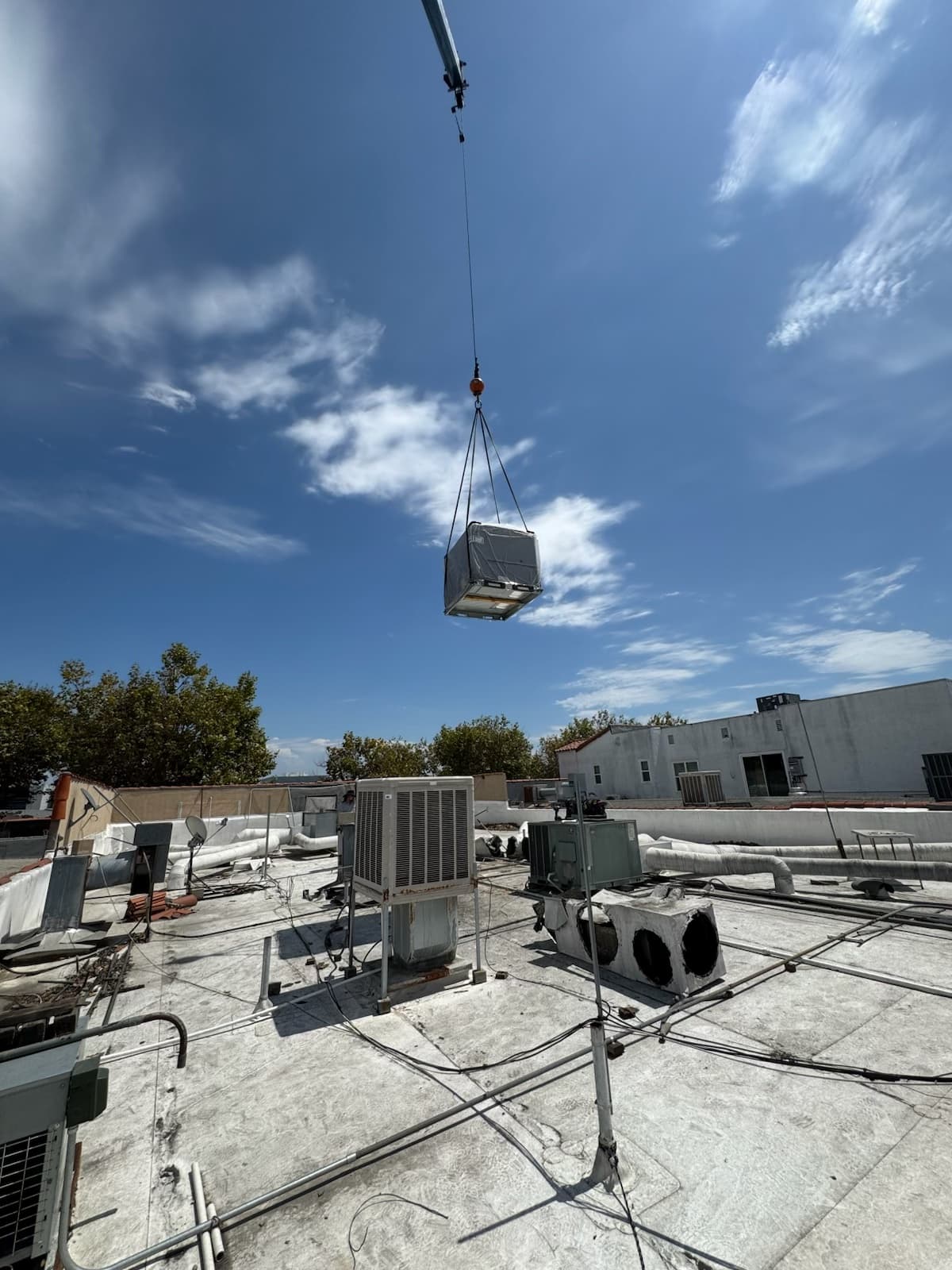
How vrf & split system service work plays out in Corona
The most common VRF request in Corona comes from inside a warehouse. A tenant in a Sampson Avenue or Temescal Canyon building needs an office build-out, a quality lab, a server room, or a climate-controlled storage area in a corner of a space that the rooftop units were never meant to condition precisely. Extending the existing duct is impractical or would starve the rest of the floor. A ductless or VRF system with its own outdoor unit and one or more indoor units gives that space independent control without touching the production floor's equipment, and it can be installed around an operating plant.
Medical and professional suites near Corona Regional Medical Center and in the newer office buildings toward Dos Lagos are the second group. A practice adding a procedure room or an imaging suite with tighter temperature needs than the shared rooftop system can deliver, or a multi-tenant office where each tenant wants to pay for only their own comfort, is well served by heat recovery VRF that lets a sunny south-facing suite cool while a north-facing one heats on a winter morning. Older Main Street buildings near The Circle use ductless for the same reason Riverside's downtown does: the building fabric cannot take duct.
Corona's heat shapes the design. Outdoor unit capacity drops as ambient rises and the city's summer afternoons sit far above the rating condition, so we select against the extended performance data with margin for critical spaces, place outdoor units where they get real airflow and some shade, and avoid enclosed yards or hot west walls that recirculate discharge air. In industrial buildings, dust and process exhaust near the outdoor unit are considered during siting. Piping limits, diversity, and condensate routing through a warehouse mezzanine or an older building are planned up front, and commissioning happens on a hot afternoon so each zone proves it holds setpoint. The VRF and split systems page covers indoor unit types and where each fits.
Corona's climate and what it does to this equipment
Corona is a heat pocket at the mouth of Temescal Canyon. Daytime temperatures can reach well past 100 degrees for long stretches, and when onshore flow weakens the 91 corridor traps both heat and smog. Santa Ana winds from the northeast drive dust and debris across industrial rooftops and into condenser coils, and wildfire smoke from the surrounding hills and nearby counties can load filters rapidly. The result is equipment that runs at high head pressure much of the summer, with coil fouling and belt or bearing wear that arrives earlier than the manufacturer's schedule suggests.
For the equipment background behind this page, read our VRF vs. RTU vs. split systems guide or the full VRF & Commercial Split Systems service page.
- Sampson and Rimpau industrial parksManufacturing and warehouse buildings with a mix of rooftop packaged units, process cooling, and office suites sharing one mechanical footprint.
- Temescal Canyon corridorBusiness parks and industrial space along the canyon, fully exposed to heat, wind, and dust funneling toward the 15 interchange.
- Corona Mall and Auto Center areaRetail, restaurants, and big-box tenants along the 91 frontage, where rooftop equipment is dense and operating hours are long.
- Main Street and downtown CoronaThe Circle, civic buildings, older commercial storefronts, and small restaurants with aging split systems and compact rooftop units.
- VRF and multi-split service with refrigerant circuit diagnostics
- Ductless mini-split installation for server rooms, tenant spaces, and additions
- Controller, communication, and zoning troubleshooting
- Documented startup and commissioning
What a vrf & split system service visit includes, and the problems we most often find
- Review the system layout: outdoor units, branch controllers, and indoor units
- Read refrigerant-circuit data and communication status
- Inspect drains, filters, coils, and line sets
- Correct the fault and re-verify operation across zones
- Document the system layout and readings by unit
- Communication faults between indoor units, branch boxes, and outdoor units
- Condensate pumps and drains failing in ceiling cassettes
- Refrigerant leaks in long line sets and field joints
- Zones fighting each other because of control setup
VRF & Split System Service in Corona: questions we get
Can a ductless or VRF system be installed in our Corona warehouse while the plant keeps running?
A Corona server room on the second floor of our industrial building overheats every afternoon. Is a ductless system the right fix?
Do you service all VRF brands?
Is VRF right for my building?
Can you add a ductless unit for a server room?
Other services in Corona
VRF & Split System Service nearby in Inland Empire (Riverside & San Bernardino Counties)
Commercial HVAC and refrigeration across Inland Empire (Riverside & San Bernardino Counties)