Commercial Refrigeration in Temecula, CA
Wine-country restaurants and event kitchens rely on walk-ins sized for peak weekends, often with remote condensers exposed to valley heat and wind. A box that holds temperature on a Tuesday can fail on a packed Saturday when doors are open constantly. We evaluate defrost cycles, door seals, evaporator airflow, and condenser conditions together, and we check how the box actually performs under busy-hour use, not just at idle.
A hospitality-driven valley city where wine-country restaurants, Old Town dining, a growing medical sector, and business parks all depend on dependable cooling in summer heat and wind.
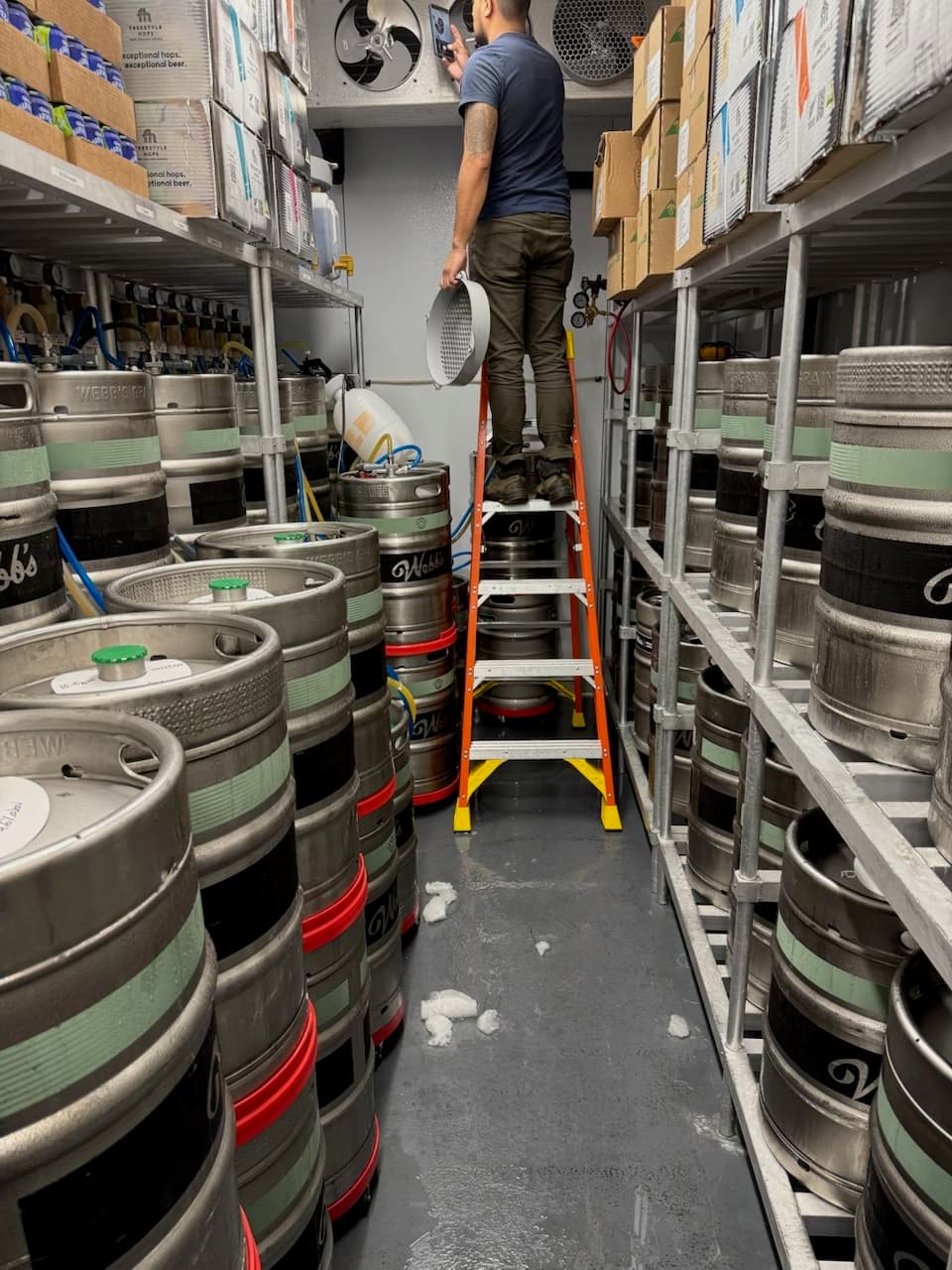
How commercial refrigeration work plays out in Temecula
The refrigeration load in Temecula is a hospitality load. Wine country event venues run walk-ins that hold a wedding's worth of product for one weekend and sit half empty the next. Old Town restaurants squeeze walk-ins and reach-ins into kitchens that were never designed for the volume they now handle. Grocery and specialty food tenants along Temecula Parkway and in the Promenade area run display cases on long hours. And the growing medical cluster around Temecula Valley Hospital adds a different category: vaccine and medication refrigerators where a temperature excursion is a compliance event, not just a product loss.
What the valley does to this equipment is fairly specific. Remote condensers on the roofs and side yards of wine country buildings see hot, dusty, gusty afternoons that load the coil with vineyard dust and raise head pressure, then a sharp evening cool-down that changes how defrost and pressure controls behave. Boxes that are opened constantly during a Saturday event accumulate frost on the evaporator faster than the defrost schedule was set for, and by Sunday morning the box is warm with the compressor running flat out. In Old Town, the problem is more often an undersized or poorly placed condensing unit sitting in a hot alley or above the cookline.
A visit here looks at the box as a system: door gaskets and closers, evaporator airflow and frost pattern, defrost timing against actual door traffic, condenser cleanliness and clearance, and refrigerant readings taken when the box is working hardest. For venues, we try to see the box after a busy event rather than on a quiet Tuesday. Readings and photos go into the DaVinci Portal, and for medical refrigeration we document alarm settings and temperature history so the clinic has a record to hand to an inspector. Our walk-in cooler and freezer guide covers the fundamentals.
Temecula's climate and what it does to this equipment
Temecula sits farther from the coast than most of Southern California's urban areas but still catches a marine layer that funnels through the Rainbow Gap, so evenings can cool noticeably after very hot days. The wide daily temperature swing is hard on equipment because it stresses controls, economizers, and refrigerant systems differently from a steady climate. Summer afternoons are hot and dry, with gusty winds that carry dust from vineyards and construction sites into coils and intakes. Wildfire smoke from inland hills and the surrounding region can load filters, and fall Santa Ana conditions add heat and debris at the end of the cooling season.
For the equipment background behind this page, read our walk-in cooler and freezer guide or the full Refrigeration: Walk-In & Reach-In Coolers/Freezers service page.
- Old Town TemeculaFront Street restaurants, boutiques, and event spaces in older buildings, usually with compact rooftop or split equipment and limited access.
- Wine country and Rancho California RoadTasting rooms, resorts, event venues, and restaurants with seasonal peaks and walk-in storage that supports food and beverage programs.
- Temecula Valley Hospital and medical districtClinics, imaging centers, and specialty offices near the hospital campus with strict temperature and air quality expectations.
- Winchester Road and Ynez corridor business parksRetail centers, offices, and light industrial space with multi-tenant rooftop systems along the main commercial arteries.
- Evaporator/condenser coil cleaning and defrost checks
- TXV/EEV, superheat, subcool, and pressure readings logged
- Door seals, drains, heaters, and fan packages inspected
- DaVinci Portal: temps and pressures logged by asset over time
What a commercial refrigeration visit includes, and the problems we most often find
- Check current box temperature against setpoint and recent trend
- Inspect door seals, drains, and evaporator/condenser coils for buildup
- Take superheat, subcool, and pressure readings against manufacturer spec
- Address the root cause — not just a temporary recharge
- Log readings to the asset so drift is caught early next visit
- Door seals and hinges that no longer hold a tight close
- Evaporator coils iced over from a defrost cycle issue
- Condenser coils caked with grease or debris, especially near kitchen exhaust
- Slow refrigerant leaks that show up as gradual temperature drift, not sudden failure
Commercial Refrigeration in Temecula: questions we get
Our event venue walk-in holds temperature all week and then drifts warm during Saturday weddings. Is that a sizing problem or a service problem?
Our clinic near Temecula Valley Hospital stores vaccines. What do you document when you service that refrigeration?
Can you service equipment during business hours?
Do you handle health-department documentation?
Other services in Temecula
Commercial Refrigeration nearby in Inland Empire (Riverside & San Bernardino Counties)
Commercial HVAC and refrigeration across Inland Empire (Riverside & San Bernardino Counties)