Commercial Refrigeration in Fontana, CA
Cold-chain and food distribution tenants in Fontana run refrigeration under a punishing combination of high ambient heat, dust, and constant dock traffic. Condenser performance, evaporator defrost, door condition, and controller setpoints decide whether product stays safe. We evaluate the entire system rather than the component that happened to alarm, and we maintain temperature and pressure records that logistics and quality teams can use in audits.
One of the Inland Empire's heaviest logistics and warehouse cities, with a major Kaiser medical campus, industrial corridors, and relentless heat and dust.
How commercial refrigeration work plays out in Fontana
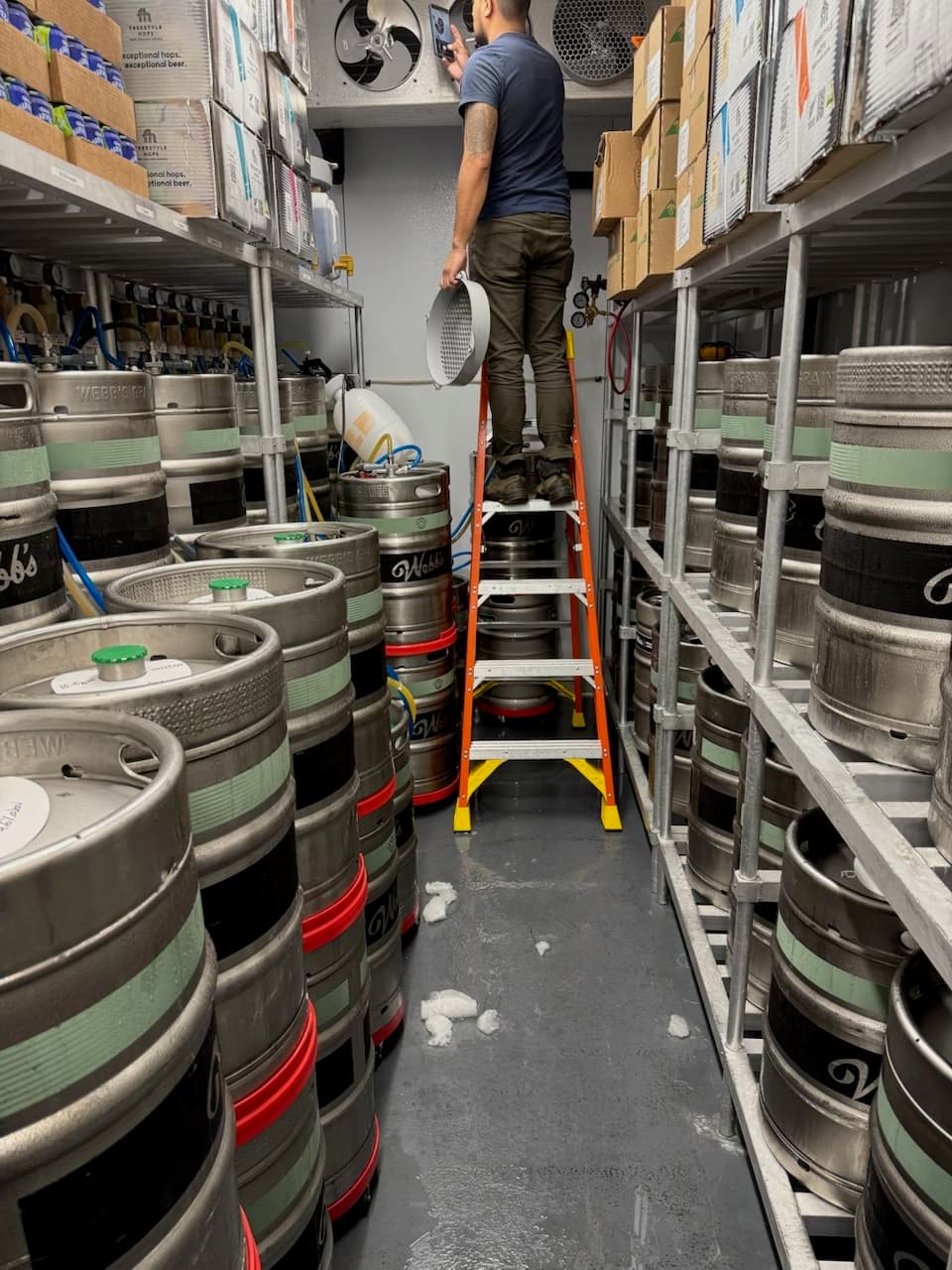
Cold storage and food distribution tenants in Fontana run refrigeration under some of the worst conditions in Southern California: ambient temperatures above 100 degrees for weeks, dust that coats condensers within days of cleaning, and dock doors that open constantly during the hottest part of the shift. A cooler or freezer that holds setpoint in the morning and drifts by late afternoon is the classic call. We look at the whole chain: condenser heat rejection under peak ambient, evaporator airflow and defrost performance, door and strip curtain condition, and controller settings that may never have been tuned to the building's actual traffic.
The stakes are higher here than in a restaurant walk-in, because product value runs into the thousands per pallet and quality teams need records. Each service visit produces temperature and pressure logs, condenser condition notes, and defrost observations that go into the DaVinci Portal, which gives a food safety or logistics manager an audit trail without chasing paper. Where a refrigerant leak history exists, we address it as a compliance matter as well as a performance one, and the refrigerant compliance guide explains why that matters in California.
Smaller operators have their own version of the problem. Restaurants in downtown Fontana and along Valley Boulevard, grocery tenants on Sierra Avenue, and the cafeterias serving the medical campus all depend on walk-ins and reach-ins whose condensers sit on hot, dusty roofs or in cramped rear yards. A good outcome for them is a box that holds temperature through a dinner rush on a 105-degree day, which usually comes down to a clean condenser with proper clearance, correct defrost timing, and gaskets that seal.
Fontana's climate and what it does to this equipment
Fontana is among the hottest and windiest parts of the region. Its position near the Cajon Pass and the base of the mountains means Santa Ana winds, and the strong gusts that come with them, strike with more force than in many neighboring cities. Dust from open ground and construction settles on coils, filters, and rooftop surfaces, and air quality is frequently poor in summer because of ozone and particulate. Wildfire smoke adds more load. Triple-digit heat is routine in summer, so condensers operate near their limits for long periods, and cold storage faces its highest loads at the worst possible ambient conditions.
For the equipment background behind this page, read our walk-in cooler and freezer guide or the full Refrigeration: Walk-In & Reach-In Coolers/Freezers service page.
- Slover, Jurupa, and Miller logistics corridorsLarge distribution and fulfillment buildings with extensive rooftop equipment, dock areas, and temperature-controlled space.
- Kaiser medical campus and Sierra AvenueHospital, clinics, pharmacies, and professional offices with high expectations for air quality, temperature stability, and uptime.
- Speedway-adjacent industrial areaLarge-scale industrial and warehouse development in the northwest part of the city, exposed to open ground and strong wind.
- Downtown Fontana and Valley BoulevardSmaller retail, restaurants, and service businesses in older buildings with split systems and compact rooftop units.
- Evaporator/condenser coil cleaning and defrost checks
- TXV/EEV, superheat, subcool, and pressure readings logged
- Door seals, drains, heaters, and fan packages inspected
- DaVinci Portal: temps and pressures logged by asset over time
What a commercial refrigeration visit includes, and the problems we most often find
- Check current box temperature against setpoint and recent trend
- Inspect door seals, drains, and evaporator/condenser coils for buildup
- Take superheat, subcool, and pressure readings against manufacturer spec
- Address the root cause — not just a temporary recharge
- Log readings to the asset so drift is caught early next visit
- Door seals and hinges that no longer hold a tight close
- Evaporator coils iced over from a defrost cycle issue
- Condenser coils caked with grease or debris, especially near kitchen exhaust
- Slow refrigerant leaks that show up as gradual temperature drift, not sudden failure
Commercial Refrigeration in Fontana: questions we get
Our Fontana cold storage building loses temperature in the late afternoon during summer. What should we check first?
Can you provide temperature records our food safety auditor will accept?
Can you service equipment during business hours?
Do you handle health-department documentation?
Other services in Fontana
Commercial Refrigeration nearby in Inland Empire (Riverside & San Bernardino Counties)
Commercial HVAC and refrigeration across Inland Empire (Riverside & San Bernardino Counties)