Chiller & Central Plant Service in Corona, CA
Larger manufacturing buildings, process cooling loops, and a few institutional and office properties hold most of Corona's chilled water. High ambient temperatures reduce condenser and tower performance, so cooling towers with scaled fill or poor water treatment cost far more than they appear to. We evaluate chiller loading, condenser approach, pump operation, and treatment condition, and plan repairs or replacements in a way that avoids interrupting production.
A manufacturing and industrial-park city along the 91 and 15 with retail centers, Temescal Canyon heat, and plenty of mid-size rooftop and process cooling loads.
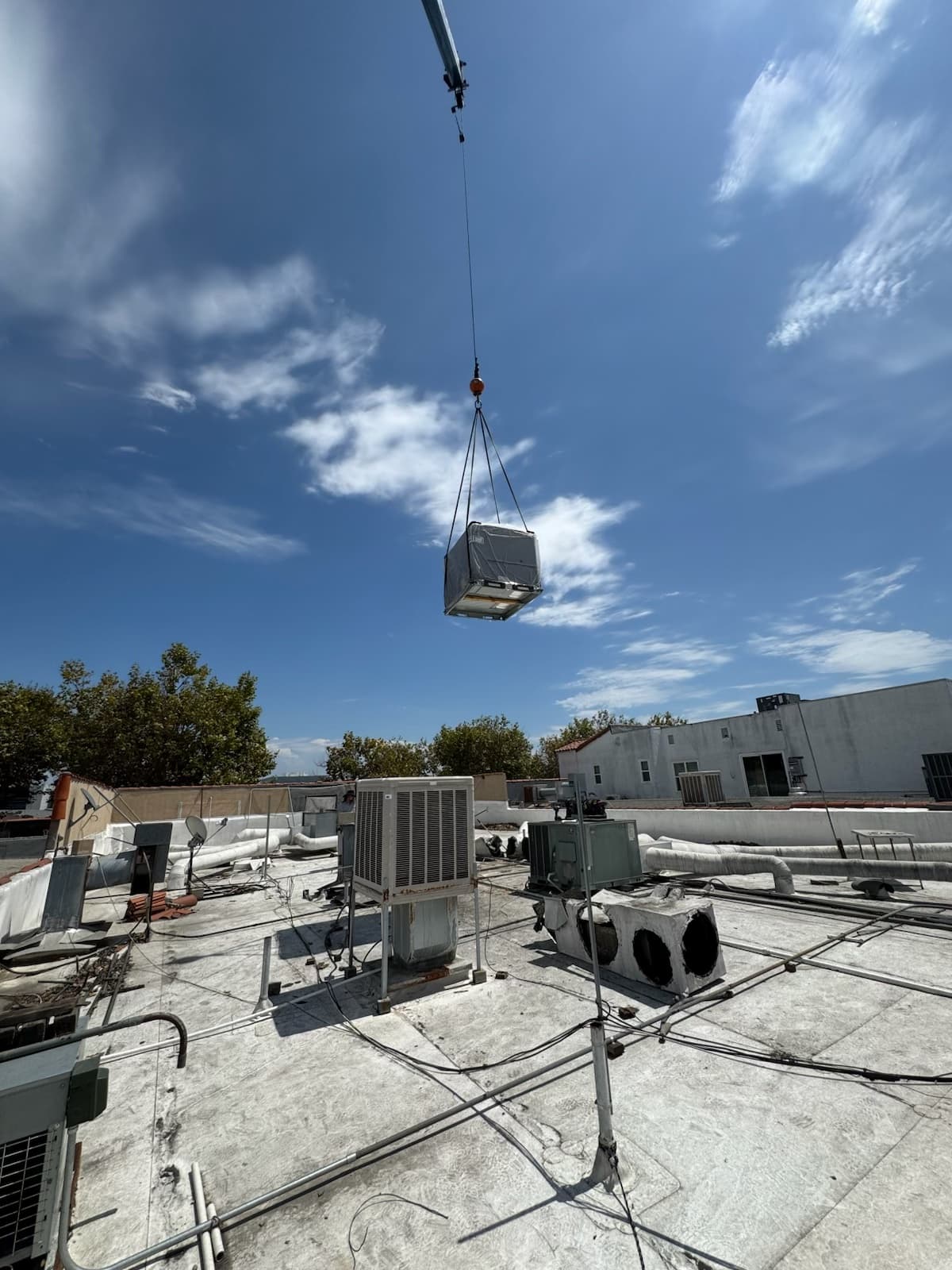
How chiller & central plant service work plays out in Corona
Chilled water in Corona is mostly process water. Manufacturing in the Sampson, Rimpau, and Temescal Canyon parks runs process chillers for molding, machining, beverage production, electronics, and testing, often with a closed loop and an air-cooled or evaporative condenser on the roof or in a yard. Comfort cooling plants are fewer: the hospital, a handful of larger office and medical buildings, and some public facilities. The distinction matters because a process chiller that loses capacity stops a production line, and the plant manager measures the cost in output rather than in comfort complaints.
Corona's ambient is hard on both types. Air-cooled process chillers on an industrial roof in July are rejecting heat into air well above their rating condition, and a coil carrying a season of dust pushes the unit toward its high pressure limit on the hottest afternoons, which is also when production is heaviest. Cooling towers lose efficiency to scale and dust faster here than near the coast because dry air concentrates basin minerals quickly and Santa Ana winds deliver debris. Water treatment that was adequate when the tower was installed is often behind by the time anyone looks. We read approach temperatures on condensers and towers against design, check chemistry, and look at pump and valve performance before deciding what the plant needs.
Replacement and major overhaul projects here are larger engagements that Davinci Mechanical mobilizes into Corona with a project team from across the hills in Orange County, planned so a production line or a critical facility never goes without cooling. Rental capacity, phased changeouts, and shoulder-season scheduling are the tools. The chillers and hydronic systems guide describes plant assessment, and the chillers and central plant page covers the service scope.
Corona's climate and what it does to this equipment
Corona is a heat pocket at the mouth of Temescal Canyon. Daytime temperatures can reach well past 100 degrees for long stretches, and when onshore flow weakens the 91 corridor traps both heat and smog. Santa Ana winds from the northeast drive dust and debris across industrial rooftops and into condenser coils, and wildfire smoke from the surrounding hills and nearby counties can load filters rapidly. The result is equipment that runs at high head pressure much of the summer, with coil fouling and belt or bearing wear that arrives earlier than the manufacturer's schedule suggests.
For the equipment background behind this page, read our chillers and hydronic systems guide or the full Chillers & Central Plant Service service page.
- Sampson and Rimpau industrial parksManufacturing and warehouse buildings with a mix of rooftop packaged units, process cooling, and office suites sharing one mechanical footprint.
- Temescal Canyon corridorBusiness parks and industrial space along the canyon, fully exposed to heat, wind, and dust funneling toward the 15 interchange.
- Corona Mall and Auto Center areaRetail, restaurants, and big-box tenants along the 91 frontage, where rooftop equipment is dense and operating hours are long.
- Main Street and downtown CoronaThe Circle, civic buildings, older commercial storefronts, and small restaurants with aging split systems and compact rooftop units.
- Chiller, tower, pump, and VFD service with logged operating data
- Trend-based diagnosis: approach, delta-T, amp draw, and pressures
- Replacement planning with rigging, power, and temporary cooling considered
- Water-treatment and Legionella-control coordination for water-cooled plants
What a chiller & central plant service visit includes, and the problems we most often find
- Review the plant: chillers, pumps, towers, controls, and recent operating history
- Take full operating readings and compare against design and prior visits
- Inspect and test safeties, strainers, VFDs, valves, and control sequences
- Report findings with prioritized repairs and a forward capital outlook
- Document the plant by asset in the DaVinci Portal for the next visit
- Falling delta-T pushing chillers to run more than the load requires
- Fouled condenser tubes or coils raising approach temperature and amp draw
- Neglected water treatment causing scale, corrosion, and biological growth
- Controls overridden to manual and never returned to automatic
Chiller & Central Plant Service in Corona: questions we get
Our Corona plant's process chiller trips on high pressure on the hottest afternoons. Is it undersized?
Check the condenser before concluding that. An air-cooled process chiller that trips only at peak ambient is usually carrying a dirty coil, a fan that is not moving its rated airflow, or a location that recirculates its own hot discharge air. Cleaning and correcting those often restores the margin. If the chiller still trips with a clean coil and good airflow, then the unit is undersized for Corona's peak or for a process load that has grown, and the options are added capacity or load management during peak hours.
How often should a cooling tower in Corona be cleaned and have its water treatment checked?
Water treatment should be monitored continuously or at least monthly by a treatment vendor, because dry air and dusty conditions here push basin chemistry out of range faster than a quarterly check can catch. Physical cleaning of the basin and inspection of fill, nozzles, and drift eliminators is usually twice a year, before and after cooling season, with a mid-summer check in a heavy dust year. A tower that is scaled or fouled costs capacity on the days the plant needs it most. Confirm current public health requirements for tower management as well.
Do you service both air-cooled and water-cooled chillers?
Yes. We work on air-cooled and water-cooled plants and the equipment around them: pumps, towers, VFDs, valves, and controls.
Can you help plan a chiller replacement?
Yes. Replacement planning covers load verification, refrigerant choice, rigging and power, temporary cooling, and phasing so the building stays comfortable.
Do you bid central plant projects?
Yes, as prime or mechanical subcontractor, in Orange County and beyond on a project-by-project basis.
Other services in Corona
Chiller & Central Plant Service nearby in Inland Empire (Riverside & San Bernardino Counties)
Commercial HVAC and refrigeration across Inland Empire (Riverside & San Bernardino Counties)