Commercial Refrigeration in Riverside, CA
Riverside restaurants near the Mission Inn, UCR dining operations, and grocers along Magnolia depend on walk-ins and display cases that fight hot ambient air every day. Condensers on rooftops and in tight back-of-house yards run with high head pressure for months, which shortens compressor life. We diagnose door gaskets, defrost control, evaporator airflow, and condenser performance together, and document readings so a manager can see whether a box is drifting before product is at risk.
A government, university, and healthcare center with historic downtown buildings, Magnolia Avenue retail, and a hot, dry summer that keeps rooftop equipment near its limits for months.
How commercial refrigeration work plays out in Riverside
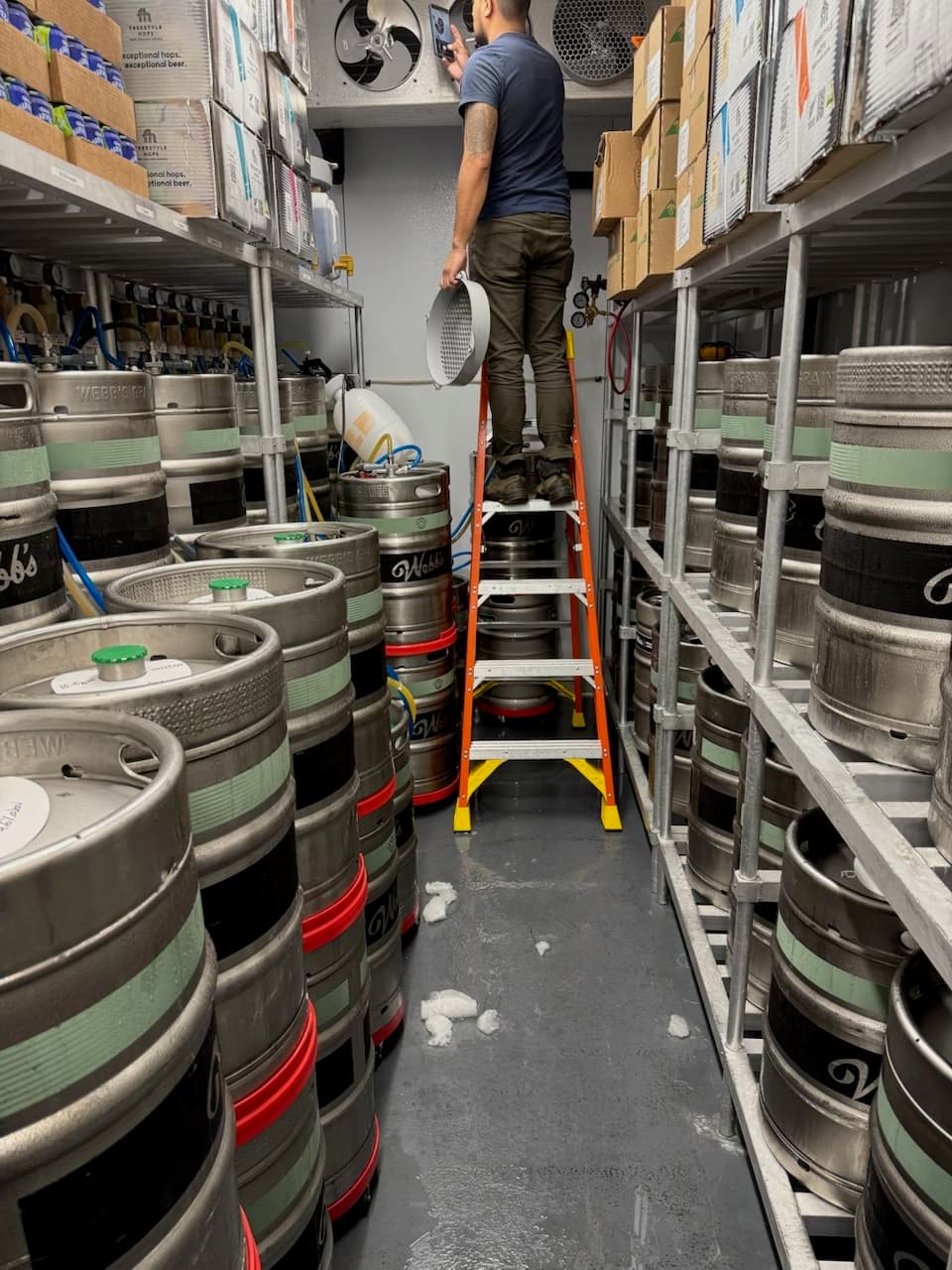
The walk-in that gives a Riverside operator trouble is almost always the one whose condensing unit sits in a hot place. Downtown restaurants around the Food Lab and the Mission Inn block often have their condensers in an alley or on a low roof surrounded by walls that trap afternoon heat. Grocers along Magnolia and Arlington and the food service operations at UC Riverside and California Baptist University have remote condensers on open roofs that bake all day. In either case the box holds temperature in May and struggles in August, and the symptom is a compressor running longer every week until it does not run at all.
We approach a Riverside refrigeration call by looking at the whole system under afternoon conditions. Condenser cleanliness and airflow come first, because a season of basin dust and citrus-area pollen can cut heat rejection sharply. Then door gaskets and closers, evaporator coil condition, defrost timing, and the superheat and subcooling that tell us whether the charge and the metering device are doing their jobs. For reach-ins and display cases in retail, we check that the case is not fighting a dining room or sales floor that the rooftop unit is failing to cool, since the two problems feed each other.
The best result for a restaurant owner or store manager is a box that holds setpoint through September with a documented margin, and a trend of temperatures and pressures in the DaVinci Portal that shows when performance begins to slip. For hospital kitchens, university dining, and the school nutrition programs across the city, the record also answers the food safety questions an inspector will ask. Where a condensing unit is simply in the wrong place, we say so and price a relocation rather than servicing it twice a summer. The walk-in cooler and freezer guide covers the diagnostic sequence in more depth.
Riverside's climate and what it does to this equipment
Riverside sits in a basin that traps heat. Summer afternoons routinely climb well past the point where a rooftop condenser is working near its design limit, and nights often fail to cool the building structure enough to give equipment a rest. Smog and fine particulate settle on coils faster than in coastal Orange County, citrus-area dust and pollen add to the load, and wildfire smoke events in the surrounding hills can clog filters in days. Santa Ana conditions in fall bring dry heat and debris. Equipment here needs coil cleaning cadence and refrigerant charge checks built around peak season, not the calendar average.
For the equipment background behind this page, read our walk-in cooler and freezer guide or the full Refrigeration: Walk-In & Reach-In Coolers/Freezers service page.
- Downtown and Mission Inn areaGovernment buildings, courts, restaurants, and older multi-story commercial properties where mixed equipment generations share one roof or mechanical room.
- UCR and University Avenue corridorCampus-adjacent dining, student-oriented retail, and research and instructional buildings with strict space-temperature expectations.
- Magnolia Avenue medical and retail corridorMedical office buildings, outpatient clinics, and strip retail running along one of the city's busiest commercial arteries.
- Hunter Park and Airport Industrial areasLight industrial, distribution, and manufacturing buildings near the 91 and 60 interchange and the municipal airport, many with rooftop packaged units and walk-in refrigeration.
- Evaporator/condenser coil cleaning and defrost checks
- TXV/EEV, superheat, subcool, and pressure readings logged
- Door seals, drains, heaters, and fan packages inspected
- DaVinci Portal: temps and pressures logged by asset over time
What a commercial refrigeration visit includes, and the problems we most often find
- Check current box temperature against setpoint and recent trend
- Inspect door seals, drains, and evaporator/condenser coils for buildup
- Take superheat, subcool, and pressure readings against manufacturer spec
- Address the root cause — not just a temporary recharge
- Log readings to the asset so drift is caught early next visit
- Door seals and hinges that no longer hold a tight close
- Evaporator coils iced over from a defrost cycle issue
- Condenser coils caked with grease or debris, especially near kitchen exhaust
- Slow refrigerant leaks that show up as gradual temperature drift, not sudden failure
Commercial Refrigeration in Riverside: questions we get
Our walk-in condenser is in a downtown alley that gets no air movement. Can anything be done short of moving it?
How much do Riverside summers shorten the life of a refrigeration compressor?
Can you service equipment during business hours?
Do you handle health-department documentation?
Other services in Riverside
Commercial Refrigeration nearby in Inland Empire (Riverside & San Bernardino Counties)
Commercial HVAC and refrigeration across Inland Empire (Riverside & San Bernardino Counties)