Commercial Refrigeration in San Bernardino, CA
Hospital kitchens, school and campus food service, grocery tenants near Inland Center, and restaurants across the city all depend on refrigeration working through long hot seasons. Smog and dust load condensers, and older systems may have leak histories that deserve attention. We evaluate defrost, evaporator airflow, door condition, and condenser performance, and we check for refrigerant loss patterns so compliance and food safety concerns are addressed together.
The county seat, with downtown government buildings, hospitals, rail-served logistics, and aging mixed-use property stock that works hard through hot, smoggy summers.
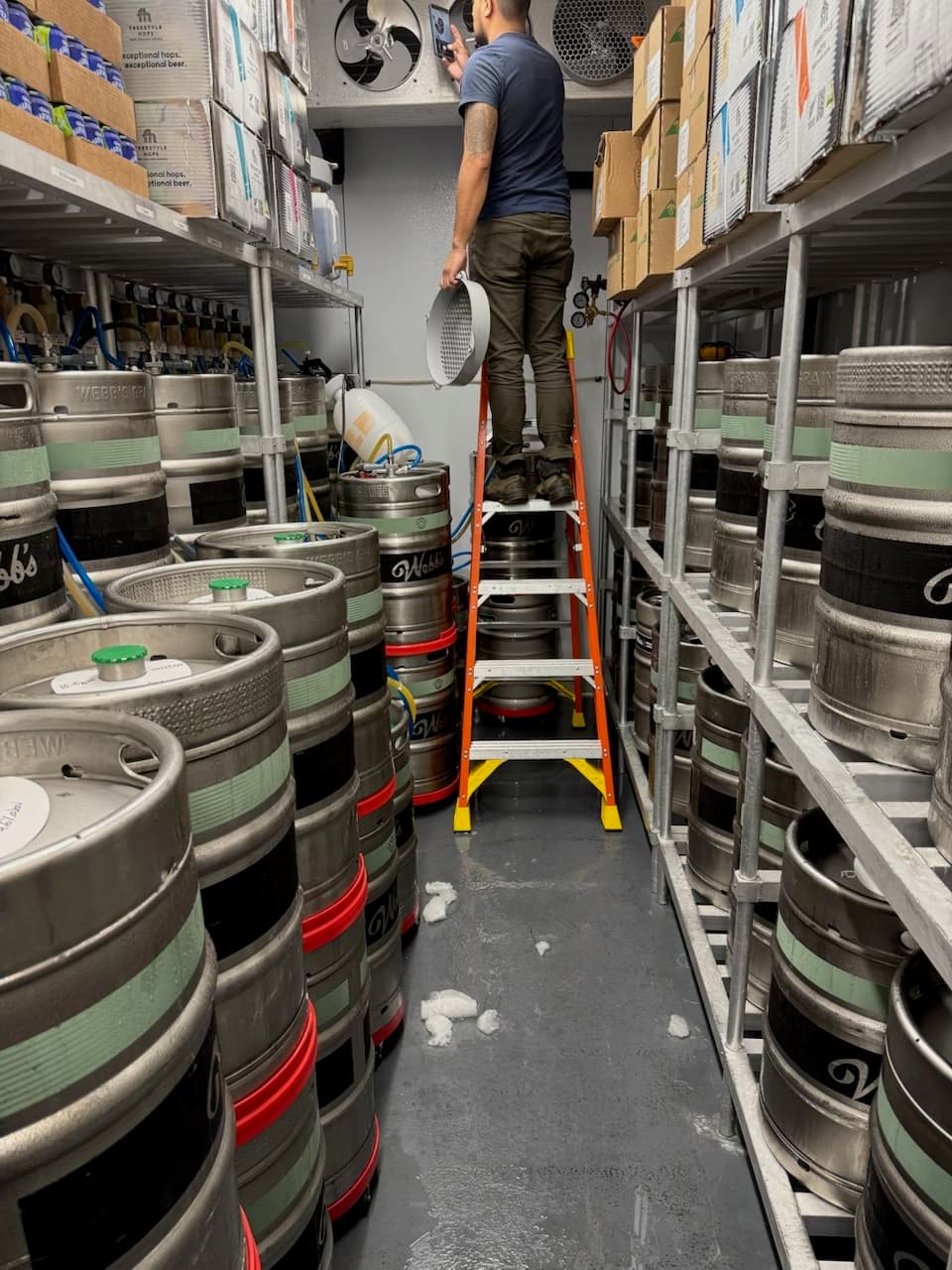
How commercial refrigeration work plays out in San Bernardino
The refrigeration load in San Bernardino is institutional as much as it is retail. Hospital kitchens at Community Hospital and St. Bernardine, campus dining at Cal State San Bernardino and San Bernardino Valley College, school district central kitchens, and the food service operations serving the county's own facilities all run walk-in coolers and freezers that cannot be allowed to drift. A clinical kitchen with a walk-in that creeps to 44 degrees overnight has a food safety event on its hands, and the facilities team needs more than a repair ticket afterward. They need to know whether it was a failed defrost termination, a condenser packed with smog-laden dust, a door closer that stopped sealing, or a compressor that has been running at the edge for a year.
On the retail side, grocery and warehouse-club tenants near Inland Center and along the Highland Avenue and Baseline Street corridors operate rack systems and display cases in buildings that have changed hands several times. Leak histories on older systems matter in California, where refrigerant management rules keep tightening. We check for refrigerant loss patterns as part of every refrigeration visit, log pressures and temperatures, and flag systems where the leak rate suggests a compliance exposure as well as a performance problem. The refrigerant compliance guide explains what owners should be tracking.
Condenser location is the recurring San Bernardino problem. Remote condensers tucked into alley enclosures behind downtown restaurants or into dark corners of a loading dock run in air that is hotter than the already hot ambient. We measure condensing temperature against outdoor temperature on every visit so the owner can see whether a box is working against its own location.
San Bernardino's climate and what it does to this equipment
San Bernardino sits at the foot of the mountains in a pocket where hot, polluted air often collects. Summer highs are among the highest in the region, and smog and fine particulate coat coils and clog filters faster than in coastal areas. Santa Ana winds in fall and winter bring heat, dust, and elevated fire danger, and wildfire smoke from nearby mountains is a recurring factor, sometimes closing windows of acceptable outdoor air for economizer use. Cold winter nights give heating real work to do. Equipment here is hit by every factor at once: high ambient, dirty air, and wide seasonal range.
For the equipment background behind this page, read our walk-in cooler and freezer guide or the full Refrigeration: Walk-In & Reach-In Coolers/Freezers service page.
- Downtown and government centerCounty and city offices, courts, and older commercial buildings with mixed equipment generations and strict reliability expectations.
- Hospitality Lane and Tri-City corporate areaHotels, offices, restaurants, and corporate buildings with large chilled and packaged systems and long cooling hours.
- Inland Center and Tippecanoe corridorMall-area retail, big-box tenants, and surrounding service businesses with dense rooftop equipment.
- Rail and airport logistics areaWarehouses, distribution buildings, and industrial space near the rail yards and San Bernardino International Airport.
- Evaporator/condenser coil cleaning and defrost checks
- TXV/EEV, superheat, subcool, and pressure readings logged
- Door seals, drains, heaters, and fan packages inspected
- DaVinci Portal: temps and pressures logged by asset over time
What a commercial refrigeration visit includes, and the problems we most often find
- Check current box temperature against setpoint and recent trend
- Inspect door seals, drains, and evaporator/condenser coils for buildup
- Take superheat, subcool, and pressure readings against manufacturer spec
- Address the root cause — not just a temporary recharge
- Log readings to the asset so drift is caught early next visit
- Door seals and hinges that no longer hold a tight close
- Evaporator coils iced over from a defrost cycle issue
- Condenser coils caked with grease or debris, especially near kitchen exhaust
- Slow refrigerant leaks that show up as gradual temperature drift, not sudden failure
Commercial Refrigeration in San Bernardino: questions we get
Our hospital-area kitchen walk-in holds temperature in the morning but alarms every afternoon in summer. What is going on?
Does San Bernardino's air quality really affect commercial refrigeration?
Can you service equipment during business hours?
Do you handle health-department documentation?
Other services in San Bernardino
Commercial Refrigeration nearby in Inland Empire (Riverside & San Bernardino Counties)
Commercial HVAC and refrigeration across Inland Empire (Riverside & San Bernardino Counties)