Commercial Refrigeration in Chino, CA
Refrigeration is the defining mechanical system in Chino. Food processors, cold storage operators, and restaurants rely on systems that hold temperature through dust, heat, and washdown. We examine condensers, evaporators, defrost, controls, and door sealing, and we monitor how equipment behaves at peak production. Detailed records are part of the service, which helps plant managers support food safety and quality audits.
A food processing, manufacturing, and former dairy-region industrial city with an airport-area business cluster, Chino Spectrum retail, and heavy refrigeration demand.
How commercial refrigeration work plays out in Chino
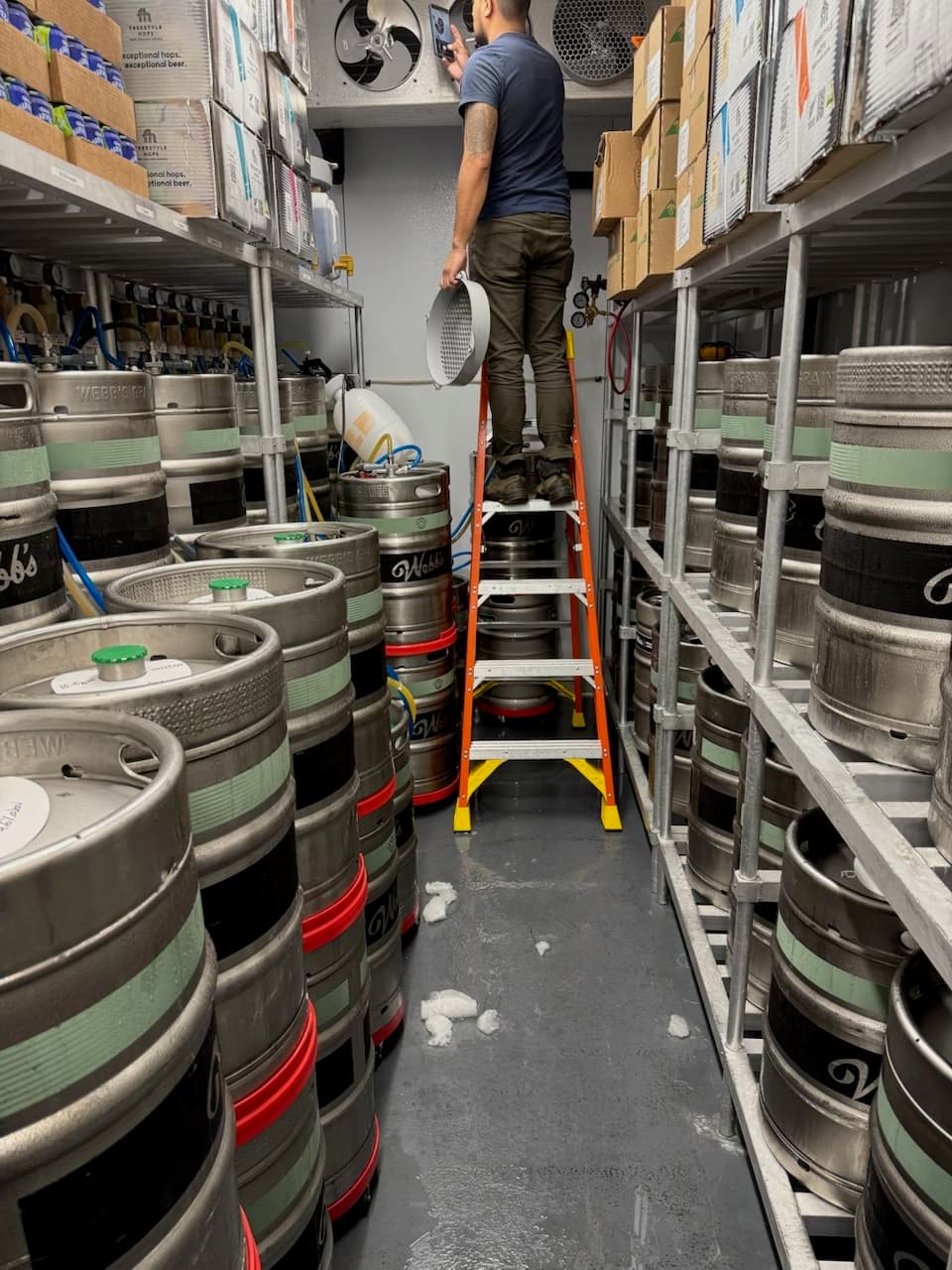
No other service matters as much in Chino as refrigeration. The city's food processing, cold storage, and distribution operations run walk-in coolers and freezers, blast cells, refrigerated docks, and process cooling that sit at the center of their business, and the operators answer to third-party audits and customer specifications that require continuous temperature records. When a refrigeration system drifts here, the consequence is not an uncomfortable room. It is held product, a corrective action report, and possibly a lost customer.
The physical conditions are hard on the equipment. Remote condensers on these buildings run in some of the hottest, dustiest air in the region, often on the same roof as dozens of HVAC units that add their own discharge heat. Evaporators inside face washdown chemicals and frequent door traffic, and defrost schedules set for a quiet winter cannot keep coils clear during a summer production peak. Door seals, strip curtains, and dock door closures matter as much as compressors, because every open door loads the system. We check all of it on each visit and log pressures, temperatures, and defrost performance so the quality team has data, not just a signature.
Restaurants at Chino Spectrum and along the Central Avenue corridor, grocers, and the medical offices with vaccine and medication refrigeration toward the Chino Hills border have the same needs at smaller scale. Our food manufacturing and cold storage sector page and the commercial refrigeration systems guide describe how we handle refrigeration from a single reach-in to a plant rack.
Chino's climate and what it does to this equipment
Chino's flat terrain and open surroundings make it hot, breezy, and dusty. Summer highs are intense, Santa Ana winds blow through with little obstruction, and remaining agricultural land and busy industrial sites contribute dust to the air. Dairy and agricultural operations also add ammonia and organic particulate that can foul coils and filters faster than in a typical commercial area, and regional smog and wildfire smoke add more. For food processing and cold storage, hot afternoons coincide with peak production, so refrigeration condensers must hold performance exactly when the load is greatest.
For the equipment background behind this page, read our walk-in cooler and freezer guide or the full Refrigeration: Walk-In & Reach-In Coolers/Freezers service page.
- Former dairy-region industrial areaFood processing, cold storage, manufacturing, and distribution buildings in the south and southeast, with large refrigeration and rooftop loads.
- Chino Spectrum and Ontario borderBig-box retail, restaurants, and entertainment with dense rooftop equipment and extended operating hours.
- Chino Airport and Merrill Avenue areaAviation-related users, light industrial tenants, and business space with wide-open exposure to wind.
- Downtown Chino and Chino Hills borderOlder storefronts, restaurants, medical offices, and community retail along the central corridors and at the city's northern edge.
- Evaporator/condenser coil cleaning and defrost checks
- TXV/EEV, superheat, subcool, and pressure readings logged
- Door seals, drains, heaters, and fan packages inspected
- DaVinci Portal: temps and pressures logged by asset over time
What a commercial refrigeration visit includes, and the problems we most often find
- Check current box temperature against setpoint and recent trend
- Inspect door seals, drains, and evaporator/condenser coils for buildup
- Take superheat, subcool, and pressure readings against manufacturer spec
- Address the root cause — not just a temporary recharge
- Log readings to the asset so drift is caught early next visit
- Door seals and hinges that no longer hold a tight close
- Evaporator coils iced over from a defrost cycle issue
- Condenser coils caked with grease or debris, especially near kitchen exhaust
- Slow refrigerant leaks that show up as gradual temperature drift, not sudden failure
Commercial Refrigeration in Chino: questions we get
Our Chino cold storage auditor wants documentation of refrigeration maintenance. What should that include?
Why does our walk-in freezer ice up every summer even though it was fine all winter?
Can you service equipment during business hours?
Do you handle health-department documentation?
Other services in Chino
Commercial Refrigeration nearby in Inland Empire (Riverside & San Bernardino Counties)
Commercial HVAC and refrigeration across Inland Empire (Riverside & San Bernardino Counties)