Commercial Refrigeration in Rancho Cucamonga, CA
Restaurants at Victoria Gardens and along Foothill Boulevard, plus production kitchens and food-related tenants in the industrial parks, rely on walk-ins and reach-ins that must hold temperature through long summers. Wind-blown debris can restrict remote condenser airflow quickly. We inspect condensers regularly, check door seals, defrost behavior, and evaporator fans, and track temperatures over time so a creeping problem is spotted before it threatens inventory.
A foothill city mixing Victoria Gardens retail, medical offices, Foothill Boulevard commercial strips, and large industrial parks that sit directly in the path of canyon wind.
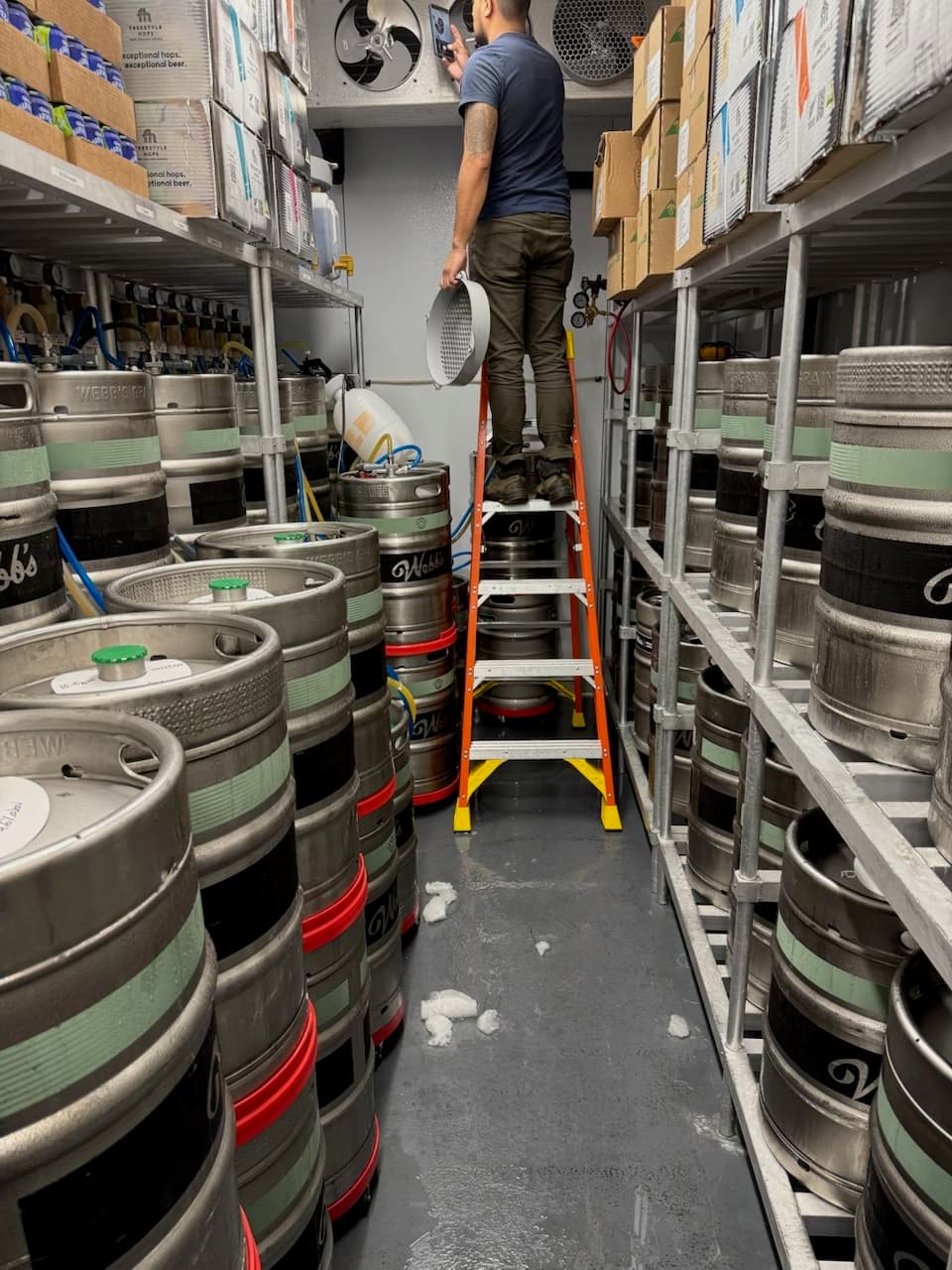
How commercial refrigeration work plays out in Rancho Cucamonga
Walk-in failures in Rancho Cucamonga tend to show up on Friday evenings at the restaurant row around Victoria Gardens and the Epicenter, when doors are opening constantly and the remote condenser on the roof has been fighting dust and heat all afternoon. The box may hold temperature at 2 p.m. and lose it by 7 p.m., and the reach-ins under the line follow because the kitchen itself is running hot. We treat the walk-in, its condenser, and the kitchen air balance as one system and check them in that order rather than assuming the compressor is at fault.
Food-related tenants in the Haven Avenue industrial parks, including commissary kitchens and small producers, have a different profile. Their boxes are larger, their condensers often sit on dusty roofs or in alcoves beside a loading area, and their product value is higher. Condenser fins packed with grit from the open ground along the 210 reduce heat rejection fast, and we see defrost settings that were never adjusted for the box's actual door traffic. A good service visit here produces a temperature and pressure log, a cleaned and verified condenser, and a note on gasket and strip-curtain condition that the operator can act on before an inspector does.
Grocery and specialty market tenants along Foothill and Base Line Road run display cases that depend on steady store air conditions. When the rooftop HVAC drifts, cases ice up or sweat and the refrigeration gets blamed. We look at both. Owners who want one record for all of it use the DaVinci Portal, which tracks each case and condenser as its own asset with its own readings.
Rancho Cucamonga's climate and what it does to this equipment
The city's position at the base of the San Gabriel Mountains defines its climate. Canyon winds through Cucamonga and Day Creek can arrive suddenly and hard, throwing dust, leaves, and debris across rooftops and into condenser coils. Summers are hot and dry, with the foothills adding to afternoon temperatures, and fall brings Santa Ana conditions and heightened fire risk in the surrounding hills. Wildfire smoke can load filters quickly. Winter nights are noticeably cooler than elsewhere in the Inland Empire, so equipment sees a wide range and economizers and heating components actually get used.
For the equipment background behind this page, read our walk-in cooler and freezer guide or the full Refrigeration: Walk-In & Reach-In Coolers/Freezers service page.
- Victoria Gardens and Day Creek areaOutdoor retail, dining, and entertainment with long operating hours and many tenant-controlled rooftop and split systems.
- Foothill Boulevard corridorRestaurants, medical offices, and older commercial strips along the historic route, many with mixed equipment generations.
- Industrial parks near Arrow Route and Haven AvenueManufacturing, food-related production, and distribution buildings with large rooftop packaged-unit arrays and refrigerated spaces.
- Epicenter and Etiwanda mixed-use areasEvent-oriented dining, newer offices, and developing commercial pads toward the city's northern and eastern edge.
- Evaporator/condenser coil cleaning and defrost checks
- TXV/EEV, superheat, subcool, and pressure readings logged
- Door seals, drains, heaters, and fan packages inspected
- DaVinci Portal: temps and pressures logged by asset over time
What a commercial refrigeration visit includes, and the problems we most often find
- Check current box temperature against setpoint and recent trend
- Inspect door seals, drains, and evaporator/condenser coils for buildup
- Take superheat, subcool, and pressure readings against manufacturer spec
- Address the root cause — not just a temporary recharge
- Log readings to the asset so drift is caught early next visit
- Door seals and hinges that no longer hold a tight close
- Evaporator coils iced over from a defrost cycle issue
- Condenser coils caked with grease or debris, especially near kitchen exhaust
- Slow refrigerant leaks that show up as gradual temperature drift, not sudden failure