Chiller & Central Plant Service in Rancho Cucamonga, CA
Larger medical buildings, bigger offices, and some industrial process cooling account for Rancho Cucamonga's chilled water. Cooling towers exposed to foothill winds and dust collect debris rapidly, and water treatment must be monitored closely. We evaluate chiller performance, tower fill and basin condition, and pump operation, and plan work in cooler months when equipment can be taken offline without compromising comfort or process loads.
A foothill city mixing Victoria Gardens retail, medical offices, Foothill Boulevard commercial strips, and large industrial parks that sit directly in the path of canyon wind.
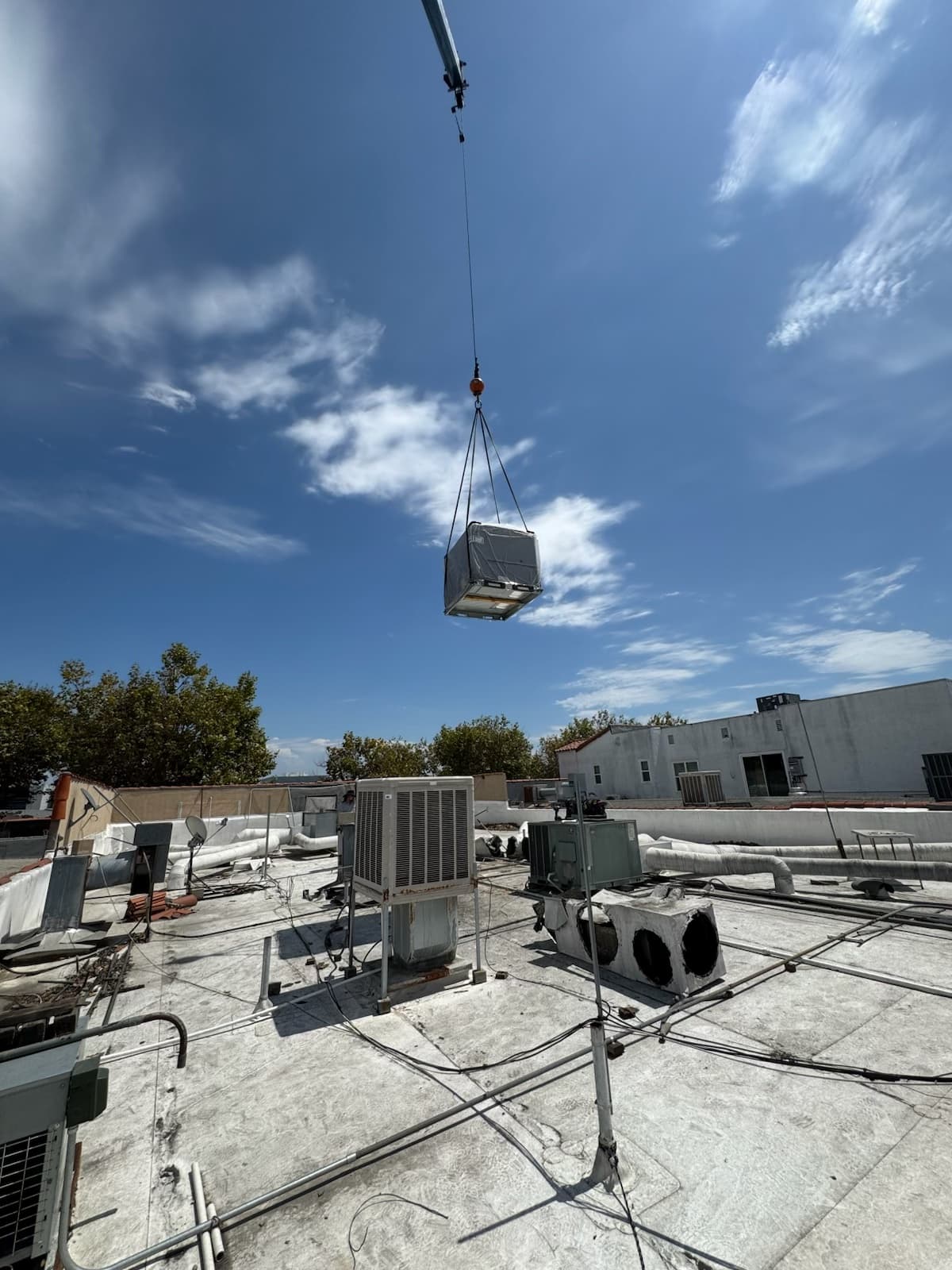
How chiller & central plant service work plays out in Rancho Cucamonga
Central plants in Rancho Cucamonga are not numerous, but the ones that exist matter: larger medical buildings, bigger corporate offices in the Haven Avenue business cluster, and manufacturing tenants with process cooling loops. A cooling tower on a roof near the foothills collects debris every time the wind comes through, basin water quality swings with evaporation on hot days, and fill scales quickly if treatment lapses. The condition of the tower usually determines the condition of the chiller, so a service visit starts there.
A representative project is a medical office building whose chiller is running at a high approach temperature in July. The tenants notice warm afternoons on upper floors, the plant runs at full load, and energy use is up. The cause is often fouled condenser tubes and a tower whose fill has been scaled for years, not a chiller that needs replacing. We measure approach, flow, and pressure drop, review the water treatment log, and distinguish between a cleaning problem and an equipment problem before anyone talks about capital.
For replacements and overhauls, the cooler foothill winters offer a real window. Between late fall and early spring, a plant can be taken down for tube cleaning, pump rebuilds, or a chiller swap without compromising occupant comfort or process loads, and we plan the work for that period whenever possible. The chillers and hydronic systems guide explains the measurements we use to make the repair-or-replace call.
Rancho Cucamonga's climate and what it does to this equipment
The city's position at the base of the San Gabriel Mountains defines its climate. Canyon winds through Cucamonga and Day Creek can arrive suddenly and hard, throwing dust, leaves, and debris across rooftops and into condenser coils. Summers are hot and dry, with the foothills adding to afternoon temperatures, and fall brings Santa Ana conditions and heightened fire risk in the surrounding hills. Wildfire smoke can load filters quickly. Winter nights are noticeably cooler than elsewhere in the Inland Empire, so equipment sees a wide range and economizers and heating components actually get used.
For the equipment background behind this page, read our chillers and hydronic systems guide or the full Chillers & Central Plant Service service page.
- Victoria Gardens and Day Creek areaOutdoor retail, dining, and entertainment with long operating hours and many tenant-controlled rooftop and split systems.
- Foothill Boulevard corridorRestaurants, medical offices, and older commercial strips along the historic route, many with mixed equipment generations.
- Industrial parks near Arrow Route and Haven AvenueManufacturing, food-related production, and distribution buildings with large rooftop packaged-unit arrays and refrigerated spaces.
- Epicenter and Etiwanda mixed-use areasEvent-oriented dining, newer offices, and developing commercial pads toward the city's northern and eastern edge.
- Chiller, tower, pump, and VFD service with logged operating data
- Trend-based diagnosis: approach, delta-T, amp draw, and pressures
- Replacement planning with rigging, power, and temporary cooling considered
- Water-treatment and Legionella-control coordination for water-cooled plants
What a chiller & central plant service visit includes, and the problems we most often find
- Review the plant: chillers, pumps, towers, controls, and recent operating history
- Take full operating readings and compare against design and prior visits
- Inspect and test safeties, strainers, VFDs, valves, and control sequences
- Report findings with prioritized repairs and a forward capital outlook
- Document the plant by asset in the DaVinci Portal for the next visit
- Falling delta-T pushing chillers to run more than the load requires
- Fouled condenser tubes or coils raising approach temperature and amp draw
- Neglected water treatment causing scale, corrosion, and biological growth
- Controls overridden to manual and never returned to automatic