Chiller & Central Plant Service in Chino, CA
Chilled water and process cooling in Chino serve food plants, manufacturing lines, and larger institutional buildings. Heat, dust, and dairy-region airborne contaminants stress cooling towers and condensers, and water treatment is critical for avoiding scale and microbial growth. We assess chiller operation, tower condition, pumps, and controls, and plan major work around production schedules so cooling is available when production lines need it.
A food processing, manufacturing, and former dairy-region industrial city with an airport-area business cluster, Chino Spectrum retail, and heavy refrigeration demand.
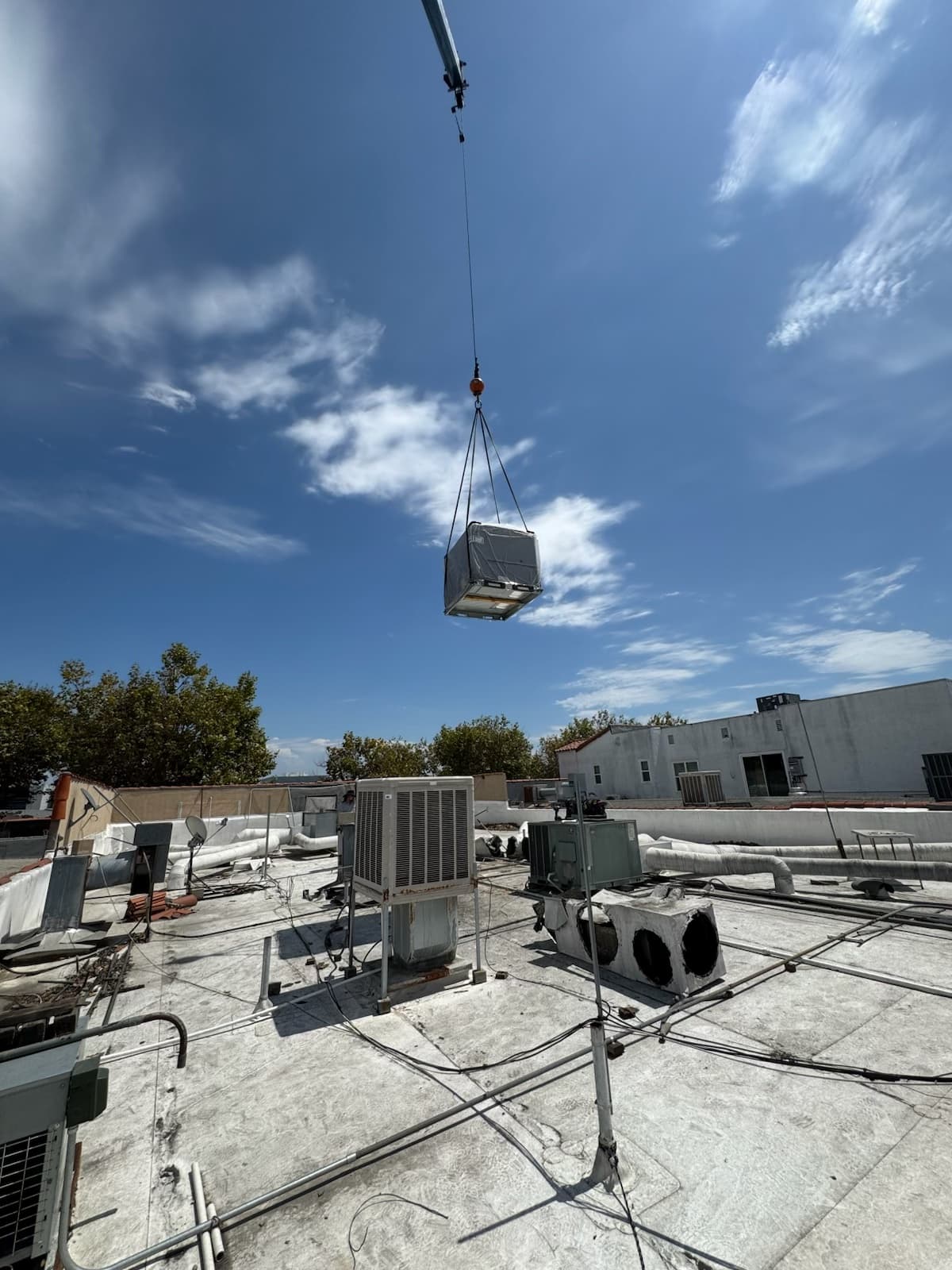
How chiller & central plant service work plays out in Chino
Central cooling plants in Chino serve process loads more often than comfort loads. Food processors chill product, glycol loops, and process water; manufacturers cool equipment and production spaces; a few larger institutional and medical buildings run conventional chilled water for comfort. The process plants have no tolerance for interruption, because a chiller outage stops a line or risks product, and they run their equipment hard through summer afternoons when ambient temperature is highest and production is often at its peak.
Cooling towers in this environment have a hard life. Dust and organic particulate from the surrounding area settle in basins and on fill, water hardness drives scale, and the warm, dusty conditions favor biological growth if treatment slips. We inspect fill, drift eliminators, basin condition, and makeup and bleed controls on every plant visit and verify treatment results with the water treatment provider. Air-cooled chillers and condensers face the same coil fouling as rooftop HVAC, with the same consequence: lost capacity exactly when the load is greatest.
Plant work is planned around production. We log chiller performance against design, check approach temperatures to quantify fouling, test pump operation and staging, and build repair or replacement plans that can be executed on scheduled down days or in phases that keep process cooling available. The chiller and hydronic systems guide explains the measurements we use, and larger plant replacements are handled as bid-level projects.
Chino's climate and what it does to this equipment
Chino's flat terrain and open surroundings make it hot, breezy, and dusty. Summer highs are intense, Santa Ana winds blow through with little obstruction, and remaining agricultural land and busy industrial sites contribute dust to the air. Dairy and agricultural operations also add ammonia and organic particulate that can foul coils and filters faster than in a typical commercial area, and regional smog and wildfire smoke add more. For food processing and cold storage, hot afternoons coincide with peak production, so refrigeration condensers must hold performance exactly when the load is greatest.
For the equipment background behind this page, read our chillers and hydronic systems guide or the full Chillers & Central Plant Service service page.
- Former dairy-region industrial areaFood processing, cold storage, manufacturing, and distribution buildings in the south and southeast, with large refrigeration and rooftop loads.
- Chino Spectrum and Ontario borderBig-box retail, restaurants, and entertainment with dense rooftop equipment and extended operating hours.
- Chino Airport and Merrill Avenue areaAviation-related users, light industrial tenants, and business space with wide-open exposure to wind.
- Downtown Chino and Chino Hills borderOlder storefronts, restaurants, medical offices, and community retail along the central corridors and at the city's northern edge.
- Chiller, tower, pump, and VFD service with logged operating data
- Trend-based diagnosis: approach, delta-T, amp draw, and pressures
- Replacement planning with rigging, power, and temporary cooling considered
- Water-treatment and Legionella-control coordination for water-cooled plants
What a chiller & central plant service visit includes, and the problems we most often find
- Review the plant: chillers, pumps, towers, controls, and recent operating history
- Take full operating readings and compare against design and prior visits
- Inspect and test safeties, strainers, VFDs, valves, and control sequences
- Report findings with prioritized repairs and a forward capital outlook
- Document the plant by asset in the DaVinci Portal for the next visit
- Falling delta-T pushing chillers to run more than the load requires
- Fouled condenser tubes or coils raising approach temperature and amp draw
- Neglected water treatment causing scale, corrosion, and biological growth
- Controls overridden to manual and never returned to automatic
Chiller & Central Plant Service in Chino: questions we get
Our Chino plant's process chiller is losing capacity each summer. Is it time to replace it?
Not necessarily. Capacity loss that returns each summer and improves in winter usually means heat rejection is the limit: a fouled condenser, a tower with scaled fill or weak airflow, or treatment that has slipped. Those are correctable. Capacity loss that persists through winter points at the chiller itself, such as refrigerant issues or compressor wear. We measure approach temperatures and performance against design to tell the difference before any replacement discussion.
How do you keep cooling running at our food facility during a chiller replacement?
By planning the sequence around your production calendar. Options include phasing the replacement so an existing machine stays online while the new one is installed and commissioned, temporary chiller rental for the changeover, and scheduling the final tie-in on a down day. We review your process cooling requirements, redundancy, and the plant's physical access before proposing a method, so the plan reflects how your facility actually runs.
Do you service both air-cooled and water-cooled chillers?
Yes. We work on air-cooled and water-cooled plants and the equipment around them: pumps, towers, VFDs, valves, and controls.
Can you help plan a chiller replacement?
Yes. Replacement planning covers load verification, refrigerant choice, rigging and power, temporary cooling, and phasing so the building stays comfortable.
Do you bid central plant projects?
Yes, as prime or mechanical subcontractor, in Orange County and beyond on a project-by-project basis.
Other services in Chino
Chiller & Central Plant Service nearby in Inland Empire (Riverside & San Bernardino Counties)
Commercial HVAC and refrigeration across Inland Empire (Riverside & San Bernardino Counties)