Chiller & Central Plant Service in San Bernardino, CA
The Hospitality Lane towers, hospitals, government facilities, and campus-style buildings in San Bernardino are where central plants are found. Many are older and rely on equipment from different eras. Hot, dusty air stresses towers, and fouled condenser tubes drive up energy use. We evaluate performance against design, review water treatment, check pumps and valves, and develop phased replacement strategies that keep critical areas cooled through construction.
The county seat, with downtown government buildings, hospitals, rail-served logistics, and aging mixed-use property stock that works hard through hot, smoggy summers.
How chiller & central plant service work plays out in San Bernardino
The central plants in San Bernardino sit in a handful of property types: the office towers and hotels in the Tri-City and Hospitality Lane area, the two hospital campuses and their support buildings, county and court facilities downtown, and the academic buildings at Cal State San Bernardino and San Bernardino Valley College. Many of them are older than their current operators' careers. It is common to find a chiller from one decade paired with a cooling tower rebuilt in another, pumps replaced one at a time as they failed, and a controls system that has been patched rather than re-sequenced. The plant still cools the building, but nobody is sure how much margin it has left on a 110-degree afternoon.
That is the question we answer first. We measure chiller performance against design, log condenser approach temperature to see how fouled the tubes are, inspect tower fill and basin for the scale and debris that hot, dusty air produces, check water treatment results, and verify that the sequence of operations actually matches how the plant is running. A fouled condenser or a tower that has lost airflow to a packed drift eliminator is often costing more energy than the owner realizes and leaving less capacity than the building needs.
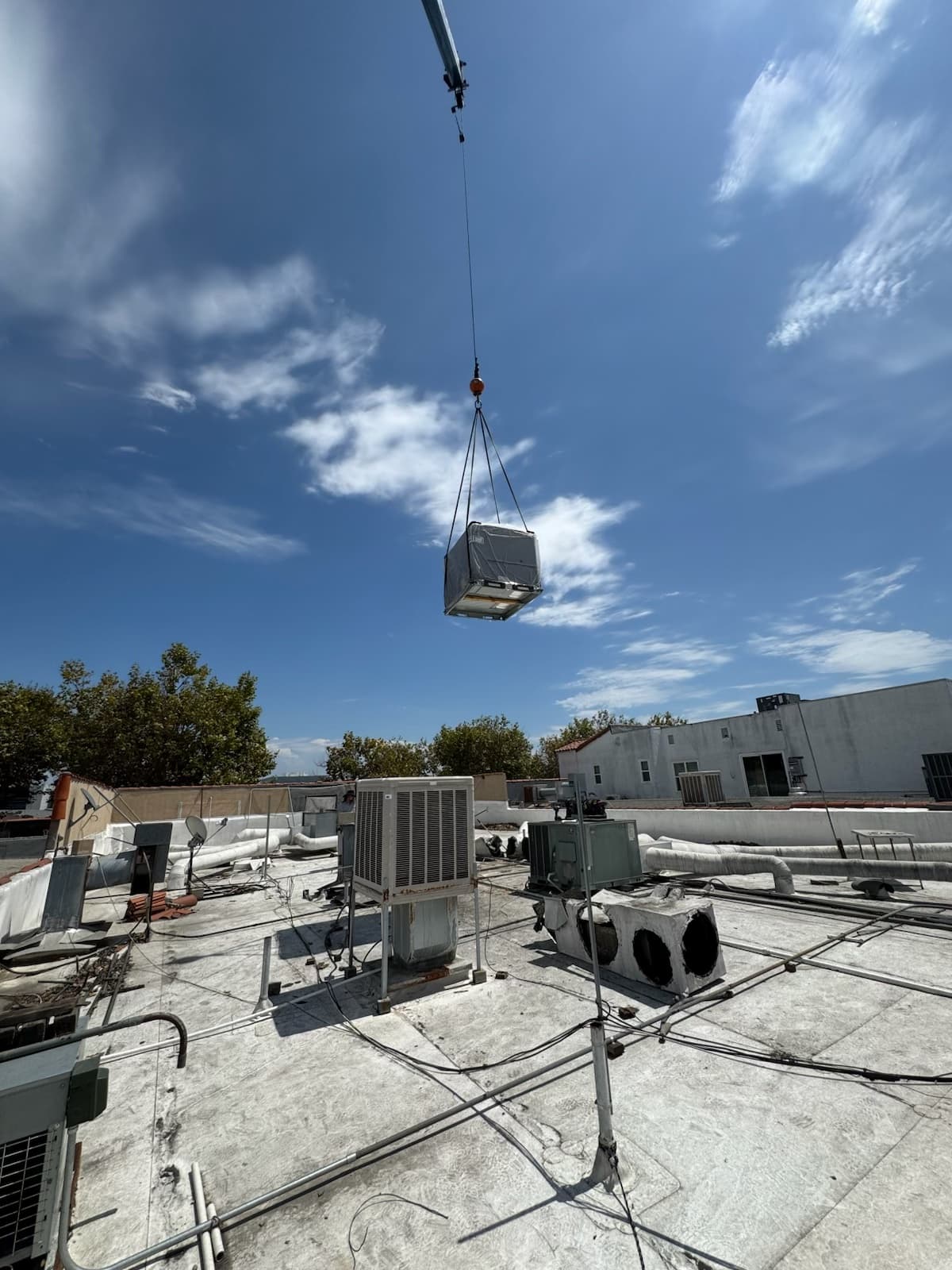
For public and hospital plants, replacement is rarely a single event. We develop phased plans that keep critical spaces, from courtrooms to operating suites, cooled while equipment is swapped, and we build the documentation for formal procurement. The chiller and hydronic guide and the hospital sector page describe that approach, and larger plant projects in the city are handled as bid-level work.
San Bernardino's climate and what it does to this equipment
San Bernardino sits at the foot of the mountains in a pocket where hot, polluted air often collects. Summer highs are among the highest in the region, and smog and fine particulate coat coils and clog filters faster than in coastal areas. Santa Ana winds in fall and winter bring heat, dust, and elevated fire danger, and wildfire smoke from nearby mountains is a recurring factor, sometimes closing windows of acceptable outdoor air for economizer use. Cold winter nights give heating real work to do. Equipment here is hit by every factor at once: high ambient, dirty air, and wide seasonal range.
For the equipment background behind this page, read our chillers and hydronic systems guide or the full Chillers & Central Plant Service service page.
- Downtown and government centerCounty and city offices, courts, and older commercial buildings with mixed equipment generations and strict reliability expectations.
- Hospitality Lane and Tri-City corporate areaHotels, offices, restaurants, and corporate buildings with large chilled and packaged systems and long cooling hours.
- Inland Center and Tippecanoe corridorMall-area retail, big-box tenants, and surrounding service businesses with dense rooftop equipment.
- Rail and airport logistics areaWarehouses, distribution buildings, and industrial space near the rail yards and San Bernardino International Airport.
- Chiller, tower, pump, and VFD service with logged operating data
- Trend-based diagnosis: approach, delta-T, amp draw, and pressures
- Replacement planning with rigging, power, and temporary cooling considered
- Water-treatment and Legionella-control coordination for water-cooled plants
What a chiller & central plant service visit includes, and the problems we most often find
- Review the plant: chillers, pumps, towers, controls, and recent operating history
- Take full operating readings and compare against design and prior visits
- Inspect and test safeties, strainers, VFDs, valves, and control sequences
- Report findings with prioritized repairs and a forward capital outlook
- Document the plant by asset in the DaVinci Portal for the next visit
- Falling delta-T pushing chillers to run more than the load requires
- Fouled condenser tubes or coils raising approach temperature and amp draw
- Neglected water treatment causing scale, corrosion, and biological growth
- Controls overridden to manual and never returned to automatic
Chiller & Central Plant Service in San Bernardino: questions we get
Our Hospitality Lane office tower's chiller plant struggles on the hottest afternoons. Is the chiller undersized?
How do you handle cooling tower water treatment in San Bernardino's hard water and dusty air?
Do you service both air-cooled and water-cooled chillers?
Can you help plan a chiller replacement?
Do you bid central plant projects?
Other services in San Bernardino
Chiller & Central Plant Service nearby in Inland Empire (Riverside & San Bernardino Counties)
Commercial HVAC and refrigeration across Inland Empire (Riverside & San Bernardino Counties)