Chiller & Central Plant Service in Temecula, CA
Chilled water systems in Temecula serve resorts, larger medical buildings, and a handful of institutional and office properties. With cool evenings and hot afternoons, load swings are large, and controls that stage equipment poorly waste energy or cause short cycling. We examine chiller staging, tower and condenser performance, and pump operation, and we plan overhauls in the shoulder seasons when cooling demand is lower.
A hospitality-driven valley city where wine-country restaurants, Old Town dining, a growing medical sector, and business parks all depend on dependable cooling in summer heat and wind.
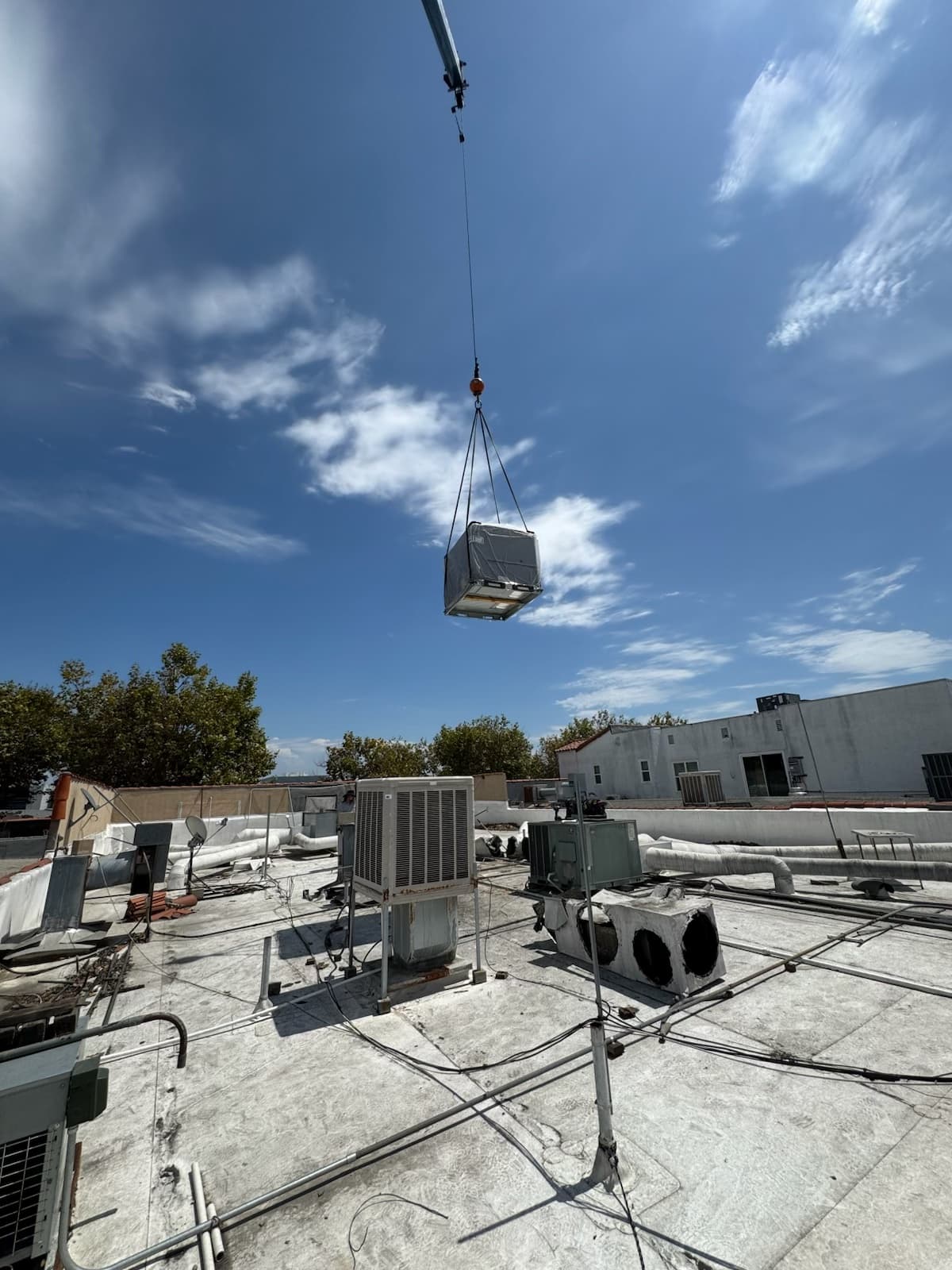
How chiller & central plant service work plays out in Temecula
Central plant work in Temecula clusters around three kinds of property: the hospital and the larger medical office buildings near it, the resort and casino-scale hospitality on the city's edges, and a handful of larger office and medical-device manufacturing buildings in the business parks along Diaz Road and the Winchester corridor. These are the buildings where a packaged rooftop unit was never the answer, and where cooling is served by chillers, cooling towers, pumps, and air handlers that have to be managed as a plant.
The valley's daily swing is the operating challenge. A chilled water plant that is loaded hard at four in the afternoon can be at a fraction of that load by nine in the evening when the marine air arrives, and plants that stage poorly will short cycle a chiller or run a tower fan flat out against a load that has disappeared. Dust and vineyard debris foul tower fill, and water treatment that was adequate in a milder climate falls behind in August. For manufacturing tenants, process loads add a steady baseline that does not follow the weather, which changes how the plant should be sequenced.
We evaluate the plant against its design: chiller approach temperatures, tower approach and fill condition, pump curves and balancing, and the controls sequences that decide what runs when. Overhauls and replacements are planned for the shoulder seasons, when a chiller can come offline without losing the building, and phased so a hospital or a resort never runs without redundancy. Readings and photos for every major component are kept in the DaVinci Portal. Larger plant projects here are typically handled as bid-level work; see bid projects and the chillers and hydronic systems guide.
Temecula's climate and what it does to this equipment
Temecula sits farther from the coast than most of Southern California's urban areas but still catches a marine layer that funnels through the Rainbow Gap, so evenings can cool noticeably after very hot days. The wide daily temperature swing is hard on equipment because it stresses controls, economizers, and refrigerant systems differently from a steady climate. Summer afternoons are hot and dry, with gusty winds that carry dust from vineyards and construction sites into coils and intakes. Wildfire smoke from inland hills and the surrounding region can load filters, and fall Santa Ana conditions add heat and debris at the end of the cooling season.
For the equipment background behind this page, read our chillers and hydronic systems guide or the full Chillers & Central Plant Service service page.
- Old Town TemeculaFront Street restaurants, boutiques, and event spaces in older buildings, usually with compact rooftop or split equipment and limited access.
- Wine country and Rancho California RoadTasting rooms, resorts, event venues, and restaurants with seasonal peaks and walk-in storage that supports food and beverage programs.
- Temecula Valley Hospital and medical districtClinics, imaging centers, and specialty offices near the hospital campus with strict temperature and air quality expectations.
- Winchester Road and Ynez corridor business parksRetail centers, offices, and light industrial space with multi-tenant rooftop systems along the main commercial arteries.
- Chiller, tower, pump, and VFD service with logged operating data
- Trend-based diagnosis: approach, delta-T, amp draw, and pressures
- Replacement planning with rigging, power, and temporary cooling considered
- Water-treatment and Legionella-control coordination for water-cooled plants
What a chiller & central plant service visit includes, and the problems we most often find
- Review the plant: chillers, pumps, towers, controls, and recent operating history
- Take full operating readings and compare against design and prior visits
- Inspect and test safeties, strainers, VFDs, valves, and control sequences
- Report findings with prioritized repairs and a forward capital outlook
- Document the plant by asset in the DaVinci Portal for the next visit
- Falling delta-T pushing chillers to run more than the load requires
- Fouled condenser tubes or coils raising approach temperature and amp draw
- Neglected water treatment causing scale, corrosion, and biological growth
- Controls overridden to manual and never returned to automatic
Chiller & Central Plant Service in Temecula: questions we get
Our medical office building's chiller runs fine in the afternoon but seems to cycle constantly in the evening. Is that normal for this climate?
Can a cooling tower overhaul be done without shutting down a resort during the season?
Do you service both air-cooled and water-cooled chillers?
Can you help plan a chiller replacement?
Do you bid central plant projects?
Other services in Temecula
Chiller & Central Plant Service nearby in Inland Empire (Riverside & San Bernardino Counties)
Commercial HVAC and refrigeration across Inland Empire (Riverside & San Bernardino Counties)