Chiller & Central Plant Service in Riverside, CA
Hospitals, government campuses, and larger office and institutional buildings rely on Riverside's central plants, and summer is when they are tested hardest. Cooling tower fill, basin water quality, condenser tube fouling, and pump performance all degrade under the long cooling season. We evaluate loading, approach temperatures, and controls sequences to find lost efficiency before it becomes a shutdown, and we plan equipment replacements in phases so critical spaces stay cooled.
A government, university, and healthcare center with historic downtown buildings, Magnolia Avenue retail, and a hot, dry summer that keeps rooftop equipment near its limits for months.
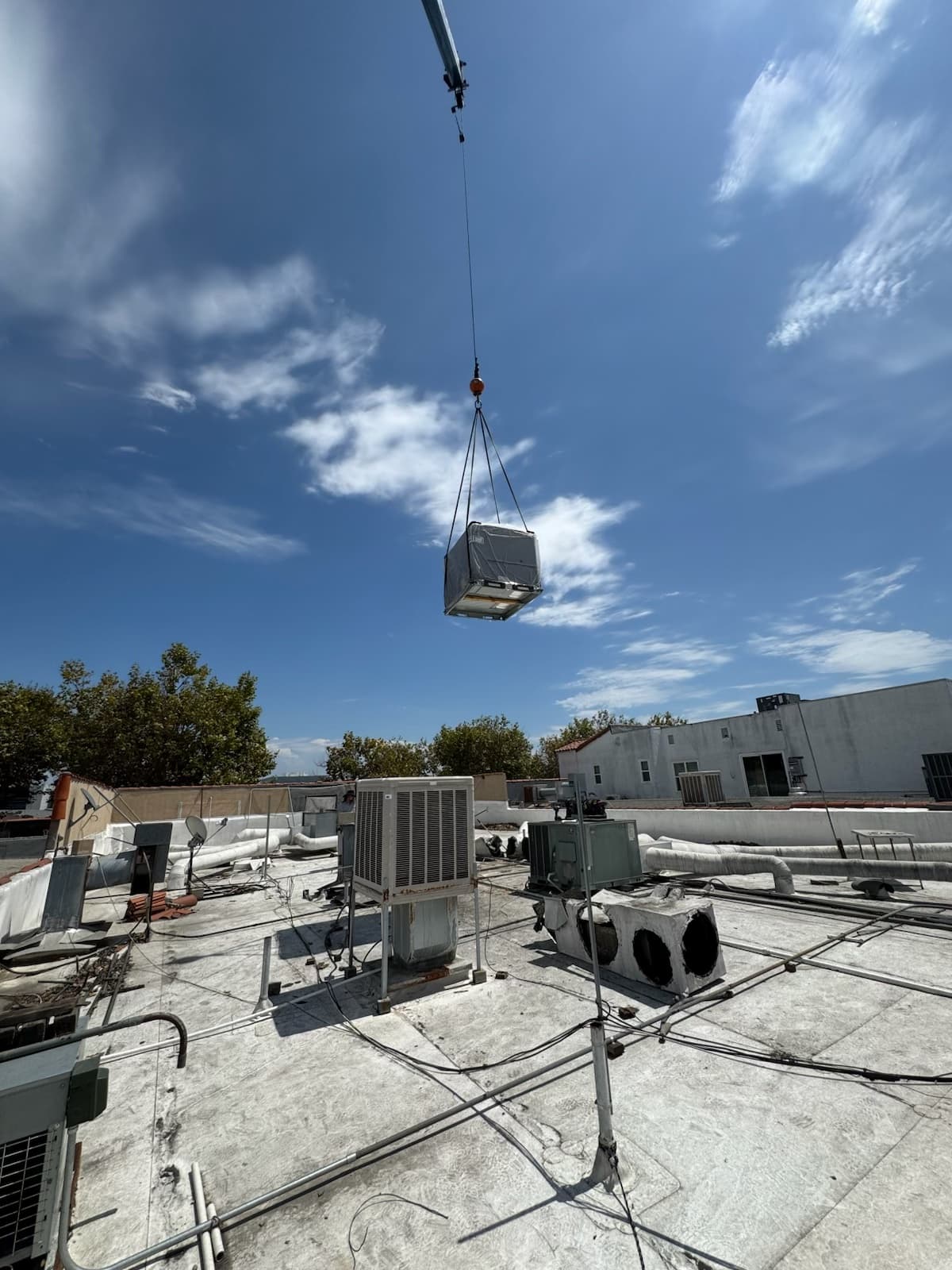
How chiller & central plant service work plays out in Riverside
Chilled water in Riverside belongs to the institutions. The hospitals, the county and city government campus downtown, UC Riverside and the other university campuses, and the larger office buildings near the 91 and Central Avenue run central plants that carry the whole facility through a cooling season that effectively runs from April into October. A chiller that loses a few percent of capacity each year through condenser fouling and tower scaling is tolerable in a mild climate. In Riverside, that loss shows up as a plant that cannot hold the building on the hottest week of the year, and that week is usually when the facility is full.
Cooling towers here work against hot, dry air that carries dust, citrus-area pollen, and in smoke season a layer of fine ash. Evaporative cooling is efficient in dry air, but the same dryness concentrates minerals in the basin faster, so water treatment and blowdown settings that were adequate near the coast fall behind. We look at approach temperatures on the tower and the condenser, compare them to design, and read the water chemistry, because the gap between those numbers tells us where capacity is being lost before anyone opens a chiller. Pumps, valves, and sequencing get the same attention; a central plant with two chillers that stage badly can run both at part load all summer and wear out twice as fast.
Projects in this category in Riverside are generally public or institutional, which means prevailing wage, certified payroll, and phasing that keeps critical spaces cooled while equipment is replaced. This is larger bid-level work that we mobilize from Orange County with a project team rather than a service truck. The chillers and hydronic systems guide and the hospitals and health systems page cover how we approach plant assessments and phased replacement.
Riverside's climate and what it does to this equipment
Riverside sits in a basin that traps heat. Summer afternoons routinely climb well past the point where a rooftop condenser is working near its design limit, and nights often fail to cool the building structure enough to give equipment a rest. Smog and fine particulate settle on coils faster than in coastal Orange County, citrus-area dust and pollen add to the load, and wildfire smoke events in the surrounding hills can clog filters in days. Santa Ana conditions in fall bring dry heat and debris. Equipment here needs coil cleaning cadence and refrigerant charge checks built around peak season, not the calendar average.
For the equipment background behind this page, read our chillers and hydronic systems guide or the full Chillers & Central Plant Service service page.
- Downtown and Mission Inn areaGovernment buildings, courts, restaurants, and older multi-story commercial properties where mixed equipment generations share one roof or mechanical room.
- UCR and University Avenue corridorCampus-adjacent dining, student-oriented retail, and research and instructional buildings with strict space-temperature expectations.
- Magnolia Avenue medical and retail corridorMedical office buildings, outpatient clinics, and strip retail running along one of the city's busiest commercial arteries.
- Hunter Park and Airport Industrial areasLight industrial, distribution, and manufacturing buildings near the 91 and 60 interchange and the municipal airport, many with rooftop packaged units and walk-in refrigeration.
- Chiller, tower, pump, and VFD service with logged operating data
- Trend-based diagnosis: approach, delta-T, amp draw, and pressures
- Replacement planning with rigging, power, and temporary cooling considered
- Water-treatment and Legionella-control coordination for water-cooled plants
What a chiller & central plant service visit includes, and the problems we most often find
- Review the plant: chillers, pumps, towers, controls, and recent operating history
- Take full operating readings and compare against design and prior visits
- Inspect and test safeties, strainers, VFDs, valves, and control sequences
- Report findings with prioritized repairs and a forward capital outlook
- Document the plant by asset in the DaVinci Portal for the next visit
- Falling delta-T pushing chillers to run more than the load requires
- Fouled condenser tubes or coils raising approach temperature and amp draw
- Neglected water treatment causing scale, corrosion, and biological growth
- Controls overridden to manual and never returned to automatic
Chiller & Central Plant Service in Riverside: questions we get
Our Riverside campus plant has lost capacity every summer for three years. Is it the chiller or the tower?
Can a central plant replacement on a public campus in Riverside be done without shutting down cooling?
Do you service both air-cooled and water-cooled chillers?
Can you help plan a chiller replacement?
Do you bid central plant projects?
Other services in Riverside
Chiller & Central Plant Service nearby in Inland Empire (Riverside & San Bernardino Counties)
Commercial HVAC and refrigeration across Inland Empire (Riverside & San Bernardino Counties)