Commercial Refrigeration in Torrance, CA
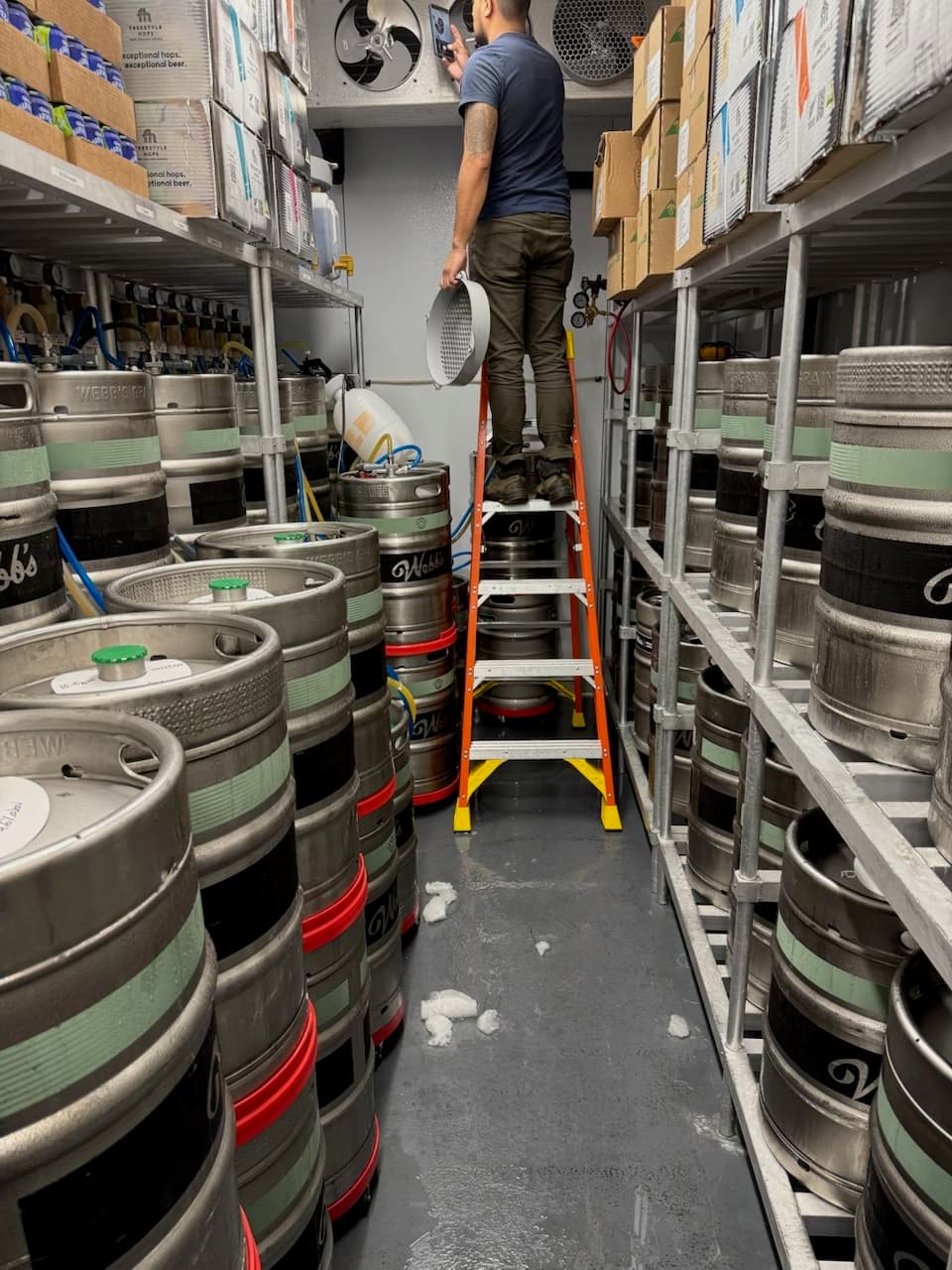
Torrance's mix of grocery, restaurant, and specialty food tenants around Del Amo and Hawthorne creates steady demand for walk-in, reach-in, and display refrigeration work. Common issues include condenser coils blocked by rooftop or ground-level debris, evaporator fan failures, and door infiltration that overloads defrost cycles. Because product loss is the real cost, diagnosis focuses on why a box drifts and what keeps it stable, not just a quick recharge that leaves the cause in place.
South Bay industrial parks tied to aerospace and automotive work, heavy retail along Hawthorne Boulevard and Del Amo, and a significant medical presence.
How commercial refrigeration work plays out in Torrance
The failure usually shows up at opening. A manager at a grocery store along Hawthorne Boulevard or a restaurant in the Del Amo area walks in, checks the walk-in thermometer, and finds it several degrees high after a night of running nonstop. Torrance has a dense cluster of food businesses, including a notable number of Japanese and Korean markets and restaurants reflecting the city's long ties to Japanese companies, and these operations run walk-ins, reach-ins, sushi cases, and display cases hard, often in back rooms with little ventilation.
The South Bay climate is mild, so a cooler that struggles here is usually suffering from something other than ambient heat. Condensing units mounted on the roof collect a fine mix of marine moisture and industrial particulate that mats coil fins. Ground-level condensers behind strip centers pull in dust from parking lots and alley traffic. Inside, door gaskets fail, strip curtains disappear, and evaporator fans run on bearings that should have been replaced two summers ago. Each of these makes the system run longer, ice up more, and fail during the first warm offshore-wind stretch of the fall.
A good outcome for a Torrance operator is not just a cold box tonight. It is knowing why it drifted, having the defrost schedule and superheat set correctly for the actual load, and having a record of the condenser cleaning and gasket replacement dates so health inspection questions have answers. For multi-unit grocery operators in the area, refrigeration service tied to a maintenance program is how product loss stops being a recurring line item. The walk-in guide covers the mechanics.
Torrance's climate and what it does to this equipment
Torrance sits in the South Bay, close enough to the ocean that the marine layer shapes much of the year, though it is not directly on the surf the way beach cities are. Mornings are often gray and cool, afternoons clear, and summer heat is milder than in the valleys or inland basin, with occasional spikes when offshore winds push temperatures up. Equipment runs fewer extreme hours but gets cooling duty across a long season, and moist, slightly salty air plus industrial dust affects coils and electrical components in outdoor installations.
For the equipment background behind this page, read our walk-in cooler and freezer guide or the full Refrigeration: Walk-In & Reach-In Coolers/Freezers service page.
- Del Amo and the Torrance Boulevard retail coreLarge retail centers, restaurants, and big-box tenants with shared rooftop equipment and grocery-style refrigeration needs.
- Industrial parks along Crenshaw and WesternAerospace, automotive, and light industrial buildings with mixed office and shop areas, where process or equipment-room cooling often matters.
- Hawthorne Boulevard commercial corridorA long stretch of strip retail, restaurants, banks, and service tenants, many with older rooftop units and shared electrical service.
- Medical area and Old TorranceHospital and medical office buildings along with the older downtown core, where smaller tenant spaces and clinical comfort needs sit side by side.
- Evaporator/condenser coil cleaning and defrost checks
- TXV/EEV, superheat, subcool, and pressure readings logged
- Door seals, drains, heaters, and fan packages inspected
- DaVinci Portal: temps and pressures logged by asset over time
What a commercial refrigeration visit includes, and the problems we most often find
- Check current box temperature against setpoint and recent trend
- Inspect door seals, drains, and evaporator/condenser coils for buildup
- Take superheat, subcool, and pressure readings against manufacturer spec
- Address the root cause — not just a temporary recharge
- Log readings to the asset so drift is caught early next visit
- Door seals and hinges that no longer hold a tight close
- Evaporator coils iced over from a defrost cycle issue
- Condenser coils caked with grease or debris, especially near kitchen exhaust
- Slow refrigerant leaks that show up as gradual temperature drift, not sudden failure