Commercial Refrigeration in Pasadena, CA
Old Pasadena restaurants and Colorado Boulevard hospitality venues run walk-in coolers in spaces that were never planned for them, sometimes in basements, alleys, or converted storage rooms. Hot summer afternoons push condensers hard, and cramped locations restrict airflow. Typical failures include dirty condensers, weak evaporator fans, and door-seal infiltration. Diagnosis addresses room location and ventilation along with the equipment, so a cooler survives a long Pasadena summer without constant attention.
Older historic buildings, a restaurant-dense Old Pasadena, and science and institutional campuses near Caltech, sitting at the foot of the San Gabriel Mountains.
How commercial refrigeration work plays out in Pasadena
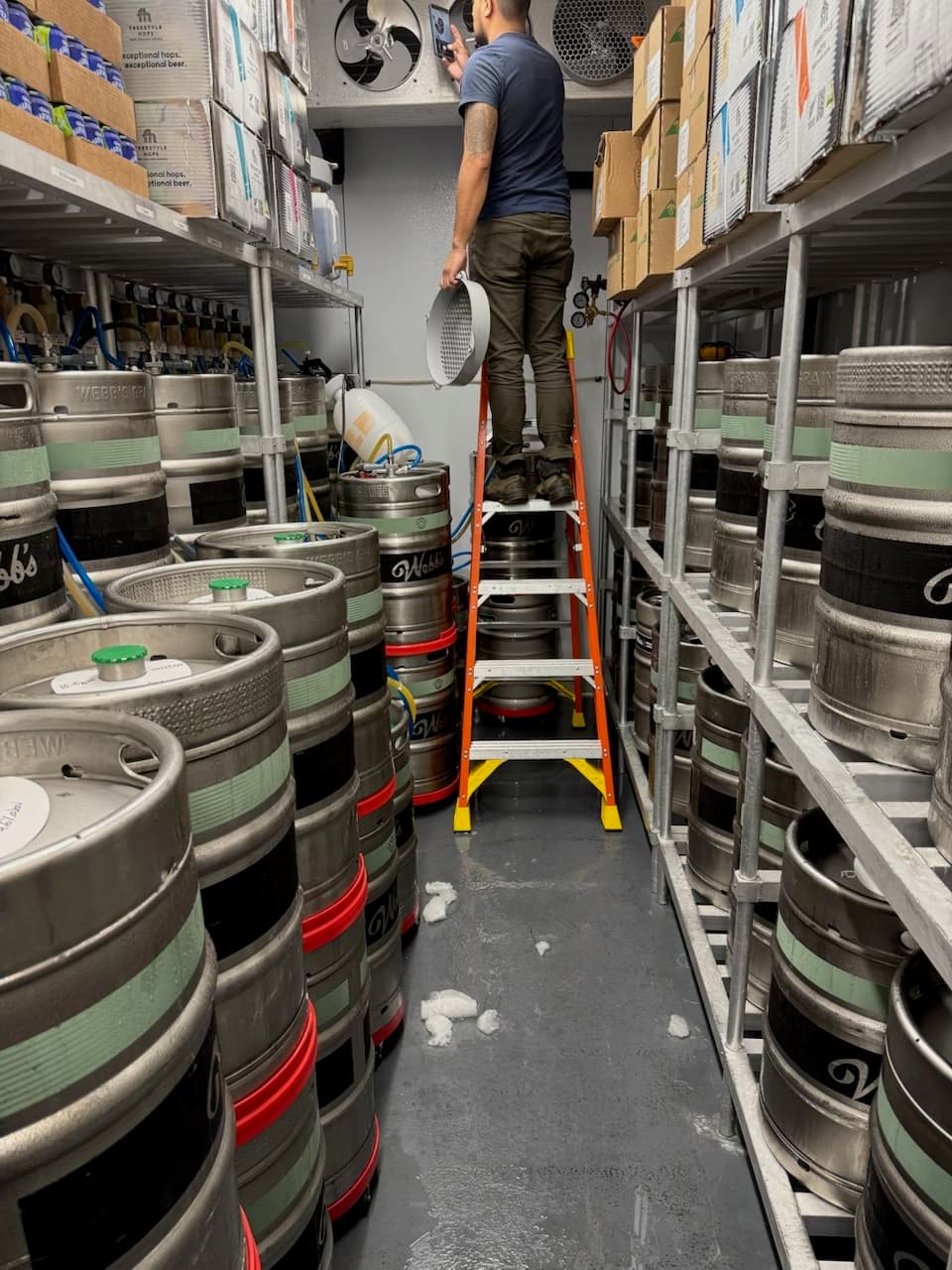
Walk-in coolers in Pasadena live in places that fight them. Old Pasadena restaurants put them in basements with no mechanical ventilation, in alley-side lean-tos behind brick buildings, or in converted storage rooms where the condensing unit sits a few feet away and reheats the air it just cooled. Hotels along Colorado Boulevard and near the Convention Center have banquet kitchens with walk-ins and reach-ins that see enormous swings in load between an ordinary Tuesday and a parade-week gala. Grocers and specialty markets along Lake Avenue, Foothill Boulevard, and in the eastern neighborhoods run display cases through summers that stay hot into the evening.
The heat is the difference from coastal cities. When the outdoor temperature sits above 95 for days, an air-cooled condenser in a cramped alcove loses capacity fast, head pressure climbs, compressors run hot, and the box slowly loses ground. Add a door gasket that leaks, a strip curtain that was removed because it annoyed the line cooks, and a condenser coil furred with foothill dust and kitchen grease, and the system never catches up at night. Ash from nearby wildfires has in some years coated outdoor coils in a single afternoon.
Davinci Mechanical's refrigeration work in Pasadena therefore looks at the room as much as the box: where the condenser rejects heat, whether that space can ventilate, whether a remote condenser on the roof or a water-cooled option makes sense in a basement installation. Superheat, subcooling, defrost timing, and door infiltration get measured and recorded. For a restaurant operator in Old Pasadena, the goal is a walk-in that holds temperature through the longest August heat wave and a documented record for the health inspector. The walk-in guide explains the fundamentals in depth.
Pasadena's climate and what it does to this equipment
Pasadena sits inland at the foot of the San Gabriel Mountains, so it runs considerably hotter than the coast, with long summers, frequent days well into the 90s and sometimes above 100, and warm evenings that give equipment little recovery time. Santa Ana wind events in fall bring dry heat and dust, and nearby wildfire smoke and ash can load filters and coils quickly. Foothill conditions also mean leaves and debris in condensers, and older buildings with limited airflow show weaknesses early in every heat wave.
For the equipment background behind this page, read our walk-in cooler and freezer guide or the full Refrigeration: Walk-In & Reach-In Coolers/Freezers service page.
- Old PasadenaHistoric brick buildings with restaurants and retail, tight alleys, retrofitted mechanical systems, and roof access that varies from easy to awkward.
- Colorado Boulevard and the Playhouse DistrictHotels, entertainment venues, restaurants, and offices along the main boulevard, with heavy demand during parade and event periods.
- Caltech area and science or institutional campusesResearch buildings, labs, and institutional facilities with demanding environmental control and documentation expectations.
- Civic Center and the Huntington Hospital areaCity buildings, medical offices, and hospital-adjacent properties where clinical comfort, filtration, and scheduling are central.
- Evaporator/condenser coil cleaning and defrost checks
- TXV/EEV, superheat, subcool, and pressure readings logged
- Door seals, drains, heaters, and fan packages inspected
- DaVinci Portal: temps and pressures logged by asset over time
What a commercial refrigeration visit includes, and the problems we most often find
- Check current box temperature against setpoint and recent trend
- Inspect door seals, drains, and evaporator/condenser coils for buildup
- Take superheat, subcool, and pressure readings against manufacturer spec
- Address the root cause — not just a temporary recharge
- Log readings to the asset so drift is caught early next visit
- Door seals and hinges that no longer hold a tight close
- Evaporator coils iced over from a defrost cycle issue
- Condenser coils caked with grease or debris, especially near kitchen exhaust
- Slow refrigerant leaks that show up as gradual temperature drift, not sudden failure
Commercial Refrigeration in Pasadena: questions we get
Our walk-in condenser is in a basement in Old Pasadena with no outside air. Is a remote condenser on the roof realistic in a historic building?
Often yes, and it is usually the right answer. Refrigerant lines are small and can be routed through existing chases or along a rear wall, and a rooftop or alley-side condenser placed out of street view typically avoids design review issues. We survey the routing, check line length against the compressor's limits, and confirm roof placement with the landlord before quoting. The alternative, a water-cooled condenser, is sometimes viable but adds water and treatment costs.
Our hotel's banquet kitchen walk-ins struggle during event weeks in Pasadena. Is that a sizing problem?
Usually it is a load-management problem layered on deferred maintenance. Event weeks mean doors open constantly and warm product loaded in bulk, which any walk-in handles poorly if the condenser is dirty or the defrost schedule is wrong. We service the equipment ahead of the event calendar, verify capacity under real conditions, and suggest operational steps such as pre-chilling product and staging deliveries. If the box is genuinely undersized, the data will show that too.
Can you service equipment during business hours?
We can work around service windows for kitchens and retail floors, including early-morning or after-hours visits when product safety is time-sensitive.
Do you handle health-department documentation?
Yes — temperature and pressure readings are logged to the asset in the Portal, so you have a record ready for inspection.