Ice Machine Service in Pasadena, CA
Pasadena's restaurants, hotels, and event venues depend on dependable ice, especially in warm months and during big event periods along Colorado Boulevard. Hospitals and clinics near Huntington add stricter sanitation expectations. Scale buildup, bin contamination, and condensers loaded with dust or kitchen grease are the common failures. Service combines cleaning, filtration checks, and condenser maintenance, with records that satisfy inspectors and give managers a clear schedule. Hospitality managers during parade and bowl-game weeks have no tolerance for a machine that runs dry.
Older historic buildings, a restaurant-dense Old Pasadena, and science and institutional campuses near Caltech, sitting at the foot of the San Gabriel Mountains.
How ice machine service work plays out in Pasadena
Pasadena's event calendar is what makes ice a serious subject here. Hotels along Colorado Boulevard and near the Convention Center, restaurants in Old Pasadena and the Playhouse District, catering operations, and venues around the Rose Bowl all plan around New Year's week, the bowl game, and a steady schedule of conferences and weddings. An ice machine that fails on an ordinary Wednesday is an inconvenience. One that fails on December 30th is a crisis, and every service company in the region is busy.
Mechanically, Pasadena machines face hot kitchens, hot outdoor air if remote condensers are used, and water that carries enough mineral content for scale to build steadily. Pasadena Water and Power supplies a blend of local groundwater and imported water, and hardness varies by season and source, so descaling intervals should be based on what the machine shows rather than a generic schedule. Dust from Santa Ana wind events and ash from foothill fires load condensers quickly in fall. In the medical buildings around Huntington Hospital, sanitation documentation matters as much as output, and machines in patient-care areas follow stricter protocols.
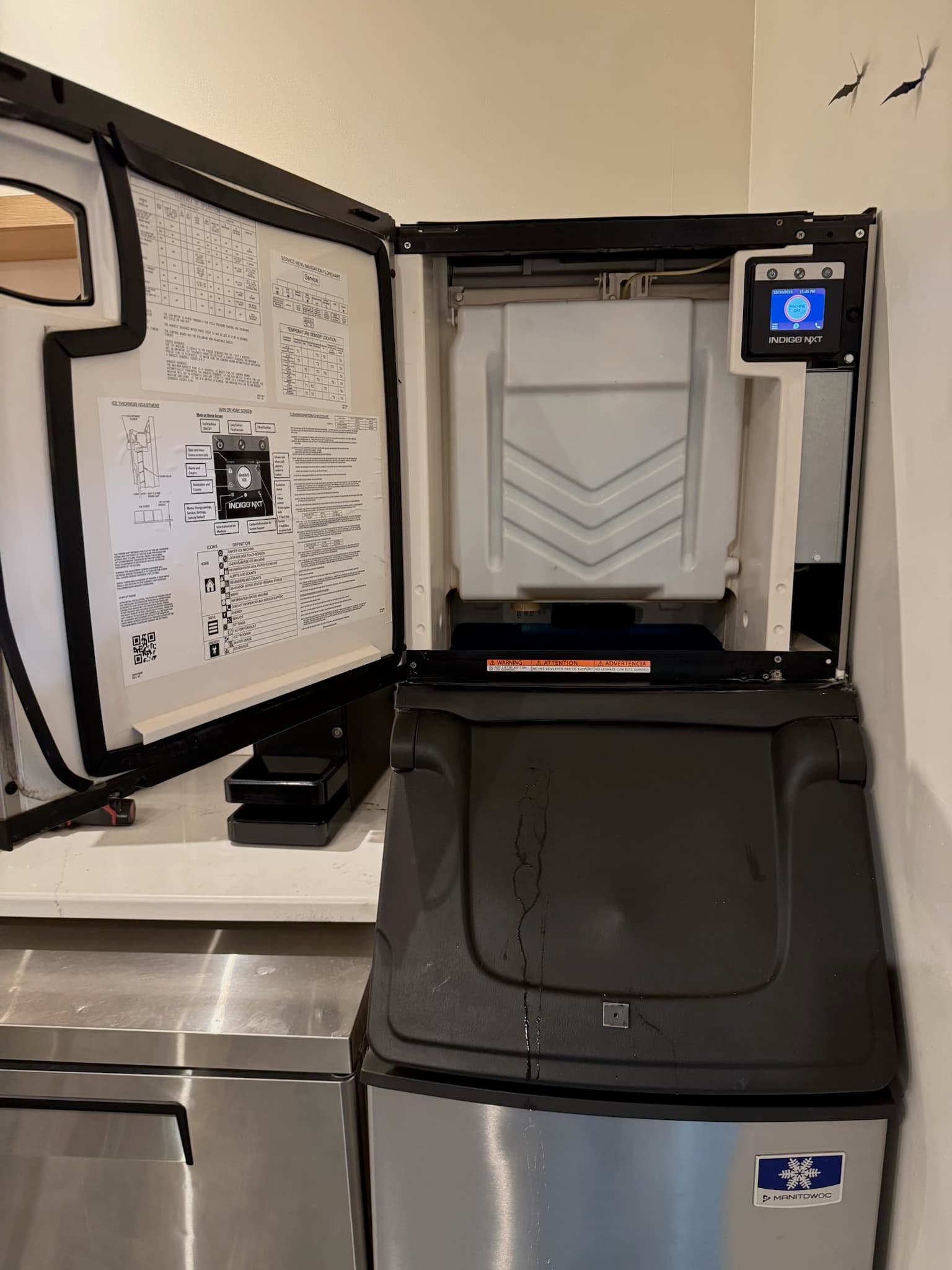
Davinci Mechanical's ice machine service in Pasadena is scheduled deliberately: a full cleaning, sanitizing, descaling, condenser cleaning, and water filter check in the fall before the holiday and event season, with a second cycle in late spring before summer heat. Each visit is logged in the DaVinci Portal with photos, so a hotel's food and beverage director can show an inspector or a corporate auditor exactly when and how each machine was serviced. The ice machine guide explains why intervals differ by site.
Pasadena's climate and what it does to this equipment
Pasadena sits inland at the foot of the San Gabriel Mountains, so it runs considerably hotter than the coast, with long summers, frequent days well into the 90s and sometimes above 100, and warm evenings that give equipment little recovery time. Santa Ana wind events in fall bring dry heat and dust, and nearby wildfire smoke and ash can load filters and coils quickly. Foothill conditions also mean leaves and debris in condensers, and older buildings with limited airflow show weaknesses early in every heat wave.
For the equipment background behind this page, read our commercial ice machine guide or the full Ice Machines — Service & Sanitation service page.
- Old PasadenaHistoric brick buildings with restaurants and retail, tight alleys, retrofitted mechanical systems, and roof access that varies from easy to awkward.
- Colorado Boulevard and the Playhouse DistrictHotels, entertainment venues, restaurants, and offices along the main boulevard, with heavy demand during parade and event periods.
- Caltech area and science or institutional campusesResearch buildings, labs, and institutional facilities with demanding environmental control and documentation expectations.
- Civic Center and the Huntington Hospital areaCity buildings, medical offices, and hospital-adjacent properties where clinical comfort, filtration, and scheduling are central.
- Scale removal, deep sanitation, and filter change-out programs
- Bin sensors, harvest cycles, pumps, and valves checked
- OEM-spec readings taken against manufacturer PM intervals
- DaVinci Portal: photo-logged cleanings and reminder scheduling
What a ice machine service visit includes, and the problems we most often find
- Check ice quality, production rate, and bin sensor operation
- Full descale of water lines and evaporator plate
- Sanitize all food-contact surfaces per manufacturer spec
- Inspect water filtration and replace if due
- Photo-document the cleaning for your compliance records
- Scale buildup from hard water slowing production and clouding ice
- Bin sensors misreading and causing over- or under-production
- Water filters overdue for change, affecting both taste and machine health
- Visible slime or mold in the bin — the most common health-inspection flag