Ice Machine Service in Torrance, CA
Restaurants along Hawthorne Boulevard, hotels near the freeway corridors, and medical facilities in Torrance all depend on clean ice. Scale from local water, slime in the bin, and condensers clogged by kitchen grease are the usual troubles. Service covers sanitation, filter and water-quality checks, and condenser cleaning, with documentation that satisfies health inspectors and supports a regular schedule. Machines in tight back-of-house spaces get special attention to airflow and clearances.
South Bay industrial parks tied to aerospace and automotive work, heavy retail along Hawthorne Boulevard and Del Amo, and a significant medical presence.
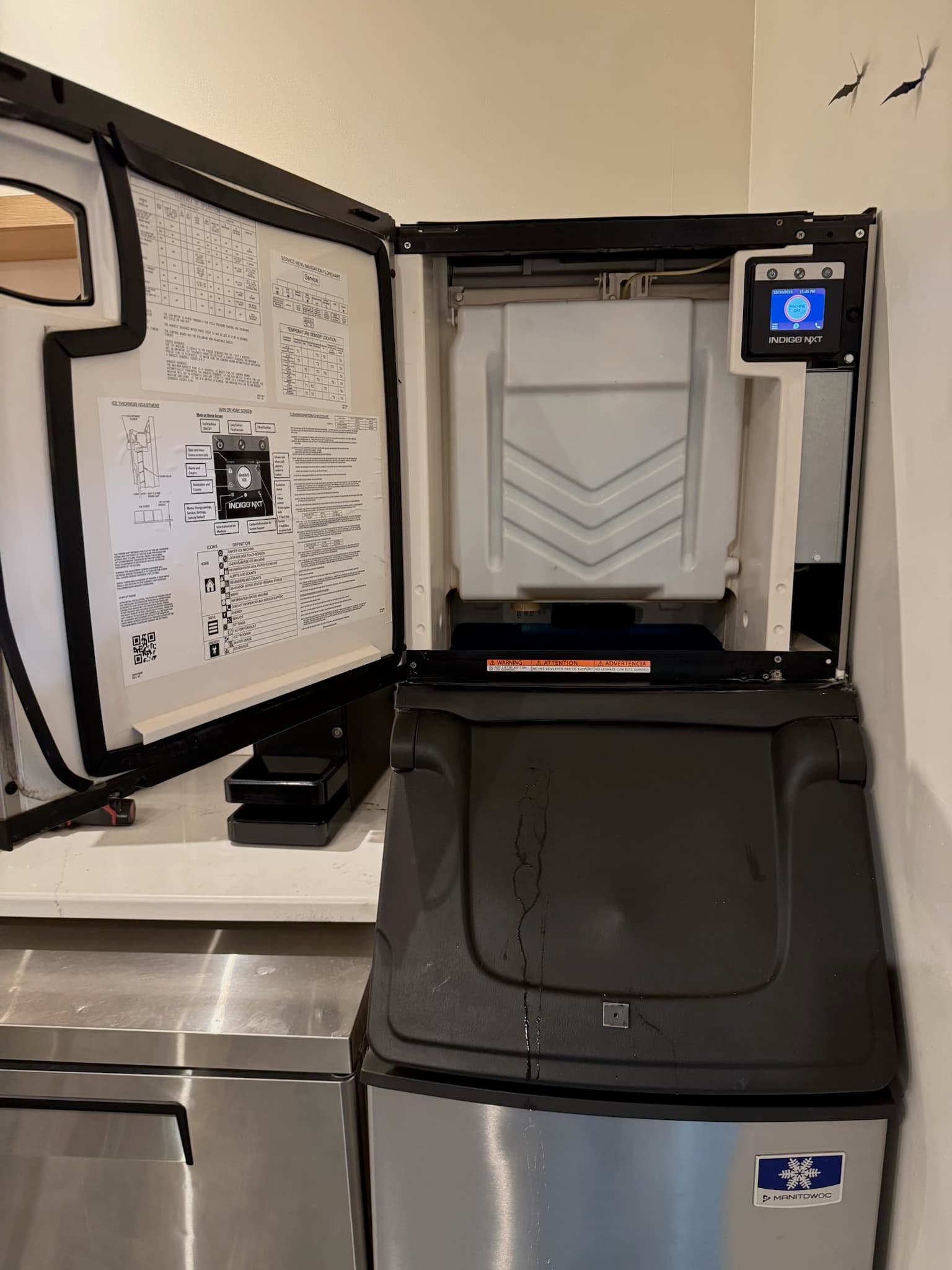
How ice machine service work plays out in Torrance
Torrance water is a blend of imported and groundwater sources, and it carries enough hardness that ice machines scale faster than operators expect. That shows up as thin, cloudy cubes, long harvest cycles, and eventually a machine that freezes up and stops. Restaurants along Hawthorne Boulevard and Pacific Coast Highway, hotels near the 405 and 110 corridors, and the cafeterias and nourishment stations in the medical buildings near Lomita Boulevard all depend on machines that often sit in warm, cramped back-of-house spaces.
The second Torrance-specific problem is air. Many machines are air-cooled and sit next to a fryer line or inside a closet with no makeup air, and in a restaurant the condenser fins load with aerosolized grease that dust then sticks to. In the medical settings, the issue is different: the machine may be fine mechanically but has not been sanitized on a schedule that would satisfy an infection-control review. Both cases call for the same discipline: descale, sanitize, clean the condenser, verify water filtration, check the harvest cycle, and write down what was done and when.
For a Torrance operator the deliverable is a machine that makes its rated output through the summer and a record in the DaVinci Portal that shows the health inspector the sanitation history without hunting through paper. Ice machine service is often folded into a quarterly maintenance plan for restaurants here because kitchens that run six or seven days a week cannot afford the downtime a seized machine causes. The ice machine guide explains the cleaning intervals and why they vary by water quality and kitchen environment.
Torrance's climate and what it does to this equipment
Torrance sits in the South Bay, close enough to the ocean that the marine layer shapes much of the year, though it is not directly on the surf the way beach cities are. Mornings are often gray and cool, afternoons clear, and summer heat is milder than in the valleys or inland basin, with occasional spikes when offshore winds push temperatures up. Equipment runs fewer extreme hours but gets cooling duty across a long season, and moist, slightly salty air plus industrial dust affects coils and electrical components in outdoor installations.
For the equipment background behind this page, read our commercial ice machine guide or the full Ice Machines — Service & Sanitation service page.
- Del Amo and the Torrance Boulevard retail coreLarge retail centers, restaurants, and big-box tenants with shared rooftop equipment and grocery-style refrigeration needs.
- Industrial parks along Crenshaw and WesternAerospace, automotive, and light industrial buildings with mixed office and shop areas, where process or equipment-room cooling often matters.
- Hawthorne Boulevard commercial corridorA long stretch of strip retail, restaurants, banks, and service tenants, many with older rooftop units and shared electrical service.
- Medical area and Old TorranceHospital and medical office buildings along with the older downtown core, where smaller tenant spaces and clinical comfort needs sit side by side.
- Scale removal, deep sanitation, and filter change-out programs
- Bin sensors, harvest cycles, pumps, and valves checked
- OEM-spec readings taken against manufacturer PM intervals
- DaVinci Portal: photo-logged cleanings and reminder scheduling
What a ice machine service visit includes, and the problems we most often find
- Check ice quality, production rate, and bin sensor operation
- Full descale of water lines and evaporator plate
- Sanitize all food-contact surfaces per manufacturer spec
- Inspect water filtration and replace if due
- Photo-document the cleaning for your compliance records
- Scale buildup from hard water slowing production and clouding ice
- Bin sensors misreading and causing over- or under-production
- Water filters overdue for change, affecting both taste and machine health
- Visible slime or mold in the bin — the most common health-inspection flag