Building Controls & Automation in Torrance, CA
Torrance offices, industrial parks, and retail centers often run controls that were installed for earlier tenants and never retuned. Verifying thermostat programming, sensor accuracy, and economizer operation is a practical first step, especially in a mild climate where free cooling can be used for many hours of the year. When economizers fail closed, owners pay for mechanical cooling that was not needed. Clear documentation of settings keeps those fixes in place.
South Bay industrial parks tied to aerospace and automotive work, heavy retail along Hawthorne Boulevard and Del Amo, and a significant medical presence.
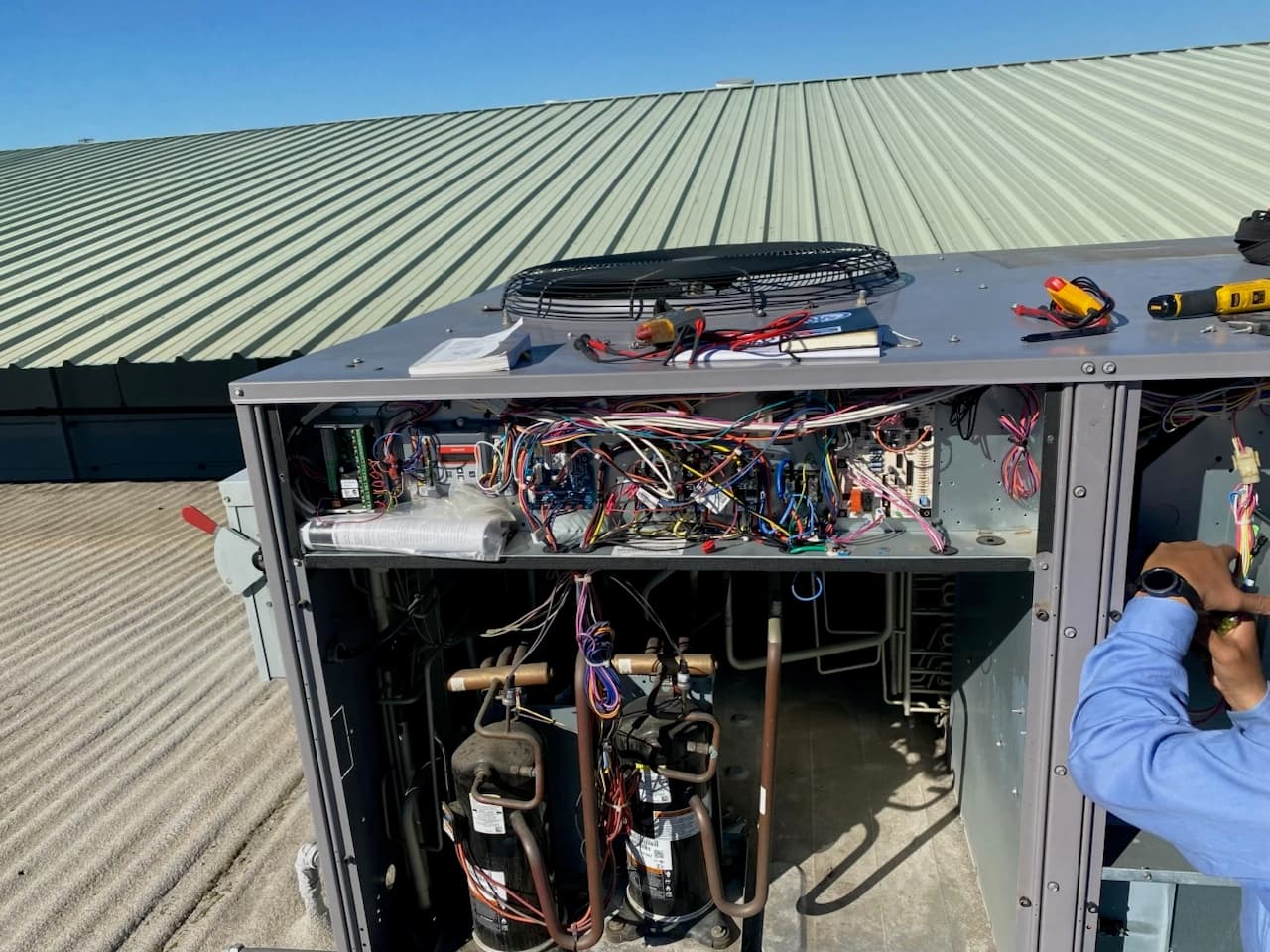
How building controls & automation work plays out in Torrance
Torrance is a city of mild days, which makes it one of the best places in Southern California for economizers to do real work. A rooftop unit on a Crenshaw Boulevard office or a Torrance Boulevard retail building can cool with outside air for a large share of its operating hours if the economizer damper opens, the sensors read correctly, and the controls are set to use it. In practice, a surprising number of economizers are stuck closed, wired out by a past technician, or controlled by a sensor that failed years ago, so the building pays for mechanical cooling it did not need.
The other common finding is schedule drift. A flex building near Western Avenue whose tenant changed from day-shift office to two-shift fabrication still has thermostats set for the original hours. A medical office near Lomita Boulevard has a suite that runs cooling overnight because a thermostat override never resets. In multi-tenant retail, each suite has its own thermostat and no one has looked at the programming since the tenant improvement. For buildings with a basic building automation system, the sequences may have been installed by a contractor who is no longer in business, with passwords nobody has.
Davinci Mechanical's building controls work in Torrance is practical: verify every thermostat and sensor, test economizer operation and document the results, align schedules with actual occupancy, and recover access to any automation system so the owner controls it. Every setting is recorded in the DaVinci Portal so the next tenant change does not erase the gains. Title 24 fault-detection requirements on newer units are also verified during this work.
Torrance's climate and what it does to this equipment
Torrance sits in the South Bay, close enough to the ocean that the marine layer shapes much of the year, though it is not directly on the surf the way beach cities are. Mornings are often gray and cool, afternoons clear, and summer heat is milder than in the valleys or inland basin, with occasional spikes when offshore winds push temperatures up. Equipment runs fewer extreme hours but gets cooling duty across a long season, and moist, slightly salty air plus industrial dust affects coils and electrical components in outdoor installations.
For the equipment background behind this page, read our building controls and energy guide or the full Building Controls & Automation service page.
- Del Amo and the Torrance Boulevard retail coreLarge retail centers, restaurants, and big-box tenants with shared rooftop equipment and grocery-style refrigeration needs.
- Industrial parks along Crenshaw and WesternAerospace, automotive, and light industrial buildings with mixed office and shop areas, where process or equipment-room cooling often matters.
- Hawthorne Boulevard commercial corridorA long stretch of strip retail, restaurants, banks, and service tenants, many with older rooftop units and shared electrical service.
- Medical area and Old TorranceHospital and medical office buildings along with the older downtown core, where smaller tenant spaces and clinical comfort needs sit side by side.
- Schedule, setpoint, and sequence review across rooftop and central equipment
- Sensor calibration and economizer verification
- Alarm and trend setup so problems surface early
- Programmable and networked thermostat installation
What a building controls & automation visit includes, and the problems we most often find
- Inventory controllers, thermostats, and any building automation system
- Compare schedules and setpoints to how the building is actually used
- Verify sensors, actuators, and economizer logic against measured conditions
- Correct overrides, sequences, and alarms; document the changes
- Review trends after adjustment to confirm savings and stability
- Schedules left at default so equipment runs when nobody is there
- Equipment overridden manually and never returned to automatic
- Drifting or miswired sensors producing comfort complaints
- Economizers that never actually modulate
Building Controls & Automation in Torrance: questions we get
How much of the year can a Torrance office building realistically cool with outside air?
More than most inland cities. With a marine-influenced climate where many days stay in the 60s and 70s, a properly functioning economizer with the right changeover setting can handle a large share of annual cooling hours, especially mornings and the shoulder seasons. The exact figure depends on your internal loads and the changeover strategy. We test the economizer, set the changeover appropriately, and verify it is actually cycling before claiming savings.
Our Torrance building has an older automation system and the installer is gone. Can you work with it or does it need replacement?
Usually we can work with it. The first step is recovering access, documenting the existing points and sequences, and confirming what still functions. Many older systems are perfectly serviceable once someone understands them. If parts are unavailable or the system is actively causing comfort problems, we lay out replacement options, but we do not recommend ripping out working controls just because they are old.
Do you install building automation systems?
We install and service thermostats and controls on rooftop and mechanical equipment, and work with larger automation systems on a project basis.
Can better controls really cut energy use?
Often. Correct schedules, setpoints, and economizer operation are among the cheapest efficiency gains in an existing building.
Can you connect to our existing system?
In most cases. Send us what is installed and we will confirm the integration approach.