Building Controls & Automation in Glendale, CA
Entertainment and animation offices in Glendale often run odd schedules, with crunch periods and after-hours work that standard setups do not anticipate. Retail and mixed-use buildings have their own patterns. Reviewing schedules, verifying sensors, and confirming economizer behavior can reduce waste while keeping creative spaces and server rooms stable. Written records of changes keep the setup consistent when staff or tenants turn over. Retail landlords around the Galleria also benefit from verifying common-area schedules.
Brand Boulevard retail and mixed-use, entertainment and animation offices, hospital campuses, and the Glendale Galleria area at the edge of the San Fernando Valley.
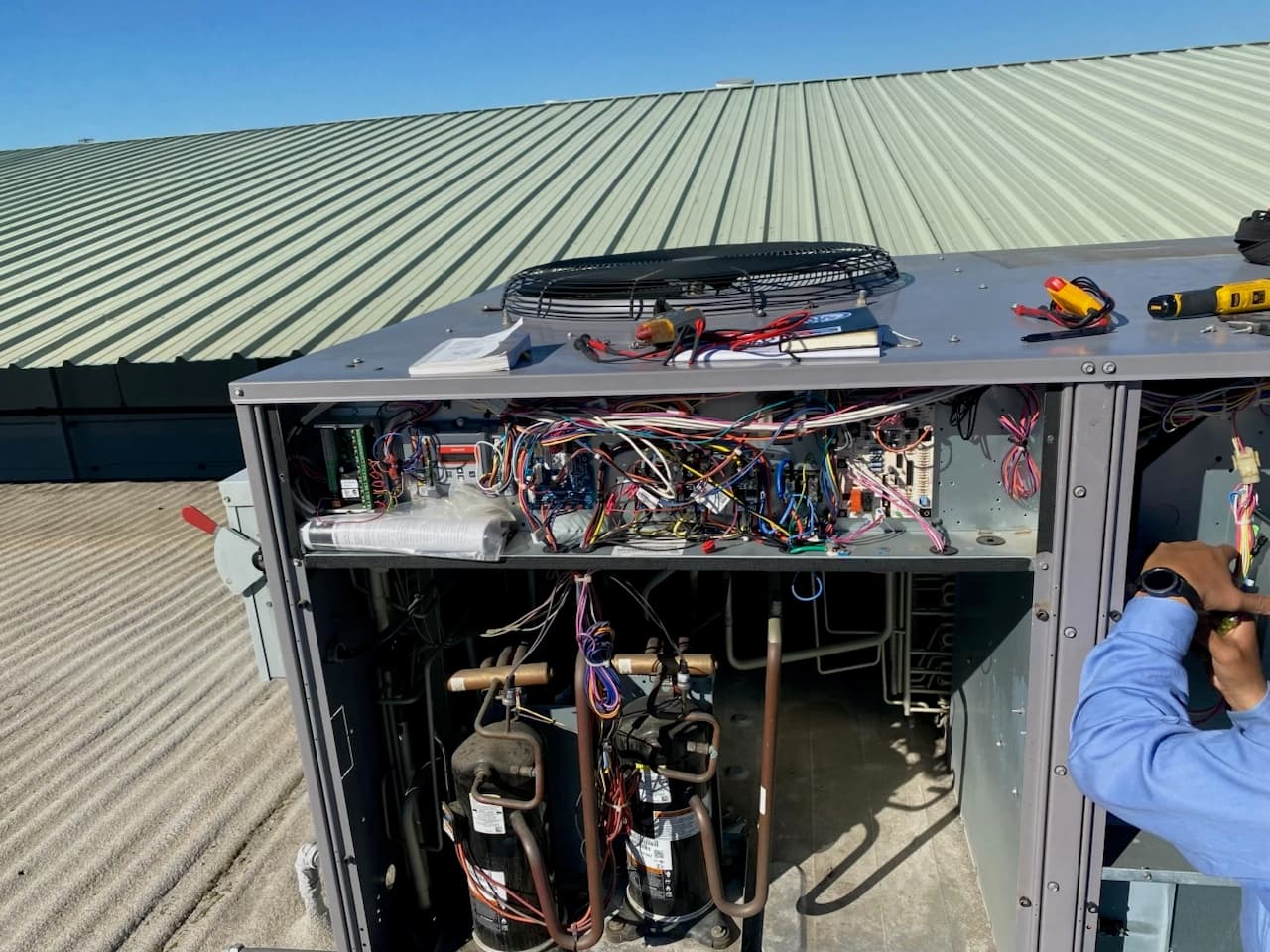
How building controls & automation work plays out in Glendale
Animation and media offices along the 134 corridor and near San Fernando Road are the clearest controls story in Glendale. These buildings were often fitted out as conventional offices and then filled with edit suites, render farms, and teams that work late into the night during delivery crunches. Schedules written for nine-to-five occupancy leave those rooms warm at 10 p.m., so someone overrides a thermostat, and the override never gets removed. Six months later the building runs full cooling on weekends for a room that is empty. The work is to rebuild schedules around how the space is actually used, give the critical rooms their own setpoints, and document what was changed.
Retail and mixed-use buildings around the Galleria and Americana have a different problem: common-area and tenant systems that were commissioned once and never verified again. Economizers matter here more than in coastal cities because Glendale's dry nights and long shoulder seasons offer many hours of free cooling, yet a damper stuck closed or an outdoor air sensor reading wrong wastes all of it. Verifying sensors, damper travel, and changeover logic is a straightforward visit that pays back quickly.
Hospital campuses and medical office buildings need the most careful hand. Setpoint and schedule changes in clinical space are made with the facilities team, recorded with before-and-after values, and never done casually. In every case the finding and the change go into the DaVinci Portal so the next engineer is not guessing. The building controls page explains the verification process, and the data center and server room sector page covers the equipment-room side.
Glendale's climate and what it does to this equipment
Glendale is warmer than the coast, with hot, dry summers shaped by its position against the Verdugo Mountains and the edge of the San Fernando Valley. Summer afternoons regularly reach the 90s, with heat waves that go higher, and nights offer less relief than coastal cities. Santa Ana winds bring dry air, dust, and fire-season smoke that clog filters and coils. Hillside and foothill conditions also deposit leaves and debris in outdoor equipment, and long cooling seasons make efficient airflow essential.
For the equipment background behind this page, read our building controls and energy guide or the full Building Controls & Automation service page.
- Downtown Glendale, Brand Boulevard, and AmericanaMixed-use retail, restaurants, offices, and residential-adjacent commercial space with central equipment rooms and extensive rooftop packages.
- Glendale Galleria areaLarge-format retail, food courts, and parking structures with long operating hours and high cooling demand.
- Entertainment and animation officesCreative campuses and studio-style offices with irregular schedules, server and edit rooms, and specialized comfort needs.
- Hospital campuses and medical officesMedical buildings where filtration, redundancy, and careful scheduling shape every service visit.
- Schedule, setpoint, and sequence review across rooftop and central equipment
- Sensor calibration and economizer verification
- Alarm and trend setup so problems surface early
- Programmable and networked thermostat installation
What a building controls & automation visit includes, and the problems we most often find
- Inventory controllers, thermostats, and any building automation system
- Compare schedules and setpoints to how the building is actually used
- Verify sensors, actuators, and economizer logic against measured conditions
- Correct overrides, sequences, and alarms; document the changes
- Review trends after adjustment to confirm savings and stability
- Schedules left at default so equipment runs when nobody is there
- Equipment overridden manually and never returned to automatic
- Drifting or miswired sensors producing comfort complaints
- Economizers that never actually modulate
Building Controls & Automation in Glendale: questions we get
Our animation studio in Glendale has rooms that must stay cool overnight during crunch. How do we do that without cooling the whole building?
Separate the critical rooms from the general office schedule. Edit suites and equipment rooms get their own zones or dedicated units with a continuous setpoint, while the open office follows an occupancy schedule with an easy, time-limited override for late nights. That way crunch weeks do not require someone to override the whole floor, and the override expires on its own. We verify that the critical zones actually hold temperature overnight before leaving.
Is economizer free cooling actually useful in Glendale, given how hot it gets?
More than people expect. The afternoons are hot, but Glendale nights and mornings are often cool and dry from fall through spring, and even in summer early-morning hours fall within economizer range. A properly working economizer can cover a large share of cooling hours in an office building. The catch is that many are stuck or miswired. We test damper travel, sensors, and changeover logic and record the result so you know whether yours is earning its keep.
Do you install building automation systems?
We install and service thermostats and controls on rooftop and mechanical equipment, and work with larger automation systems on a project basis.
Can better controls really cut energy use?
Often. Correct schedules, setpoints, and economizer operation are among the cheapest efficiency gains in an existing building.
Can you connect to our existing system?
In most cases. Send us what is installed and we will confirm the integration approach.