Building Controls & Automation in Pasadena, CA
Pasadena buildings include everything from historic offices with basic thermostats to research facilities with sophisticated automation. In both cases, schedules drift, sensors age, and economizers stop working. Verifying controls, resetting schedules to match real occupancy, and confirming economizer function often cuts runtime and improves comfort. In lab and research settings, documenting any setpoint change is as important as the change itself. Older Colorado Boulevard offices often hold forgotten schedules that quietly run systems all night.
Older historic buildings, a restaurant-dense Old Pasadena, and science and institutional campuses near Caltech, sitting at the foot of the San Gabriel Mountains.
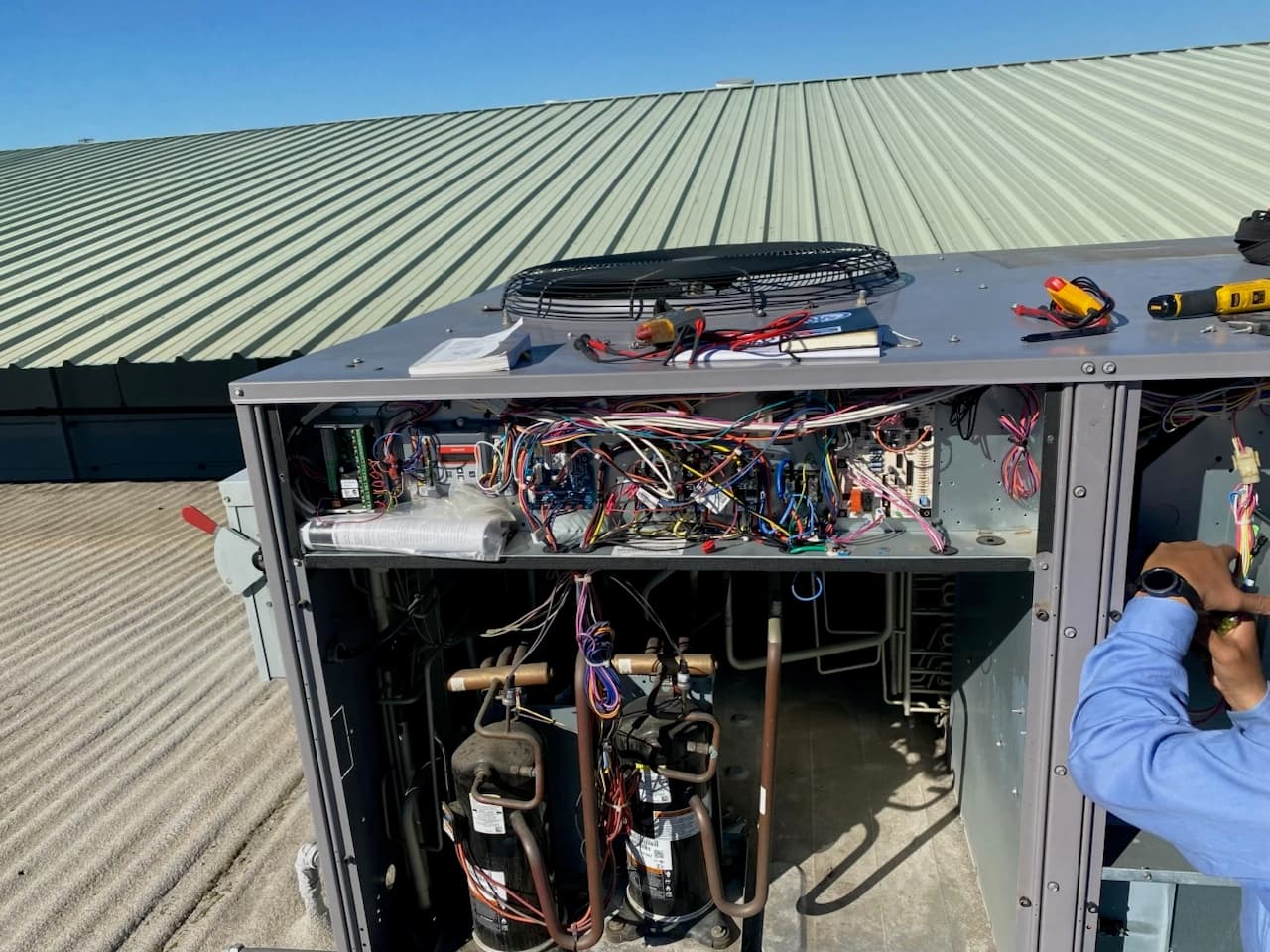
How building controls & automation work plays out in Pasadena
Controls in Pasadena run the full range. At one end, a Colorado Boulevard office building from the 1960s with a dozen programmable thermostats, each set by a different tenant, several locked in permanent hold, and a schedule that runs the whole building until ten at night because a long-gone law firm once worked late. At the other end, a research building near Caltech with a full building automation system, trend logs, and sequences nobody has reviewed since commissioning, where a failed humidity sensor has been quietly driving a reheat valve open for a year. In between sit medical offices around Huntington Hospital and hotels with guest room controls that fight the central system.
Pasadena's climate changes what good controls look like. Summer nights stay warm, so night flush strategies are less effective than on the coast, but spring and fall mornings are cool and dry and economizers can do real work in the shoulder seasons if they function. Many do not: dampers stuck, actuators failed, outdoor sensors reading wrong because they sit in the sun on a dark roof. Santa Ana wind events are a special case, since an economizer that opens during a dusty, hot wind event loads filters and brings in heat; a good sequence uses outdoor temperature and, where available, air quality data to lock out economizing on those days.
Davinci Mechanical's building controls work in Pasadena verifies every sensor and thermostat, tests economizers and documents the result, aligns schedules to real occupancy, and recovers access to automation systems the owner has lost control of. In lab and research settings, every change is documented before and after and coordinated with facility staff. Settings and sequences are recorded in the DaVinci Portal, so the building does not drift back the next time a tenant changes. For institutional owners, this is also where Title 24 fault-detection requirements on newer equipment are verified.
Pasadena's climate and what it does to this equipment
Pasadena sits inland at the foot of the San Gabriel Mountains, so it runs considerably hotter than the coast, with long summers, frequent days well into the 90s and sometimes above 100, and warm evenings that give equipment little recovery time. Santa Ana wind events in fall bring dry heat and dust, and nearby wildfire smoke and ash can load filters and coils quickly. Foothill conditions also mean leaves and debris in condensers, and older buildings with limited airflow show weaknesses early in every heat wave.
For the equipment background behind this page, read our building controls and energy guide or the full Building Controls & Automation service page.
- Old PasadenaHistoric brick buildings with restaurants and retail, tight alleys, retrofitted mechanical systems, and roof access that varies from easy to awkward.
- Colorado Boulevard and the Playhouse DistrictHotels, entertainment venues, restaurants, and offices along the main boulevard, with heavy demand during parade and event periods.
- Caltech area and science or institutional campusesResearch buildings, labs, and institutional facilities with demanding environmental control and documentation expectations.
- Civic Center and the Huntington Hospital areaCity buildings, medical offices, and hospital-adjacent properties where clinical comfort, filtration, and scheduling are central.
- Schedule, setpoint, and sequence review across rooftop and central equipment
- Sensor calibration and economizer verification
- Alarm and trend setup so problems surface early
- Programmable and networked thermostat installation
What a building controls & automation visit includes, and the problems we most often find
- Inventory controllers, thermostats, and any building automation system
- Compare schedules and setpoints to how the building is actually used
- Verify sensors, actuators, and economizer logic against measured conditions
- Correct overrides, sequences, and alarms; document the changes
- Review trends after adjustment to confirm savings and stability
- Schedules left at default so equipment runs when nobody is there
- Equipment overridden manually and never returned to automatic
- Drifting or miswired sensors producing comfort complaints
- Economizers that never actually modulate