Maintenance Plans in Fontana, CA
Fontana's warehouse owners often manage rooftops that have never had consistent service. A good program starts with a full inventory, tags each unit, and documents baseline readings so degradation can be tracked. Spring work focuses on coils, charge, belts, and electrical components before the heat arrives, with interim visits for filters and controls. Medical clients get tighter filtration and humidity checks. All of it flows into the DaVinci Portal for easy reporting.
One of the Inland Empire's heaviest logistics and warehouse cities, with a major Kaiser medical campus, industrial corridors, and relentless heat and dust.
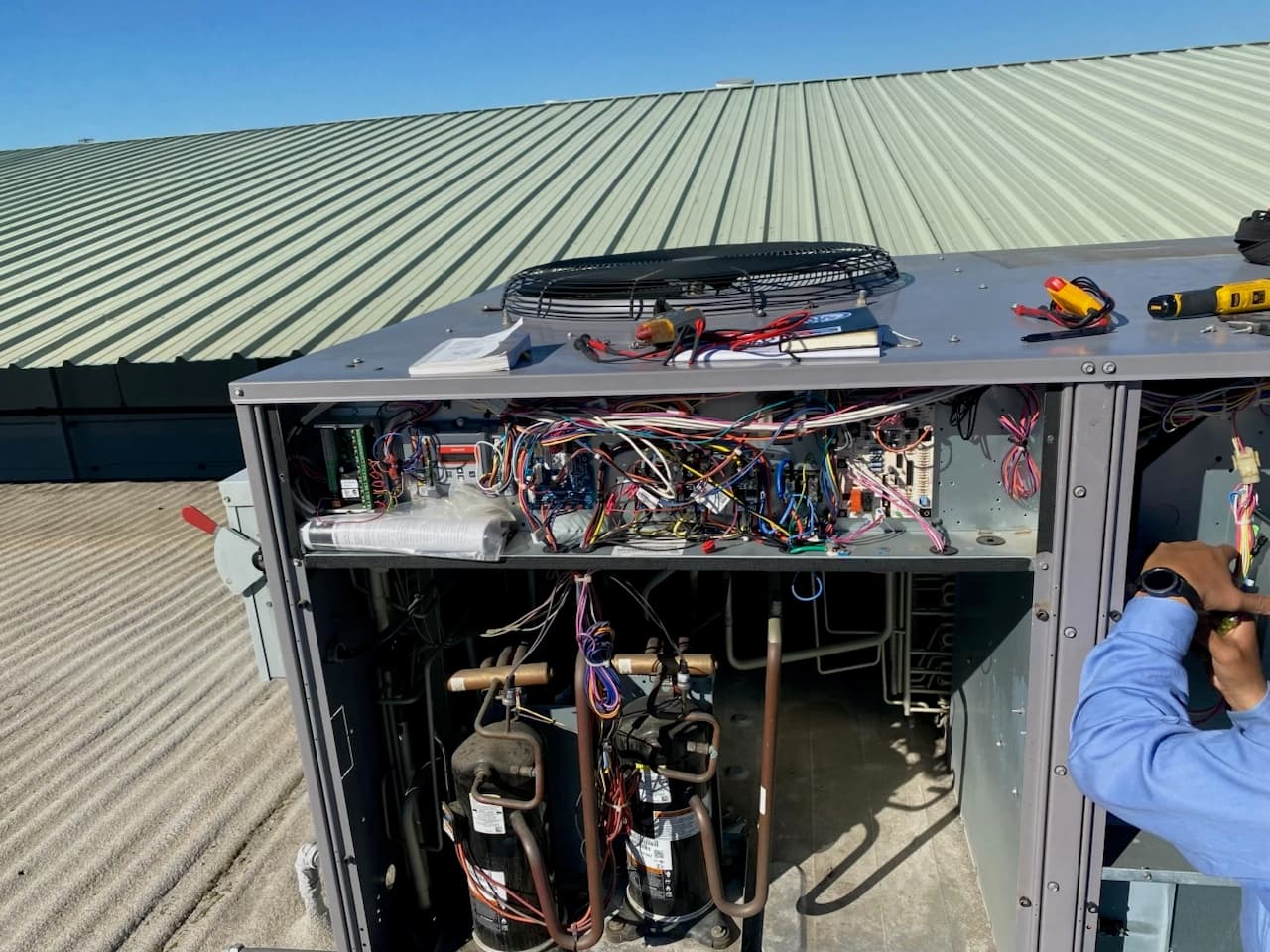
How maintenance plans work plays out in Fontana
Most Fontana maintenance programs begin with a discovery problem rather than a service problem. A landlord acquires a 500,000-square-foot building on Slover Avenue, the seller's records consist of a few invoices, and nobody can say how many units are on the roof or which ones work. The first quarter of a program is therefore an inventory: tags, locations, photos, model and serial data, and baseline readings for each unit, entered in the DaVinci Portal. Only once that exists does a schedule mean anything, because a visit plan for forty units looks nothing like one for twelve.
After inventory, the calendar is driven by heat and dust. Spring work concentrates on condenser cleaning, charge verification, belts, and electrical connections so the roof is ready before the first run of triple-digit days, which can arrive in May. Mid-summer visits are filter and controls checks with a look at any unit flagged during spring. Fall covers heating sections and a second round of coil cleaning after the first Santa Ana events. For warehouse tenants, the visit schedule also respects dock operations and security badging, which we arrange with the site manager rather than showing up unannounced.
Medical properties around Sierra Avenue and the Kaiser campus sit on a bi-annual cycle with filtration verified more often, since smog and wildfire smoke affect exam room air quality before temperature. Restaurants in downtown Fontana and along Valley Boulevard fit a quarterly rhythm that pairs HVAC with refrigeration and ice machine checks. The maintenance program page covers tier structure, and the warehouse industry page describes how we approach large-roof portfolios.
Fontana's climate and what it does to this equipment
Fontana is among the hottest and windiest parts of the region. Its position near the Cajon Pass and the base of the mountains means Santa Ana winds, and the strong gusts that come with them, strike with more force than in many neighboring cities. Dust from open ground and construction settles on coils, filters, and rooftop surfaces, and air quality is frequently poor in summer because of ozone and particulate. Wildfire smoke adds more load. Triple-digit heat is routine in summer, so condensers operate near their limits for long periods, and cold storage faces its highest loads at the worst possible ambient conditions.
For the equipment background behind this page, read our preventive maintenance program guide or the full Commercial Maintenance Plans service page.
- Slover, Jurupa, and Miller logistics corridorsLarge distribution and fulfillment buildings with extensive rooftop equipment, dock areas, and temperature-controlled space.
- Kaiser medical campus and Sierra AvenueHospital, clinics, pharmacies, and professional offices with high expectations for air quality, temperature stability, and uptime.
- Speedway-adjacent industrial areaLarge-scale industrial and warehouse development in the northwest part of the city, exposed to open ground and strong wind.
- Downtown Fontana and Valley BoulevardSmaller retail, restaurants, and service businesses in older buildings with split systems and compact rooftop units.
- Free diagnostic on repairs for plan members
- Included labor per tier, with a member rate for anything over
- Photo-logged reports with temps, pressures, and amp draws
- DaVinci Portal included with QR tracking and self-service scheduling
What a maintenance plans visit includes, and the problems we most often find
- Walk every covered asset — RTUs, refrigeration, ice machines, water heaters
- Take and log readings against each unit's history, not a generic checklist
- Flag anything trending toward failure before it becomes a breakdown
- Deliver a photo-logged report after every visit
- Free diagnostic on any repair that comes out of the visit
- Equipment that 'seemed fine' failing without any maintenance history to catch the trend
- Multiple pieces of equipment aging out around the same time with no replacement plan
- Surprise repair costs that a documented PM history would have flagged months earlier
- Multi-location accounts with no consistent record across sites
Maintenance tiers for Fontana properties
Fontana's logistics and medical properties usually need a plan that begins with a full rooftop inventory, followed by pre-summer coil and electrical work and scheduled filter and controls visits.
See maintenance plan tiersMaintenance Plans in Fontana: questions we get
We just bought a Fontana warehouse with no HVAC records. What does the first year of a maintenance program look like?
How does a maintenance plan account for the dust on Fontana roofs?
What's the difference between the plan tiers?
Can one plan cover multiple locations?
Other services in Fontana
Maintenance Plans nearby in Inland Empire (Riverside & San Bernardino Counties)
Commercial HVAC and refrigeration across Inland Empire (Riverside & San Bernardino Counties)