VRF & Split System Service in Burbank, CA
Edit suites, server and equipment rooms, and creative offices in Burbank's older buildings, where ductwork is limited, suit VRF and ductless systems. In valley heat, outdoor unit placement and airflow clearances are critical, since poor ventilation around condensers quickly cuts capacity. Service covers charge verification, communication wiring, condensate drainage, and controller settings, since many VRF problems come from small installation or wiring issues. Studio support buildings with many small, independently used rooms are natural candidates for zoned systems.
Studio and media campuses, airport-area industrial buildings, a restaurant-rich Magnolia Park, and hospital facilities in the heat of the San Fernando Valley.
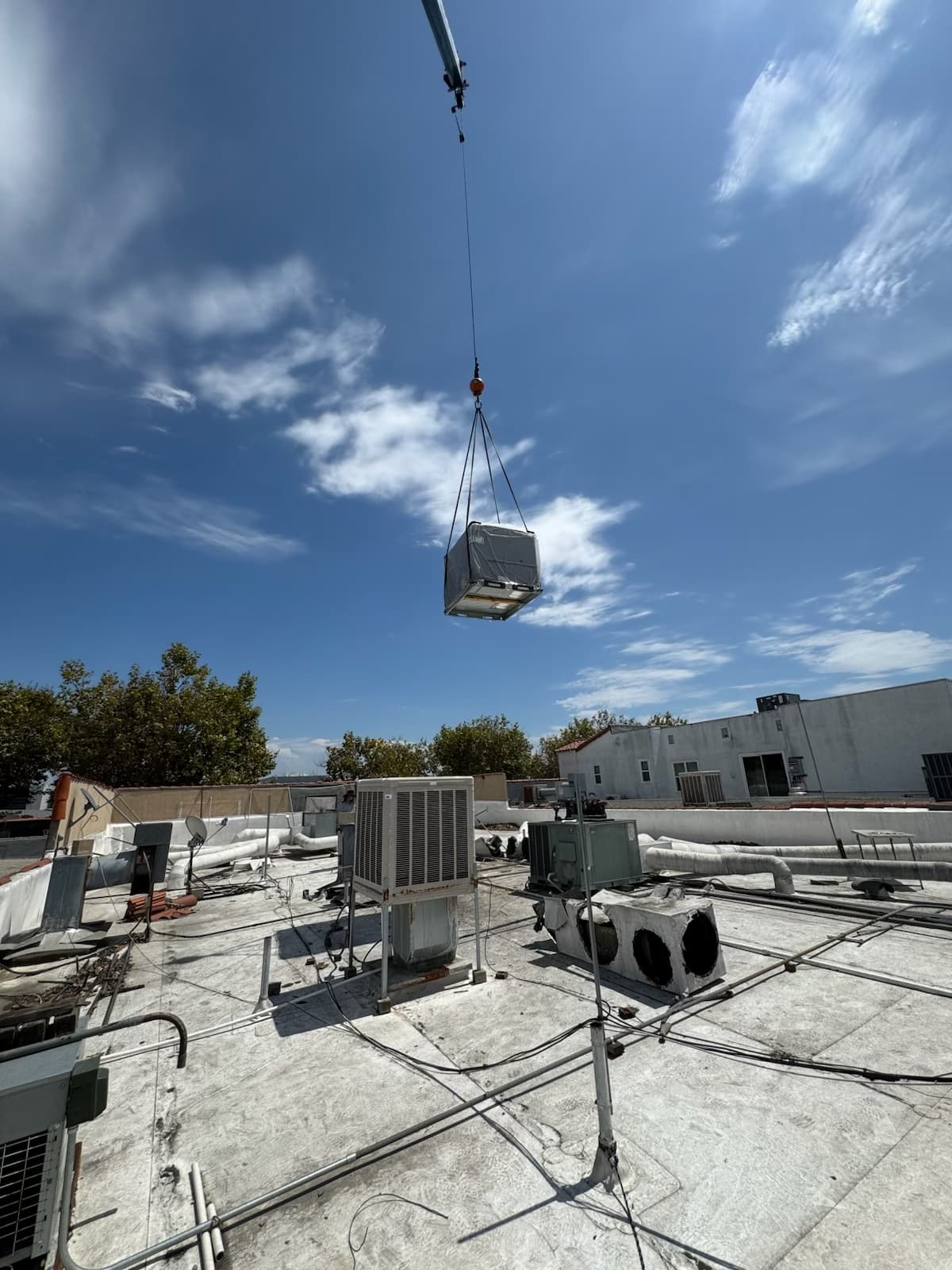
How vrf & split system service work plays out in Burbank
The fastest growing equipment category in Burbank is the one built for small, independently used rooms. Edit bays, mix stages, machine rooms, color suites, and small conference rooms in Media District buildings each need their own setpoint and often need cooling around the clock, and VRF and ductless systems are how most of them get it. Medical offices near the hospital use them for exam and imaging rooms. Magnolia Park and downtown tenant improvements use them where the original ductwork cannot reach a reconfigured space. The equipment is capable; the installations range from excellent to improvised.
Burbank heat finds the improvised ones. Outdoor units crowded onto a hot roof with no clearance recirculate their own discharge and lose capacity on the afternoons that matter most. Branch controllers hidden above ceilings collect dust and condensate. Communication wiring run alongside power or landed in the wrong order produces faults that appear across several indoor units at once and look far worse than they are. Condensate lines routed with insufficient slope back up in summer when every unit is running. Our first pass on a VRF call is always the same three things, communication wiring, refrigerant charge, and outdoor unit airflow, and only after those are cleared do we start looking at compressors or boards.
On a properly run installation or retrofit, outdoor units are placed and spaced for valley heat, line sets and condensate are pressure-tested and sloped, and commissioning readings for every indoor unit go into the DaVinci Portal. For studio tenants that is the record their operations lead wants; for landlords it is what makes a multi-tenant system manageable at turnover. The VRF and ductless page describes service and retrofit work in more depth.
Burbank's climate and what it does to this equipment
Burbank sits in the San Fernando Valley, and the valley holds heat. Summer days regularly reach the upper 90s and into the 100s during heat waves, with warm nights that limit equipment recovery. The marine layer that cools coastal cities rarely reaches this far, so cooling seasons are long and intense. Santa Ana winds add dry air, dust, and fire-season smoke that load filters and coils. In these conditions, rooftop condensers and chillers work close to their limits more often than elsewhere in the county.
For the equipment background behind this page, read our VRF vs. RTU vs. split systems guide or the full VRF & Commercial Split Systems service page.
- Media District and studio campusesProduction lots, office buildings, edit suites, and server areas with steady cooling loads and limited tolerance for interruption.
- Magnolia ParkIndependent restaurants, cafes, and shops in older commercial buildings, where kitchens, coolers, and rooftop equipment are compact.
- Airport-area industrial and business parksLarge industrial and light-industrial buildings near Hollywood Burbank Airport with substantial rooftop equipment counts.
- Downtown Burbank and hospital campusesOffices, retail, and medical buildings where comfort, filtration, and scheduling around clinical or business hours are essential.
- VRF and multi-split service with refrigerant circuit diagnostics
- Ductless mini-split installation for server rooms, tenant spaces, and additions
- Controller, communication, and zoning troubleshooting
- Documented startup and commissioning
What a vrf & split system service visit includes, and the problems we most often find
- Review the system layout: outdoor units, branch controllers, and indoor units
- Read refrigerant-circuit data and communication status
- Inspect drains, filters, coils, and line sets
- Correct the fault and re-verify operation across zones
- Document the system layout and readings by unit
- Communication faults between indoor units, branch boxes, and outdoor units
- Condensate pumps and drains failing in ceiling cassettes
- Refrigerant leaks in long line sets and field joints
- Zones fighting each other because of control setup