Boiler & Hydronic Service in Whittier, CA
Boilers in Whittier serve the hospital and medical buildings, some older churches and institutional buildings, and a few multi-story offices with hydronic reheat. These systems often date back decades and may have asbestos-era insulation or outdated controls that complicate work. We perform seasonal startups, test combustion and safeties, check pumps and expansion tanks, and evaluate when modern condensing equipment is a practical replacement. Hospital reheat systems get particular attention because failures show up as comfort and humidity complaints in patient areas.
Uptown Whittier restaurants, hospital and medical campuses, light industrial streets and Quad-area retail on aging but well-kept commercial buildings.
How boiler & hydronic service work plays out in Whittier
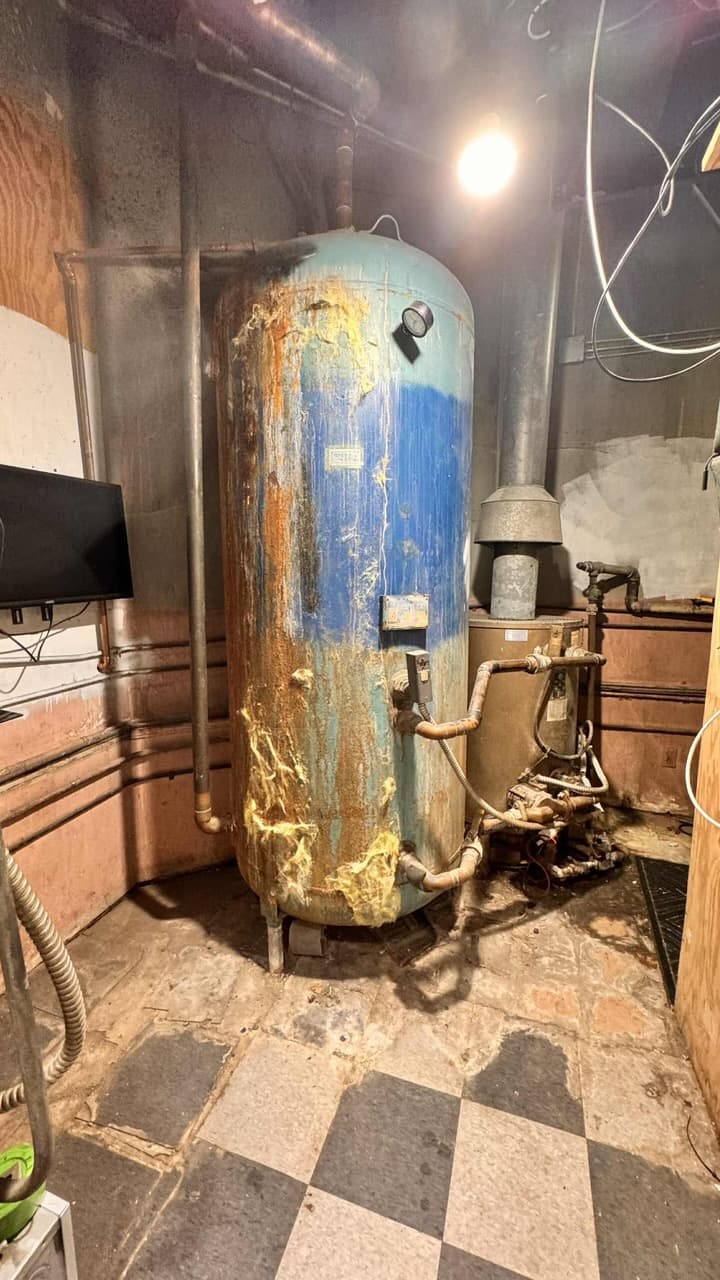
The boilers in Whittier are old, and many of them live in old buildings. The hospital campus and its medical offices rely on hydronic heat and reheat for patient comfort and humidity control; churches, civic buildings and institutional properties around Uptown and near Whittier College have boilers that may date back decades; and a few multi-story offices use hydronic reheat at terminal units. Because the city's heating season is short and mild, these systems run lightly, and light use is what lets pumps seize, seals dry out, controls drift and water chemistry go stale between one winter and the next.
A seasonal startup in October is where problems surface before they become complaints: combustion analysis, low-water cutoff and safety tests, expansion tank and relief valve checks, pump and seal inspection, and a look at each reheat valve, because a reheat valve leaking during cooling season has the boiler and the chiller fighting each other all summer at a cost no invoice ever itemizes. In a hospital, a heating or humidity complaint in a patient area is a clinical issue, so the reheat system gets extra attention.
Older equipment here sometimes carries insulation from eras that require testing before it is disturbed, and outdated controls that complicate even routine repair. We identify those issues early and sequence any abatement or testing ahead of the mechanical work. When replacement is due, the common finding is that the original boiler was sized for a colder design assumption and a different use, and a modern condensing or modulating unit sized to measured load, with venting routed for its flue temperatures, fits the building better. Our boilers and hydronic heating page explains how we size and vent a replacement unit.
Whittier's climate and what it does to this equipment
Whittier sits in the foothills edge of the Los Angeles basin, with the Puente Hills to the east, and the marine layer reaches it more often than it reaches the San Gabriel Valley. Summers are warm to hot, commonly in the 80s and 90s with periodic heat waves, and nights cool enough to give economizers real use. Hillside areas see higher fire-season smoke and ash, which clog filters and coils. Santa Ana winds bring dust and heat in fall. Equipment faces moderate heat but significant air quality swings and the wear of buildings that are decades old.
For the equipment background behind this page, read our water heaters and boilers guide or the full Boilers & Hydronic Heating service page.
- Uptown Whittier (Greenleaf Avenue)Historic low-rise restaurants, cafes and shops with retrofitted kitchens, walk-ins and shared or hard-to-reach roofs.
- Whittier Boulevard and Painter Avenue retailMid-size centers and freestanding pads with grocery, pharmacy and restaurant tenants and aging packaged units.
- PIH Health Whittier Hospital and medical office areaHospital-adjacent buildings with strict temperature, humidity and ventilation needs and after-hours service demands.
- Telegraph Road and light-industrial blocksSmall manufacturing, auto and contractor buildings with a handful of older rooftop units and limited controls.
- Combustion analysis and tuning with logged results
- Low-water cutoff, relief valve, and flame-safeguard testing
- Condensing and non-condensing boiler service
- Hydronic loop, pump, valve, and expansion-tank diagnostics
What a boiler & hydronic service visit includes, and the problems we most often find
- Review boiler type, age, fuel, and the loads it serves
- Inspect burners, heat exchanger surfaces, venting, and combustion air
- Run combustion analysis and adjust to manufacturer specifications
- Test safeties and controls; check loop pressure, flow, and water quality
- Document results and recommend repairs or replacement timing
- Poor combustion tuning wasting fuel and fouling heat exchangers
- Condensing boilers running with return temperatures too high to condense
- Air in the loop or failing pumps causing cold zones
- Untested safeties on older boilers with no maintenance records
Boiler & Hydronic Service in Whittier: questions we get
Our Whittier church building has a boiler that is decades old and only runs a few months a year. Should we replace it or keep maintaining it?
Low runtime stretches a boiler's life, so age alone is not the deciding factor. What matters is the condition of the heat exchanger, the safeties, the venting and whether parts are still available. We inspect and test it in the fall, give you a written condition report, and if the exchanger is sound and parts are obtainable, continued maintenance is reasonable. If the exchanger is compromised or parts are scarce, a planned replacement in a mild month is better than an emergency in December.
Our medical office near the hospital has rooms that are too warm in summer even though the AC runs. Could the boiler be involved?
Yes, through reheat. Many medical buildings use hydronic reheat coils at zone terminals, and if the boiler is left on or a reheat valve leaks, hot water flows through those coils while the chiller or rooftop units try to cool the space. The symptom is exactly what you describe: a warm zone with the cooling running flat out. We test valve operation and check for leak-through, which is usually a quick fix with a noticeable effect on comfort and energy.
Do commercial boilers need annual service?
Yes. Annual combustion tuning and safety testing is standard practice, and boilers are also subject to jurisdictional inspection requirements that vary by type.
Can you replace a boiler without a long shutdown?
Often, with planning: staged piping, temporary heat where needed, and scheduling around the heating season.
Do you work on steam systems?
We evaluate steam and hot-water systems individually. Send us the equipment details and we will confirm scope.