RTU & Split Installs in Whittier, CA
Roof replacements in Whittier often involve older buildings where curb sizes, roof structure and access are quirks of the original construction. Some roofs need new curbs or adapters, and some require structural review before a larger modern unit is set. Crane access can be limited on narrow streets near Uptown, and parking-lot lifts need coordination with retail tenants. We plan permits, Title 24 and refrigerant selection in advance, and where several tenants share a building we sequence replacements so businesses lose as little cooling time as possible.
Uptown Whittier restaurants, hospital and medical campuses, light industrial streets and Quad-area retail on aging but well-kept commercial buildings.
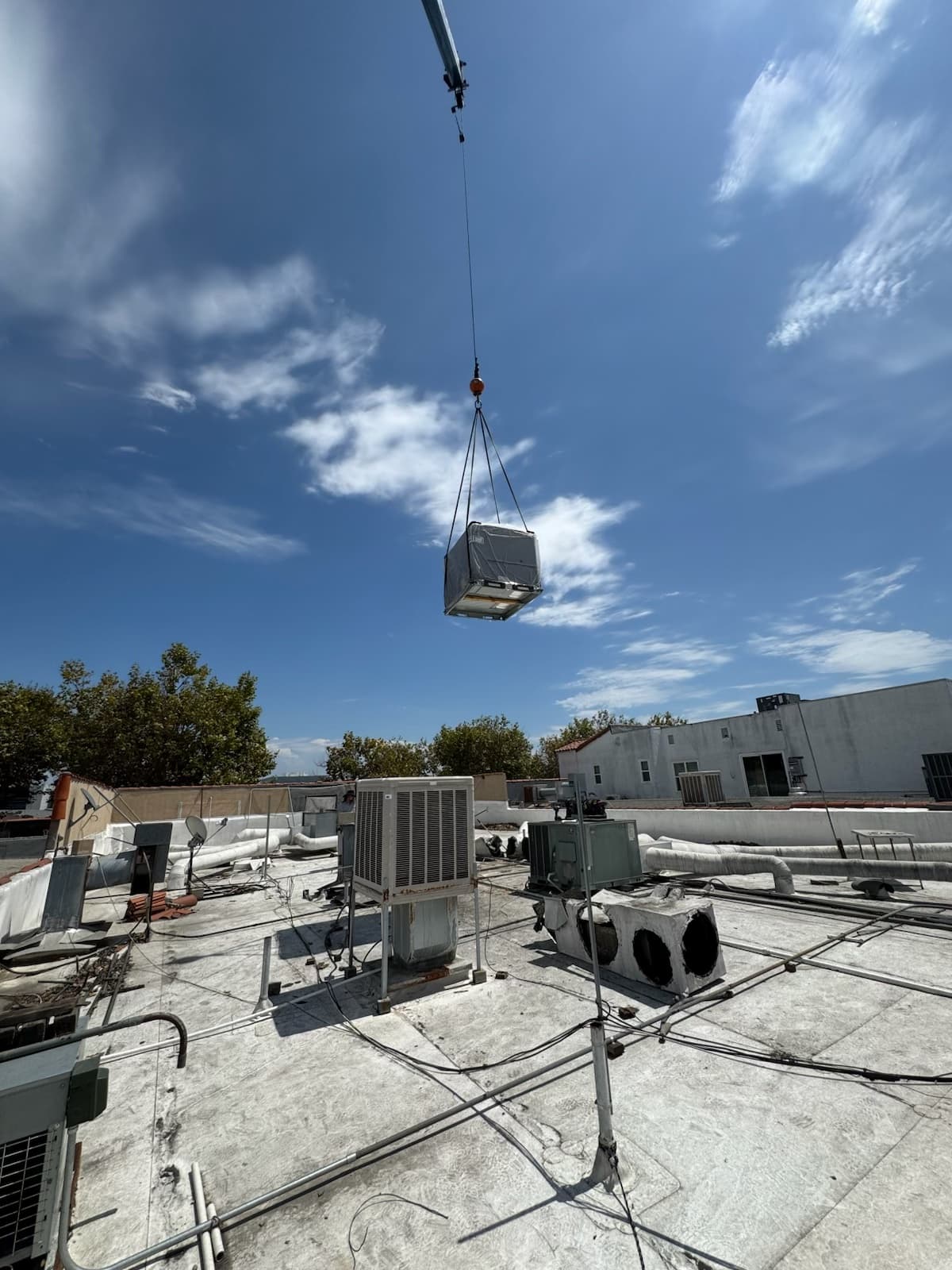
How rtu & split installs work plays out in Whittier
Few Whittier roofs are simple. Uptown buildings from the 1920s through the 1950s have bowstring trusses, parapets, odd pitches and roof hatches that open into a neighboring tenant's storage room, so replacing a packaged unit begins with a structural look, a plan for getting the old unit off and the new one on, and a frank conversation about whether the roof can take a heavier modern unit where a lighter one sat. Narrow streets around Greenleaf and Philadelphia make a crane pick an early-morning event with a city encroachment permit and traffic control, not a drive-up lift.
Along Whittier Boulevard, including the centers near The Quad and Whittwood Town Center, the roofs are easier but the tenants are harder. A crane in a retail parking lot has to work before the stores open, the landlord wants a certificate and a schedule, and anchor tenants with refrigeration want assurance that their condensing units on the same roof will not be disturbed. Curbs from the 1970s and 1980s rarely match current footprints, so factory curb adapters are standard, and sequencing matters when a multi-tenant building replaces several units over a season so no tenant loses cooling during business hours.
Permits, Title 24 acceptance testing and refrigerant selection are planned before the unit is ordered, which is how an inspector's visit becomes a formality rather than a correction list. Economizer requirements, in particular, are worth getting right here because Whittier's cooler evenings give economizers real work to do. Our commercial RTU replacement page lays out the sequence, and the Title 24 and permits guide covers the compliance side.
Whittier's climate and what it does to this equipment
Whittier sits in the foothills edge of the Los Angeles basin, with the Puente Hills to the east, and the marine layer reaches it more often than it reaches the San Gabriel Valley. Summers are warm to hot, commonly in the 80s and 90s with periodic heat waves, and nights cool enough to give economizers real use. Hillside areas see higher fire-season smoke and ash, which clog filters and coils. Santa Ana winds bring dust and heat in fall. Equipment faces moderate heat but significant air quality swings and the wear of buildings that are decades old.
For the equipment background behind this page, read our commercial rooftop unit guide or the full RTU & Split System Installs service page.
- Uptown Whittier (Greenleaf Avenue)Historic low-rise restaurants, cafes and shops with retrofitted kitchens, walk-ins and shared or hard-to-reach roofs.
- Whittier Boulevard and Painter Avenue retailMid-size centers and freestanding pads with grocery, pharmacy and restaurant tenants and aging packaged units.
- PIH Health Whittier Hospital and medical office areaHospital-adjacent buildings with strict temperature, humidity and ventilation needs and after-hours service demands.
- Telegraph Road and light-industrial blocksSmall manufacturing, auto and contractor buildings with a handful of older rooftop units and limited controls.
- Site survey covering load, airflow balancing, and duct condition
- Clean rigging with code-correct gas, electrical, and condensate work
- Startup readings documented and stored in the Portal
- DaVinci Portal included: asset QR tag + warranty paperwork on file
What a rtu & split installs visit includes, and the problems we most often find
- Site survey — existing curb/duct compatibility, load, and airflow requirements
- Equipment selection sized to actual load and hours of operation, not just square footage
- Crane scheduling and rigging coordinated for roof access
- Install with code-correct gas, electrical, and condensate work
- Startup readings taken and documented; warranty registered in the Portal
- Undersized or oversized replacement units causing short-cycling or poor comfort
- Curb mismatches that turn a 'simple swap' into a bigger job mid-install
- Duct transitions that don't match the new unit's airflow requirements
- Aging units on refrigerant types that are getting harder and more expensive to service