Chiller & Central Plant Service in Whittier, CA
Central plant work in Whittier is concentrated at the hospital campus and a small number of larger institutional or multi-story office buildings. Those systems run continuously, and the cooling towers and chillers need disciplined water treatment, vibration checks and performance trending. In a hospital setting, planned shutdowns must be coordinated with clinical staff and infection control. We service chillers, towers and pumps, and plan replacements in phases so critical areas stay conditioned while equipment is changed out.
Uptown Whittier restaurants, hospital and medical campuses, light industrial streets and Quad-area retail on aging but well-kept commercial buildings.
How chiller & central plant service work plays out in Whittier
Central plant work in Whittier is concentrated in a few places: the hospital campus on Washington Boulevard and the larger medical buildings around it, Whittier College and nearby institutional buildings, and a small number of multi-story offices and civic buildings. These plants run continuously, and in the hospital setting a shutdown is a clinical coordination exercise, not a maintenance task. The cooling towers see a gentler climate than the eastern San Gabriel Valley, since the marine layer reaches Whittier more often, but the Puente Hills fire season loads tower fill and air-cooled condensers with ash in a way that coastal plants never experience.
The practical work on these systems is disciplined trending and water treatment. Approach temperatures, kW per ton, tower basin chemistry, pump vibration and refrigerant conditions are logged visit after visit so a decline shows up as a line on a chart rather than a failure on a hot afternoon. In a hospital, that trend is also what justifies a planned retube or replacement to an administrator who has to schedule it around patient care and budget cycles. Infection-control practices, negative-pressure containment for any work that disturbs ceilings or air handlers, and after-hours windows are part of every plant visit on a medical campus.
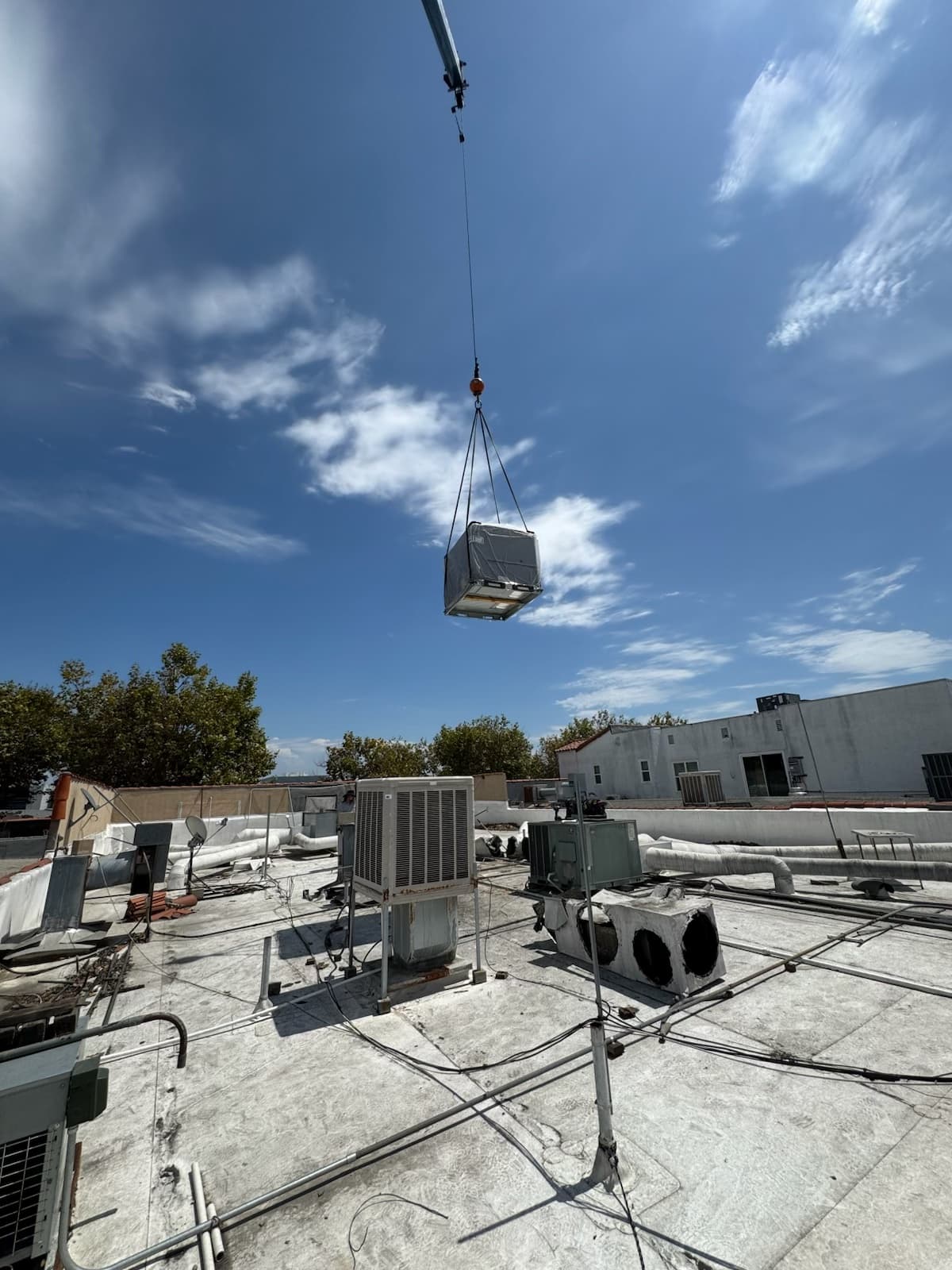
Replacement on a working campus is staged: temporary cooling for critical spaces, pre-fabricated piping and electrical, a swap compressed into a low-occupancy window, and controls integration so the new machine runs the way the plant was designed. Public and institutional owners run that under prevailing wage. See chillers and central plant, the hospitals and health systems sector and the chillers and hydronic systems guide.
Whittier's climate and what it does to this equipment
Whittier sits in the foothills edge of the Los Angeles basin, with the Puente Hills to the east, and the marine layer reaches it more often than it reaches the San Gabriel Valley. Summers are warm to hot, commonly in the 80s and 90s with periodic heat waves, and nights cool enough to give economizers real use. Hillside areas see higher fire-season smoke and ash, which clog filters and coils. Santa Ana winds bring dust and heat in fall. Equipment faces moderate heat but significant air quality swings and the wear of buildings that are decades old.
For the equipment background behind this page, read our chillers and hydronic systems guide or the full Chillers & Central Plant Service service page.
- Uptown Whittier (Greenleaf Avenue)Historic low-rise restaurants, cafes and shops with retrofitted kitchens, walk-ins and shared or hard-to-reach roofs.
- Whittier Boulevard and Painter Avenue retailMid-size centers and freestanding pads with grocery, pharmacy and restaurant tenants and aging packaged units.
- PIH Health Whittier Hospital and medical office areaHospital-adjacent buildings with strict temperature, humidity and ventilation needs and after-hours service demands.
- Telegraph Road and light-industrial blocksSmall manufacturing, auto and contractor buildings with a handful of older rooftop units and limited controls.
- Chiller, tower, pump, and VFD service with logged operating data
- Trend-based diagnosis: approach, delta-T, amp draw, and pressures
- Replacement planning with rigging, power, and temporary cooling considered
- Water-treatment and Legionella-control coordination for water-cooled plants
What a chiller & central plant service visit includes, and the problems we most often find
- Review the plant: chillers, pumps, towers, controls, and recent operating history
- Take full operating readings and compare against design and prior visits
- Inspect and test safeties, strainers, VFDs, valves, and control sequences
- Report findings with prioritized repairs and a forward capital outlook
- Document the plant by asset in the DaVinci Portal for the next visit
- Falling delta-T pushing chillers to run more than the load requires
- Fouled condenser tubes or coils raising approach temperature and amp draw
- Neglected water treatment causing scale, corrosion, and biological growth
- Controls overridden to manual and never returned to automatic