Ice Machine Service in Temecula, CA
Tasting rooms, event venues, and resort bars depend on ice for service peaks, and a machine that falls behind during an event is a visible failure. Hot ambient conditions reduce production, and mineral content in the valley's water can foul machines quickly. We clean and sanitize, replace filters, verify condenser performance, and recommend capacity that matches how the venue really uses ice, including bagged or bin storage needs for events.
A hospitality-driven valley city where wine-country restaurants, Old Town dining, a growing medical sector, and business parks all depend on dependable cooling in summer heat and wind.
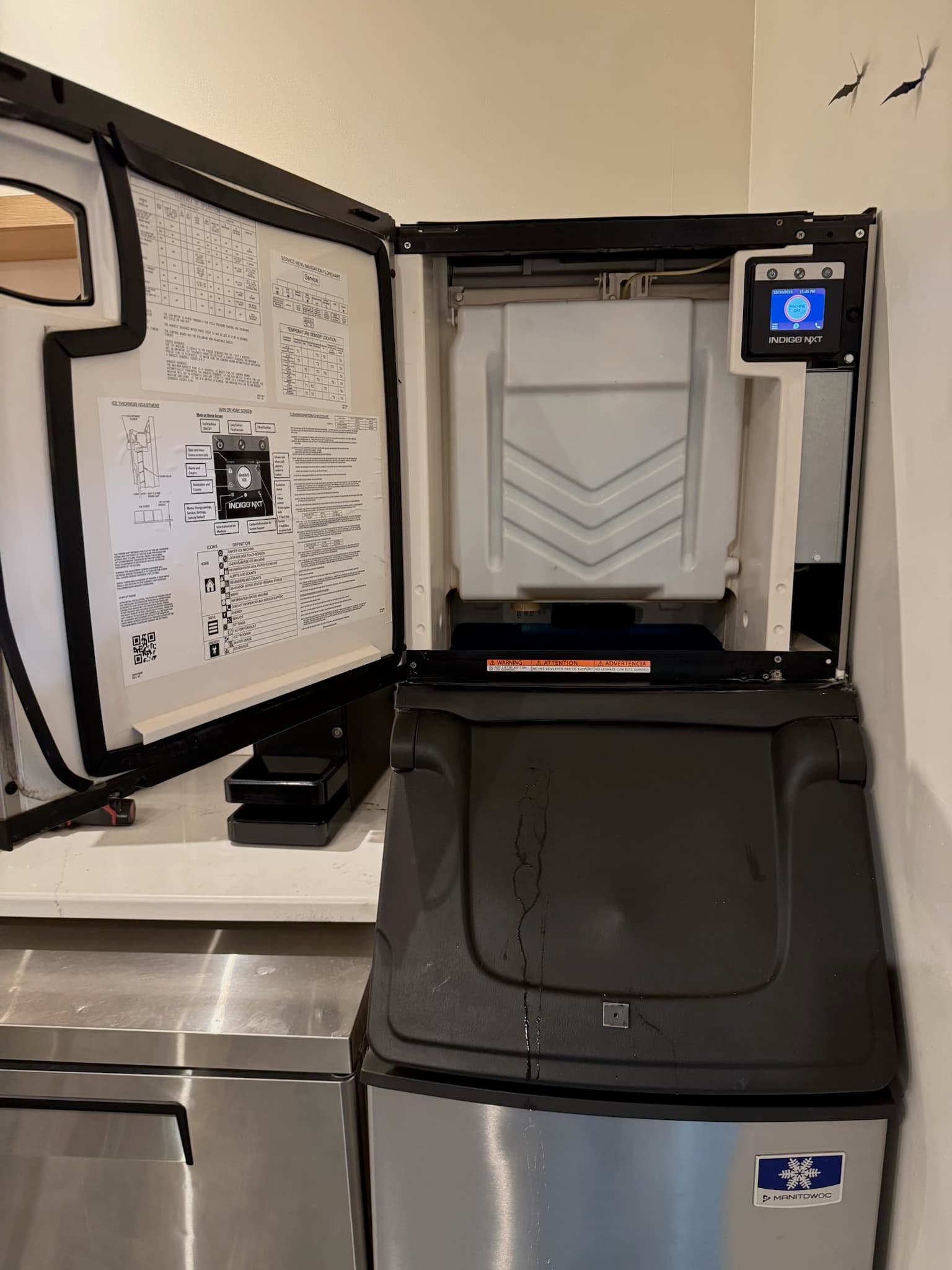
How ice machine service work plays out in Temecula
Ice runs out at the worst moment in Temecula: the third hour of a wedding reception in wine country, a Saturday afternoon on a crowded Old Town patio, or a summer evening at a hotel bar near the Promenade when the valley is still over ninety degrees. Most of these machines are air cooled and sit in back-of-house rooms that get hot during service, and air-cooled machines lose a meaningful share of their rated production once the room climbs past the mid eighties. A machine that produces plenty in March falls behind in July without anything being broken.
The valley's water adds the second problem. Water here tends to run hard, and mineral scale builds on evaporator plates and in water distribution tubes faster than many operators expect. Scale slows the freeze cycle, lengthens harvest, and eventually causes the machine to run long cycles that produce thin, cloudy ice. We see this most in machines that have been on a once-a-year cleaning schedule and in venues that only run hard for part of the year, which lets scale and slime establish during the slow months.
Our service for Temecula operators pairs a cleaning and sanitation schedule with a realistic look at capacity. For venues with event peaks, that often means a bin or storage strategy rather than a bigger machine, so ice made overnight is available at four in the afternoon. We check and change filtration, descale and sanitize the evaporator and water system, clean the condenser and verify its airflow in the room where it actually sits, and log everything in the DaVinci Portal so a health inspector or a corporate food safety audit sees a dated history. The commercial ice machine guide explains the cleaning intervals we recommend.
Temecula's climate and what it does to this equipment
Temecula sits farther from the coast than most of Southern California's urban areas but still catches a marine layer that funnels through the Rainbow Gap, so evenings can cool noticeably after very hot days. The wide daily temperature swing is hard on equipment because it stresses controls, economizers, and refrigerant systems differently from a steady climate. Summer afternoons are hot and dry, with gusty winds that carry dust from vineyards and construction sites into coils and intakes. Wildfire smoke from inland hills and the surrounding region can load filters, and fall Santa Ana conditions add heat and debris at the end of the cooling season.
For the equipment background behind this page, read our commercial ice machine guide or the full Ice Machines — Service & Sanitation service page.
- Old Town TemeculaFront Street restaurants, boutiques, and event spaces in older buildings, usually with compact rooftop or split equipment and limited access.
- Wine country and Rancho California RoadTasting rooms, resorts, event venues, and restaurants with seasonal peaks and walk-in storage that supports food and beverage programs.
- Temecula Valley Hospital and medical districtClinics, imaging centers, and specialty offices near the hospital campus with strict temperature and air quality expectations.
- Winchester Road and Ynez corridor business parksRetail centers, offices, and light industrial space with multi-tenant rooftop systems along the main commercial arteries.
- Scale removal, deep sanitation, and filter change-out programs
- Bin sensors, harvest cycles, pumps, and valves checked
- OEM-spec readings taken against manufacturer PM intervals
- DaVinci Portal: photo-logged cleanings and reminder scheduling
What a ice machine service visit includes, and the problems we most often find
- Check ice quality, production rate, and bin sensor operation
- Full descale of water lines and evaporator plate
- Sanitize all food-contact surfaces per manufacturer spec
- Inspect water filtration and replace if due
- Photo-document the cleaning for your compliance records
- Scale buildup from hard water slowing production and clouding ice
- Bin sensors misreading and causing over- or under-production
- Water filters overdue for change, affecting both taste and machine health
- Visible slime or mold in the bin — the most common health-inspection flag
Ice Machine Service in Temecula: questions we get
How often should an ice machine at a wine country venue be cleaned if it only runs hard from spring through harvest season?
Our Old Town bar's machine is in a hot back room with no window. Would moving to a water-cooled or remote-condenser unit help?
How often should ice machines be sanitized?
Can you fix low production without a full replacement?
Other services in Temecula
Ice Machine Service nearby in Inland Empire (Riverside & San Bernardino Counties)
Commercial HVAC and refrigeration across Inland Empire (Riverside & San Bernardino Counties)