RTU & Split Installs in Temecula, CA
Installs around Temecula often involve visible rooftops on hospitality and retail buildings, where noise, screening, and appearance matter to owners and landlords. We plan crane picks around trading hours, confirm curb and structural conditions, and select units with strong high ambient output and quiet operation where tenants and neighbors are sensitive. Permits and Title 24 documentation are handled in the project scope, and we coordinate with property managers who answer to local design standards and event calendars.
A hospitality-driven valley city where wine-country restaurants, Old Town dining, a growing medical sector, and business parks all depend on dependable cooling in summer heat and wind.
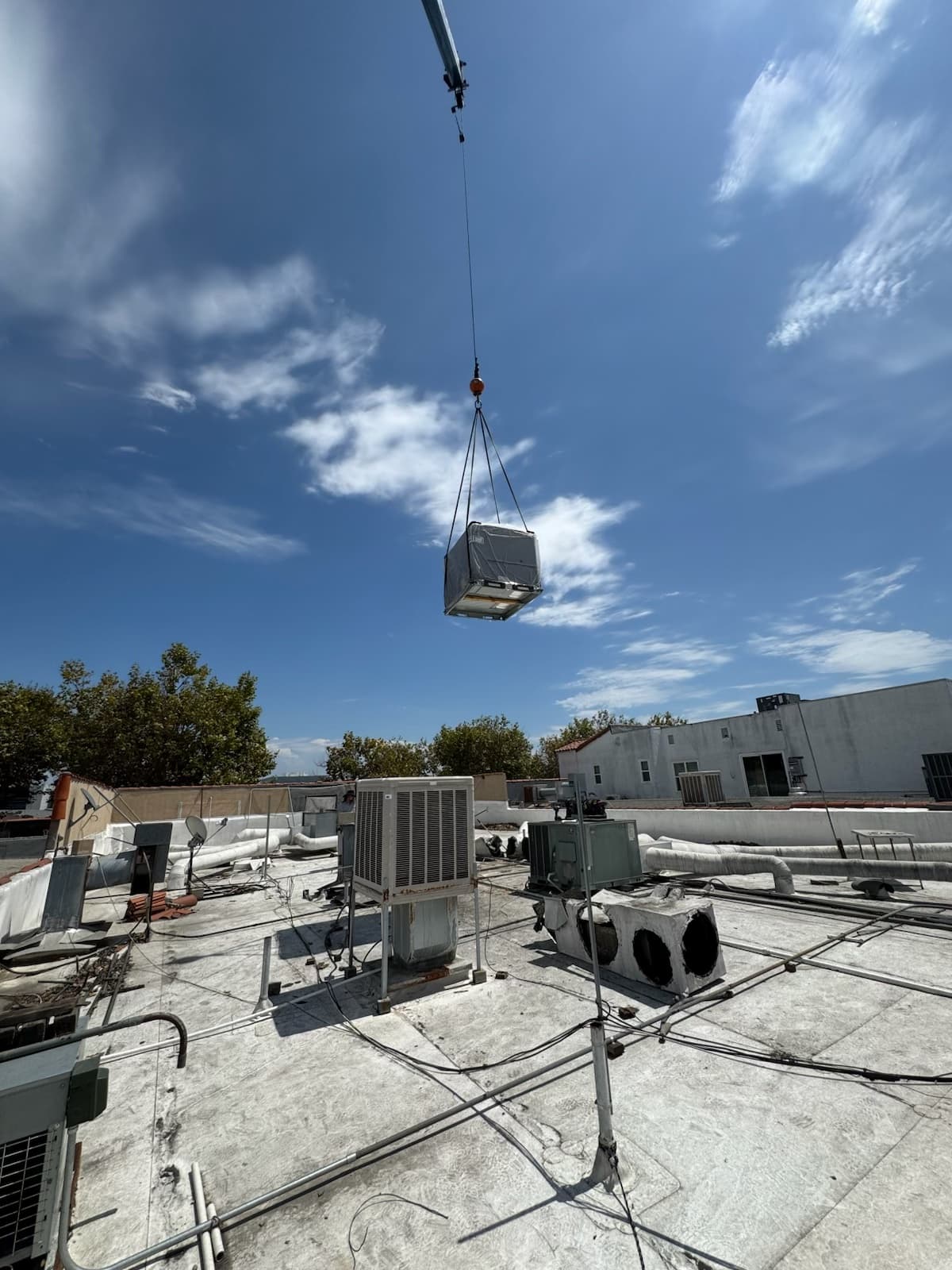
How rtu & split installs work plays out in Temecula
Replacing rooftop equipment in Temecula means working under more eyes than in most Inland Empire cities. Old Town operates under its own specific plan with design standards that care about how buildings read from the street, and the retail centers along Ynez Road and Winchester Road have landlords who want screening, color, and sound addressed before a crane shows up. Resort and tasting room owners in wine country are even more particular, because a bare condenser on a visible roof undercuts the setting they have spent years building. So the project starts with a conversation about sightlines and noise, not just tonnage.
Logistics follow from the property type. On Front Street, the buildings are small, the alleys are narrow, and a crane often has to set up in a public right of way with a city encroachment permit and a short closure window, which pushes the pick to an early weekday morning before foot traffic builds. Along the Promenade and the Temecula Parkway retail corridor, the problem is reversed: plenty of parking lot for a crane but tenants on every side who open at ten, so the pick has to be done and the roof buttoned up before then. Business parks around Enterprise Circle, Diaz Road, and Rancho Way are the easiest, with roof hatches and loading areas built for this kind of work.
Sizing matters more here than a load calculation alone suggests. Afternoons are hot, but the evening cool-down is real, so a unit that is simply oversized will short cycle through the shoulder hours and leave a dining room clammy. We size for the peak, specify units rated for high ambient, and pair them with economizers that can actually use the cool evening air. Permits, Title 24 acceptance testing, and the closeout record go in the project scope, and each new unit enters the DaVinci Portal with its startup readings. See commercial RTU replacement for how we scope these jobs.
Temecula's climate and what it does to this equipment
Temecula sits farther from the coast than most of Southern California's urban areas but still catches a marine layer that funnels through the Rainbow Gap, so evenings can cool noticeably after very hot days. The wide daily temperature swing is hard on equipment because it stresses controls, economizers, and refrigerant systems differently from a steady climate. Summer afternoons are hot and dry, with gusty winds that carry dust from vineyards and construction sites into coils and intakes. Wildfire smoke from inland hills and the surrounding region can load filters, and fall Santa Ana conditions add heat and debris at the end of the cooling season.
For the equipment background behind this page, read our commercial rooftop unit guide or the full RTU & Split System Installs service page.
- Old Town TemeculaFront Street restaurants, boutiques, and event spaces in older buildings, usually with compact rooftop or split equipment and limited access.
- Wine country and Rancho California RoadTasting rooms, resorts, event venues, and restaurants with seasonal peaks and walk-in storage that supports food and beverage programs.
- Temecula Valley Hospital and medical districtClinics, imaging centers, and specialty offices near the hospital campus with strict temperature and air quality expectations.
- Winchester Road and Ynez corridor business parksRetail centers, offices, and light industrial space with multi-tenant rooftop systems along the main commercial arteries.
- Site survey covering load, airflow balancing, and duct condition
- Clean rigging with code-correct gas, electrical, and condensate work
- Startup readings documented and stored in the Portal
- DaVinci Portal included: asset QR tag + warranty paperwork on file
What a rtu & split installs visit includes, and the problems we most often find
- Site survey — existing curb/duct compatibility, load, and airflow requirements
- Equipment selection sized to actual load and hours of operation, not just square footage
- Crane scheduling and rigging coordinated for roof access
- Install with code-correct gas, electrical, and condensate work
- Startup readings taken and documented; warranty registered in the Portal
- Undersized or oversized replacement units causing short-cycling or poor comfort
- Curb mismatches that turn a 'simple swap' into a bigger job mid-install
- Duct transitions that don't match the new unit's airflow requirements
- Aging units on refrigerant types that are getting harder and more expensive to service
RTU & Split Installs in Temecula: questions we get
Our building is in Old Town and the city has design standards for rooftop equipment. Does that change how a replacement is handled?
Can a crane realistically set a unit on a wine country restaurant roof without tearing up landscaping or closing the parking lot during an event weekend?
Do you handle the crane pick and rigging?
Can you match an existing curb or duct layout?
Other services in Temecula
RTU & Split Installs nearby in Inland Empire (Riverside & San Bernardino Counties)
Commercial HVAC and refrigeration across Inland Empire (Riverside & San Bernardino Counties)