Commercial Refrigeration in San Diego, CA
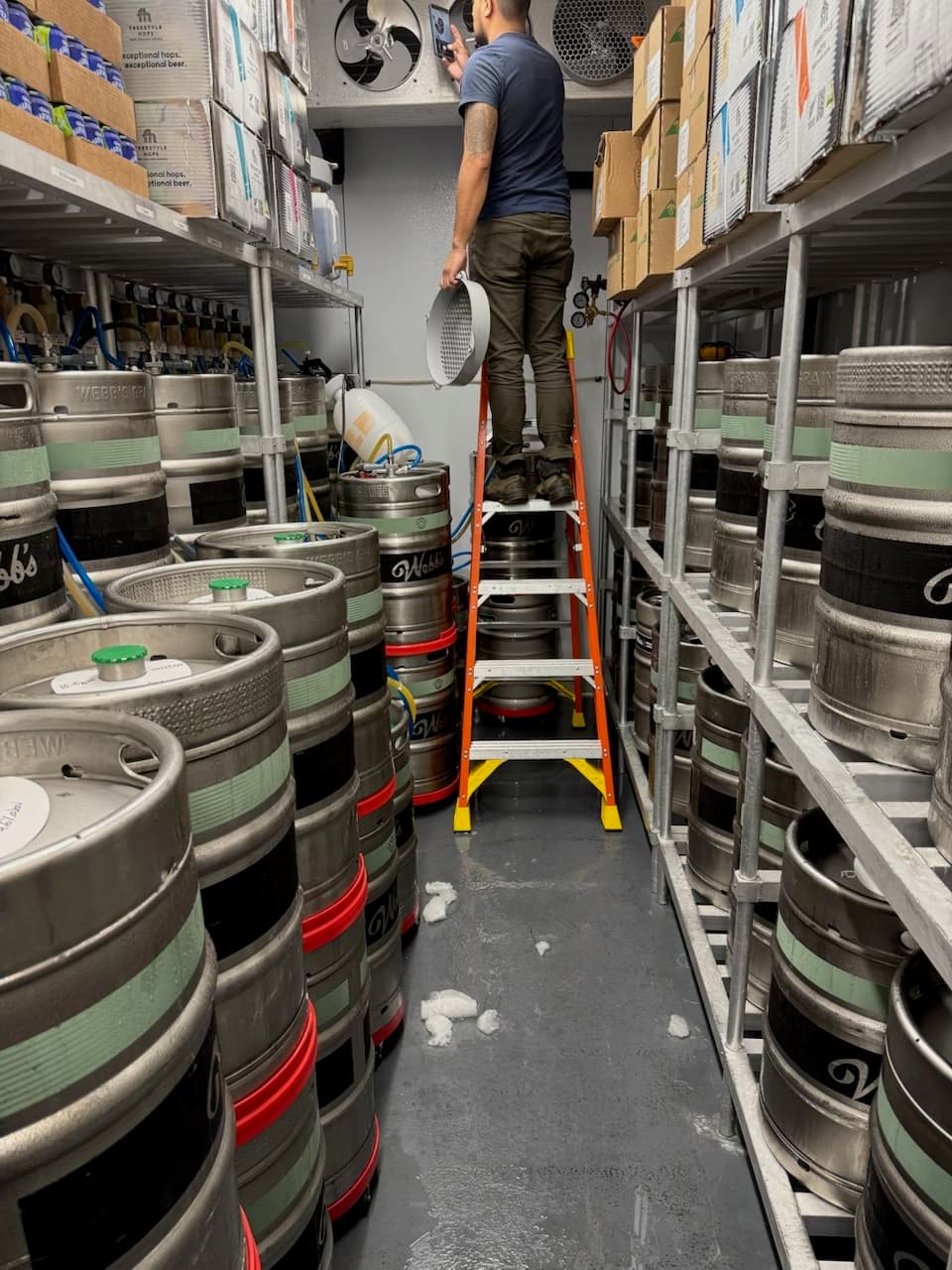
Gaslamp and downtown restaurants depend on walk-in coolers in basements, back-of-house corridors and alley-side enclosures where ambient heat from kitchens works against the system. Near the port and Barrio Logan, food distributors and cold-storage operations add larger rack and multiple-evaporator systems that run around the clock in humid, salty air. We diagnose defrost problems, airflow restrictions, refrigerant circuit faults and failing controls, and we document temperatures and readings so an inspector or a food-safety auditor sees a clear record.
A large, varied commercial market spanning downtown and Gaslamp hospitality, Kearny Mesa and Mira Mesa industrial space, Sorrento Valley life-science buildings, and the marine-industrial waterfront around the Port and Barrio Logan.
How commercial refrigeration work plays out in San Diego
San Diego's refrigeration load is concentrated in three very different places. Downtown and the Gaslamp hold hundreds of restaurant and bar walk-ins, many in basements or alley enclosures where the condensing unit breathes hot kitchen exhaust and the box door opens every ninety seconds on a Saturday. Convoy Street in Kearny Mesa is one of the densest food corridors in the county, with Asian markets, bakeries and restaurants running display cases, reach-ins and walk-ins in older strip buildings with limited roof space. The working waterfront around the Tenth Avenue Marine Terminal and Barrio Logan carries seafood, produce and food-distribution cold rooms that run around the clock in salty, humid air.
Each setting fails in its own way. Downtown boxes ice up because defrost cycles cannot keep pace with door traffic and humidity. Convoy Street condensing units sit on roofs shared with kitchen exhaust, so coils grease over and head pressures climb. Waterfront racks lose fins and fan motors to corrosion and need coil treatment and sacrificial hardware considered part of the maintenance plan, not an upgrade. We diagnose each of these at the source, with readings recorded so a County of San Diego food-facility inspector or a food-safety auditor sees a clear temperature history instead of a handwritten log.
Access is a planning item in every case. Downtown means tight alleys, parking that costs real time and roof access through occupied floors. Convoy means working around peak dining hours and shared roofs. The waterfront means gated yards and operating hours that do not pause for a service truck. A good outcome is a box that holds temperature through a convention weekend or a Saturday market rush, plus a record in the DaVinci Portal that shows exactly what was measured and changed. The walk-in cooler and freezer guide explains what we look at and why.
San Diego's climate and what it does to this equipment
San Diego's climate is mild on paper and punishing in the details. Near the bay and the coast, the marine layer brings persistent humidity and salt-laden air that attacks coil fins, fan housings, electrical enclosures and rooftop cabinet seams, so condenser coils on waterfront roofs fail earlier than the same models inland. Mesas such as Kearny Mesa and Mira Mesa sit a little warmer and drier. Late-summer and early-fall heat events, along with the occasional Santa Ana wind period, push cooling equipment hard just when many owners assume the season is over.
For the equipment background behind this page, read our walk-in cooler and freezer guide or the full Refrigeration: Walk-In & Reach-In Coolers/Freezers service page.
- Downtown and Gaslamp QuarterRestaurants, bars, hotels and mixed-use towers with rooftop equipment, shared riser systems, and kitchens that run late and hard through weekends and convention weeks.
- Kearny Mesa and Mira MesaA dense grid of flex-industrial, office and light manufacturing buildings along the Convoy, Ruffin and Miramar corridors, with large inventories of aging rooftop units.
- Sorrento Valley and Torrey Pines MesaLife-science and technology buildings where lab exhaust, tight temperature bands and documented control sequences matter as much as raw capacity.
- Port, Barrio Logan and the bayfrontMarine-industrial shops, cold storage, food distribution and support facilities exposed to salt air, with equipment that corrodes faster than anywhere inland.
- Evaporator/condenser coil cleaning and defrost checks
- TXV/EEV, superheat, subcool, and pressure readings logged
- Door seals, drains, heaters, and fan packages inspected
- DaVinci Portal: temps and pressures logged by asset over time
What a commercial refrigeration visit includes, and the problems we most often find
- Check current box temperature against setpoint and recent trend
- Inspect door seals, drains, and evaporator/condenser coils for buildup
- Take superheat, subcool, and pressure readings against manufacturer spec
- Address the root cause — not just a temporary recharge
- Log readings to the asset so drift is caught early next visit
- Door seals and hinges that no longer hold a tight close
- Evaporator coils iced over from a defrost cycle issue
- Condenser coils caked with grease or debris, especially near kitchen exhaust
- Slow refrigerant leaks that show up as gradual temperature drift, not sudden failure