Chiller & Central Plant Service in San Diego, CA
Downtown towers, hospital campuses and larger life-science complexes on the Torrey Pines mesa are where San Diego's central plants are most common. Cooling towers near the coast see unusual water chemistry and scale pressure, and plants serving laboratories or patient areas cannot tolerate long outages. We evaluate chillers, towers, pumps and controls as a system, advising on repair versus replacement, staging, and the sequencing that keeps a building cool during planned work.
A large, varied commercial market spanning downtown and Gaslamp hospitality, Kearny Mesa and Mira Mesa industrial space, Sorrento Valley life-science buildings, and the marine-industrial waterfront around the Port and Barrio Logan.
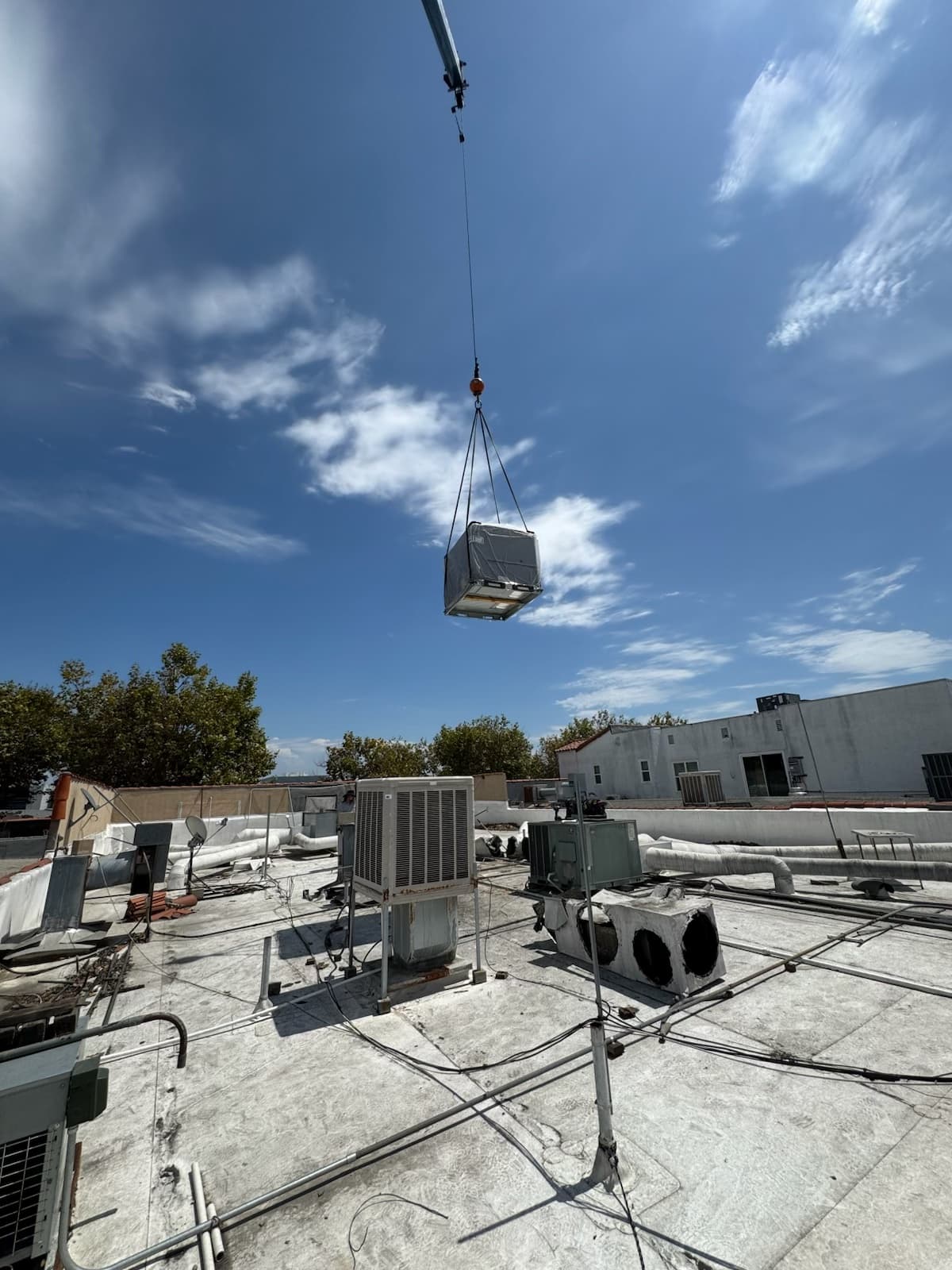
How chiller & central plant service work plays out in San Diego
San Diego's central plants cluster where buildings are large and loads are continuous: downtown office and hotel towers, the medical campuses in Hillcrest, Kearny Mesa and La Jolla, the research buildings along the Torrey Pines mesa and Sorrento Valley, and university facilities in University City. Many of these plants were built for a different tenant mix and have been modified several times since, so the current problems are rarely about a single chiller. They are about staging, pump control, a tower that is over its head in a heat event or sequencing that nobody has reviewed since the last controls upgrade.
The marine environment shapes the service picture. Cooling towers near the bay and the coast take on salt from the air as well as minerals from hard supply water, so water treatment has to be disciplined and basins, fill and drift eliminators need more frequent inspection. Air-cooled chillers on coastal roofs lose condenser surface to corrosion. Inland plants in Mission Valley and Rancho Bernardo run more hours at higher ambient and expose capacity shortfalls during late-season heat. A chiller that seems adequate in June can fall short in a September heat event, and the plant has to be evaluated against that condition rather than the yearly average.
Hospital and laboratory plants cannot go down for a planned repair without a real contingency, so our work there is sequenced: temporary cooling where required, phased component replacement, controls verification after each step and documented readings before and after. Larger plant replacements in San Diego are usually bid-level projects, and for public or institutional owners we come prepared for prevailing wage and certified payroll through our bid projects process. The chillers and hydronic systems guide covers the evaluation sequence we follow.
San Diego's climate and what it does to this equipment
San Diego's climate is mild on paper and punishing in the details. Near the bay and the coast, the marine layer brings persistent humidity and salt-laden air that attacks coil fins, fan housings, electrical enclosures and rooftop cabinet seams, so condenser coils on waterfront roofs fail earlier than the same models inland. Mesas such as Kearny Mesa and Mira Mesa sit a little warmer and drier. Late-summer and early-fall heat events, along with the occasional Santa Ana wind period, push cooling equipment hard just when many owners assume the season is over.
For the equipment background behind this page, read our chillers and hydronic systems guide or the full Chillers & Central Plant Service service page.
- Downtown and Gaslamp QuarterRestaurants, bars, hotels and mixed-use towers with rooftop equipment, shared riser systems, and kitchens that run late and hard through weekends and convention weeks.
- Kearny Mesa and Mira MesaA dense grid of flex-industrial, office and light manufacturing buildings along the Convoy, Ruffin and Miramar corridors, with large inventories of aging rooftop units.
- Sorrento Valley and Torrey Pines MesaLife-science and technology buildings where lab exhaust, tight temperature bands and documented control sequences matter as much as raw capacity.
- Port, Barrio Logan and the bayfrontMarine-industrial shops, cold storage, food distribution and support facilities exposed to salt air, with equipment that corrodes faster than anywhere inland.
- Chiller, tower, pump, and VFD service with logged operating data
- Trend-based diagnosis: approach, delta-T, amp draw, and pressures
- Replacement planning with rigging, power, and temporary cooling considered
- Water-treatment and Legionella-control coordination for water-cooled plants
What a chiller & central plant service visit includes, and the problems we most often find
- Review the plant: chillers, pumps, towers, controls, and recent operating history
- Take full operating readings and compare against design and prior visits
- Inspect and test safeties, strainers, VFDs, valves, and control sequences
- Report findings with prioritized repairs and a forward capital outlook
- Document the plant by asset in the DaVinci Portal for the next visit
- Falling delta-T pushing chillers to run more than the load requires
- Fouled condenser tubes or coils raising approach temperature and amp draw
- Neglected water treatment causing scale, corrosion, and biological growth
- Controls overridden to manual and never returned to automatic