Commercial Refrigeration in Escondido, CA
Food-related light industrial buildings and restaurants in downtown Escondido ask a lot of their refrigeration in hot weather. Condensing units on dusty roofs and yards clog quickly, and warm ambient air pushes head pressures up. Walk-in coolers, freezers and display cases need regular condenser attention and tight door and gasket control. We diagnose repeating temperature problems at the source and record readings for audits and inspections.
An inland North County city with a downtown core, auto-dealer and big-box corridors, a major hospital campus, and agriculture and food-related light industrial space exposed to real valley heat.
How commercial refrigeration work plays out in Escondido
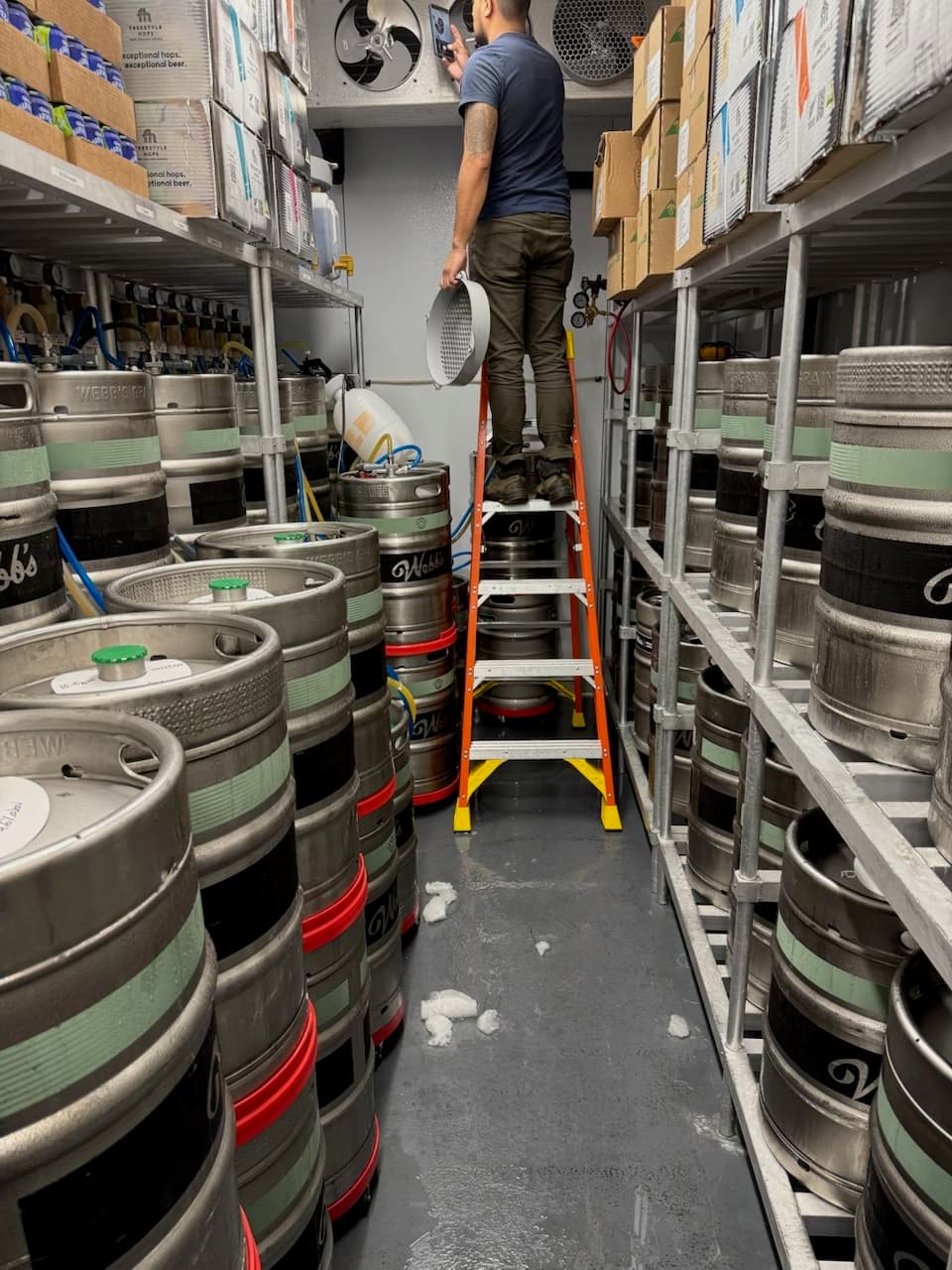
Refrigeration in Escondido lives in some of the hardest conditions in San Diego County. Packing, storage and food-processing buildings on the north and east edges of the city, along with distributors in the light-industrial areas off Mission Avenue and Enterprise Street, run walk-ins and cold rooms whose condensing units sit on dusty roofs or in open yards next to groves, grading and truck traffic. By midsummer a condenser can be half blocked with fine dust, head pressure rises with the ambient, and the box that held temperature in April struggles to pull down in the afternoon. Condenser cleaning here is not a once-a-year item.
Downtown restaurants along Grand Avenue and the markets and food businesses on East Valley Parkway and Escondido Boulevard have a smaller but equally hot version of the problem. Walk-ins in back alleys with the condensing unit on a low roof above a dumpster enclosure, reach-ins in kitchens that run well above comfortable, and display cases fighting a dining room that the rooftop unit cannot keep cool. The repair pattern is predictable: frost from a defrost issue or a door left open in the heat, a compressor running without rest, and a gasket or sweep that has given up.
A refrigeration visit in this city starts with the heat-rejection side and the temperature history, then moves to defrost, controls and door hardware. Readings for every box go into the DaVinci Portal, which matters for food businesses that have to show inspectors the equipment was holding temperature. Our commercial refrigeration systems guide and the food manufacturing and cold storage sector page cover the larger systems in more depth.
Escondido's climate and what it does to this equipment
Escondido's inland valley setting produces hot, dry summers, with afternoon temperatures that regularly run well above coastal levels and long cooling seasons stretching from late spring into fall. The marine layer reaches the valley only weakly, so humidity is low most of the year, and dust and agricultural debris load coils and filters quickly. Santa Ana wind events can add intense, dry heat in autumn. Rooftop units, condensers and refrigeration systems here run harder and longer than their coastal counterparts, which makes capacity margins, clean coils and healthy electrical components central to reliability.
For the equipment background behind this page, read our walk-in cooler and freezer guide or the full Refrigeration: Walk-In & Reach-In Coolers/Freezers service page.
- Downtown EscondidoRestaurants, civic and arts buildings, and older commercial blocks with mixed rooftop equipment and renovation history.
- Auto-dealer and big-box corridorsLarge flat-roofed showrooms, service buildings and retail centers whose rooftop units run long hours through valley heat.
- Hospital and medical districtA major hospital campus with surrounding medical offices that require continuous cooling, hot water and documented maintenance.
- Agricultural and light-industrial areasFood-related light industrial, packing and storage buildings, and warehouses where refrigeration and temperature-controlled space matter.
- Evaporator/condenser coil cleaning and defrost checks
- TXV/EEV, superheat, subcool, and pressure readings logged
- Door seals, drains, heaters, and fan packages inspected
- DaVinci Portal: temps and pressures logged by asset over time
What a commercial refrigeration visit includes, and the problems we most often find
- Check current box temperature against setpoint and recent trend
- Inspect door seals, drains, and evaporator/condenser coils for buildup
- Take superheat, subcool, and pressure readings against manufacturer spec
- Address the root cause — not just a temporary recharge
- Log readings to the asset so drift is caught early next visit
- Door seals and hinges that no longer hold a tight close
- Evaporator coils iced over from a defrost cycle issue
- Condenser coils caked with grease or debris, especially near kitchen exhaust
- Slow refrigerant leaks that show up as gradual temperature drift, not sudden failure
Commercial Refrigeration in Escondido: questions we get
How often do condensers on our Escondido cold-storage building really need cleaning?
In a dusty yard near agricultural land, far more often than the manual implies. A visual inspection monthly during the warm season and a proper cleaning at least quarterly is a reasonable starting point, with adjustments based on what the first season shows. Dust loading is the leading cause of high head pressure and compressor failures on inland refrigeration, and it is cheaper to clean a coil than to replace a compressor in August.
Our Grand Avenue restaurant walk-in cannot hold temperature on hot afternoons but is fine at night. Is the compressor failing?
Possibly, but check the heat rejection first. A condensing unit on a hot roof or in an enclosed alley may be seeing air far above design temperature, and a dirty coil or a weak fan makes it worse. Combine that with a kitchen door opening constantly during service and the box simply cannot keep up. We measure under afternoon load, clean and test the condenser, and check the refrigerant circuit before anyone decides the compressor is at fault.
Can you service equipment during business hours?
We can work around service windows for kitchens and retail floors, including early-morning or after-hours visits when product safety is time-sensitive.
Do you handle health-department documentation?
Yes — temperature and pressure readings are logged to the asset in the Portal, so you have a record ready for inspection.