Building Controls & Automation in San Diego, CA
Kearny Mesa, Mira Mesa and Sorrento Valley buildings often carry layers of controls from several renovation eras. Schedules drift, economizers stick in the wrong position and sensors lose calibration, quietly wasting energy and creating comfort complaints. In life-science space, control sequences also protect the work being done inside. We verify thermostats, schedules, sensors and economizer operation, correct what is wrong, and leave documented settings so the next technician is not starting from guesswork.
A large, varied commercial market spanning downtown and Gaslamp hospitality, Kearny Mesa and Mira Mesa industrial space, Sorrento Valley life-science buildings, and the marine-industrial waterfront around the Port and Barrio Logan.
How building controls & automation work plays out in San Diego
A University City office tower and a Mira Mesa flex building can have the same controls complaint for opposite reasons. The tower has a building automation system that was commissioned a decade ago for a single tenant and has since been patched by three different contractors, so schedules overlap, setpoints contradict each other and the economizers run on logic nobody can explain. The flex building has no automation at all, just a dozen thermostats of different brands, each set by whoever complained last, and an energy bill that reflects it. Both buildings waste cooling hours in a climate where free cooling from the marine layer should be doing a large share of the work.
San Diego's economizer opportunity is unusually large because outdoor air is in the usable range so much of the year, which also means a stuck damper, a failed outdoor air sensor or a misconfigured changeover costs more here than it would inland. In Sorrento Valley and Torrey Pines laboratories, the stakes go beyond energy: control sequences maintain pressure relationships and temperature bands that protect the work inside, and a drifted sensor can quietly take a space out of specification. Medical office buildings in Hillcrest and Kearny Mesa carry the same concern for exam and procedure rooms.
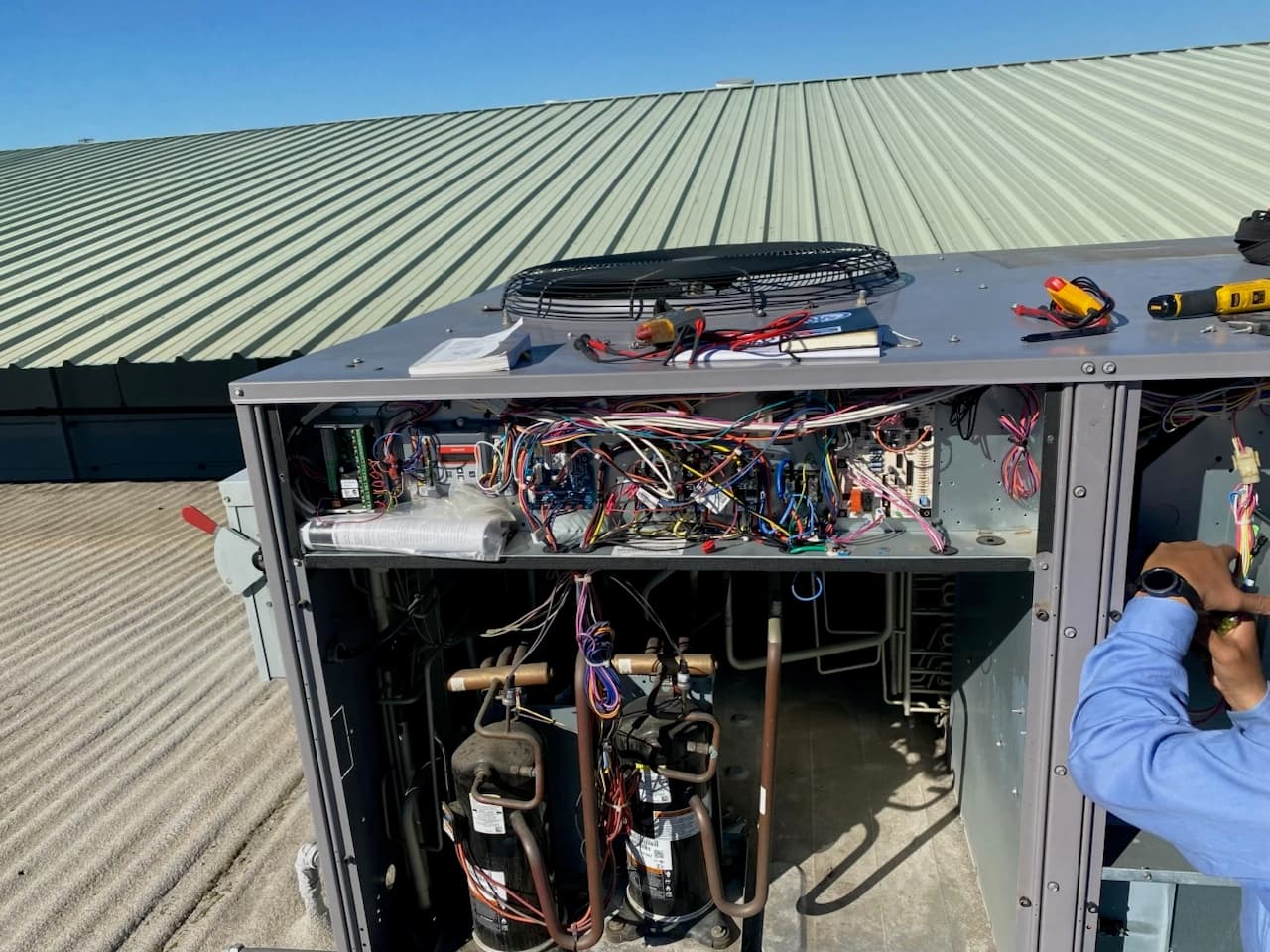
The job is verification before change. We confirm what each sensor actually reads, test economizer dampers through their full travel, check schedules against real occupancy and document setpoints before adjusting them. Where a building automation system exists, we work within it and leave a written record of every change; where it does not, we recommend the minimum that will actually hold, which is sometimes better thermostats and a schedule rather than a full system. The result is recorded in the Portal so the next technician does not reset the building to defaults. The diagnostics and root-cause guide covers why we start with measurement.
San Diego's climate and what it does to this equipment
San Diego's climate is mild on paper and punishing in the details. Near the bay and the coast, the marine layer brings persistent humidity and salt-laden air that attacks coil fins, fan housings, electrical enclosures and rooftop cabinet seams, so condenser coils on waterfront roofs fail earlier than the same models inland. Mesas such as Kearny Mesa and Mira Mesa sit a little warmer and drier. Late-summer and early-fall heat events, along with the occasional Santa Ana wind period, push cooling equipment hard just when many owners assume the season is over.
For the equipment background behind this page, read our building controls and energy guide or the full Building Controls & Automation service page.
- Downtown and Gaslamp QuarterRestaurants, bars, hotels and mixed-use towers with rooftop equipment, shared riser systems, and kitchens that run late and hard through weekends and convention weeks.
- Kearny Mesa and Mira MesaA dense grid of flex-industrial, office and light manufacturing buildings along the Convoy, Ruffin and Miramar corridors, with large inventories of aging rooftop units.
- Sorrento Valley and Torrey Pines MesaLife-science and technology buildings where lab exhaust, tight temperature bands and documented control sequences matter as much as raw capacity.
- Port, Barrio Logan and the bayfrontMarine-industrial shops, cold storage, food distribution and support facilities exposed to salt air, with equipment that corrodes faster than anywhere inland.
- Schedule, setpoint, and sequence review across rooftop and central equipment
- Sensor calibration and economizer verification
- Alarm and trend setup so problems surface early
- Programmable and networked thermostat installation
What a building controls & automation visit includes, and the problems we most often find
- Inventory controllers, thermostats, and any building automation system
- Compare schedules and setpoints to how the building is actually used
- Verify sensors, actuators, and economizer logic against measured conditions
- Correct overrides, sequences, and alarms; document the changes
- Review trends after adjustment to confirm savings and stability
- Schedules left at default so equipment runs when nobody is there
- Equipment overridden manually and never returned to automatic
- Drifting or miswired sensors producing comfort complaints
- Economizers that never actually modulate