Commercial Refrigeration in Oceanside, CA
Restaurants around the harbor and downtown, plus grocery and food operations along Mission Avenue and Oceanside Boulevard, depend on walk-ins and reach-ins that run year-round in humid air. Condensing units on harbor-side roofs and patios face salt exposure that shortens their life. We diagnose frost buildup, poor temperature holding and compressor issues at the root, and log readings so the operator has solid records for inspections.
A harbor and downtown city on the north coast with hospitals, light-industrial space along the Oceanside Boulevard and Mission Avenue corridors, and an economy shaped by neighboring Camp Pendleton.
How commercial refrigeration work plays out in Oceanside
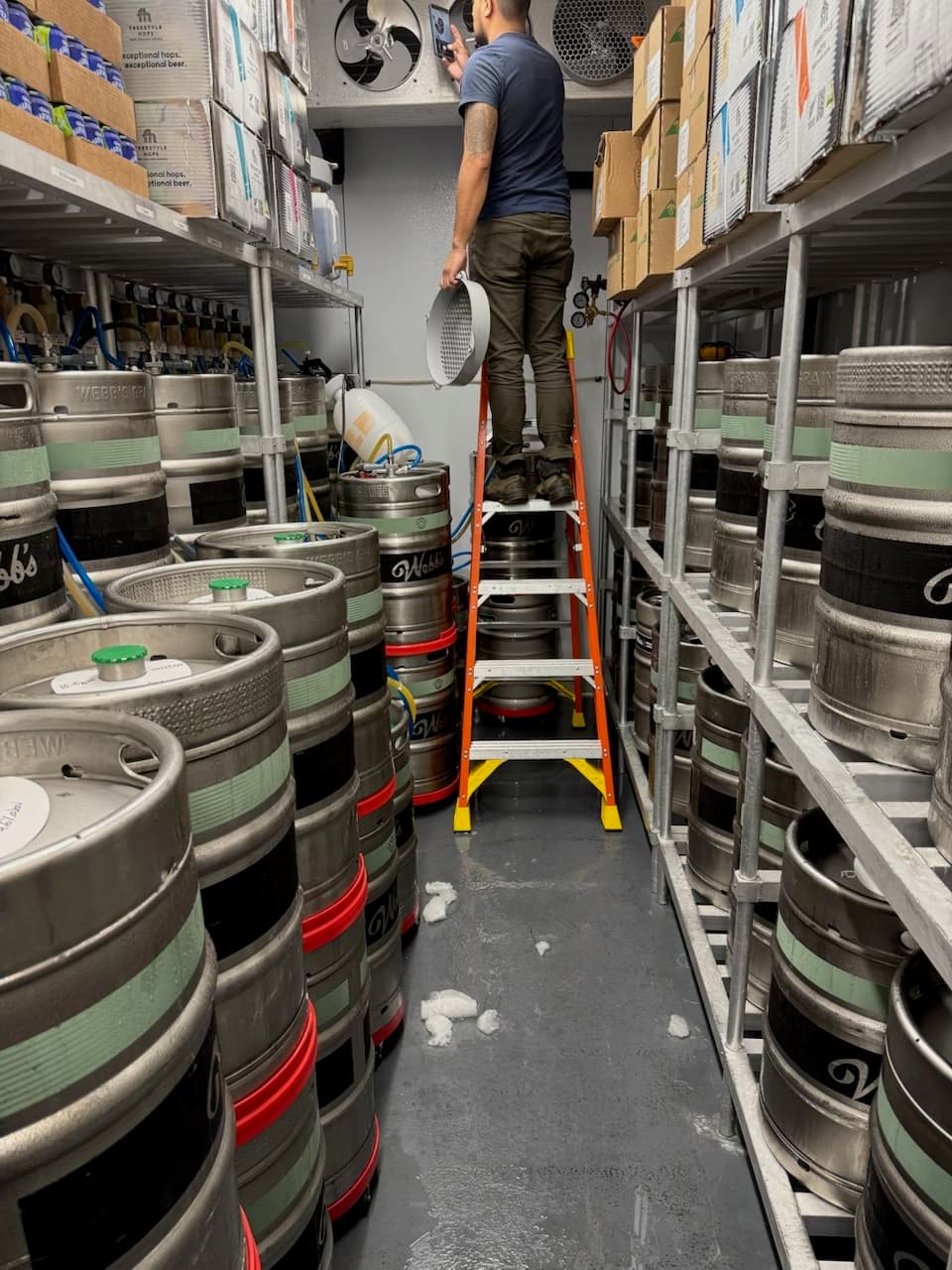
Walk-in failures in Oceanside cluster in two places: the restaurant and bar rows around the harbor, pier and Mission Avenue downtown, and the markets and food businesses strung along Oceanside Boulevard and Mission Avenue further east. The downtown boxes are often in tight back-of-house spaces with condensing units outside on a patio wall or a small roof, where ocean air and kitchen grease combine to foul coils quickly. Frost on the evaporator, a floor that sweats and a compressor that runs without rest are the usual signs, and the cause is more often airflow, a failing door gasket or a defrost timer than the compressor everyone wants to replace.
Grocery and specialty markets serving Oceanside's large and diverse population run display cases, reach-ins and multiple walk-ins through long hours, and they have health inspections to pass. A typical job starts with a temperature history, moves to the condenser and the defrost cycle, and ends with logged readings for each box so the manager has a record to show. Where a parallel rack or several condensing units share a roof, we check the whole heat-rejection side because one dirty condenser can drag down its neighbors on a warm afternoon.
The inland light-industrial buildings in Rancho del Oro and along the Oceanside Boulevard corridor sometimes include small cold rooms for food distributors, floral or produce handlers, or lab and medical storage. Those boxes need tighter documentation and are often forgotten until an alarm goes off at night. We treat them the same way we treat a restaurant walk-in: find the actual cause, fix it, and leave readings and photos in the DaVinci Portal. Our walk-in cooler and freezer guide explains the common failure modes in plain terms.
Oceanside's climate and what it does to this equipment
Oceanside's weather follows the coast: cool, damp mornings under the marine layer, mild afternoons and persistent humidity. Salt carried inland by onshore breezes works on equipment near the harbor and the beach, corroding coils, housings and electrical terminals more quickly than in nearby inland cities. Summers are comfortable by Southern California standards, but the eastern, inland parts of the city can warm noticeably on days when the marine layer retreats. Equipment therefore faces two different problems depending on the street: salt and moisture near the water, and longer, hotter run times farther east.
For the equipment background behind this page, read our walk-in cooler and freezer guide or the full Refrigeration: Walk-In & Reach-In Coolers/Freezers service page.
- Downtown and Oceanside HarborRestaurants, hotels and mixed-use buildings near the pier and harbor, where kitchens and rooftop equipment live in salt air and tight service access.
- Oceanside Boulevard and Mission Avenue corridorsShopping centers, professional offices and older retail with aging rooftop units and tenants that change faster than the equipment is updated.
- Rancho del Oro and the inland industrial areasLight-industrial, warehouse and flex buildings serving local trades and distribution, with large open volumes and a mix of heating and cooling needs.
- Medical campusesHospital and medical office buildings that depend on continuous cooling, reliable hot water and documented maintenance records.
- Evaporator/condenser coil cleaning and defrost checks
- TXV/EEV, superheat, subcool, and pressure readings logged
- Door seals, drains, heaters, and fan packages inspected
- DaVinci Portal: temps and pressures logged by asset over time
What a commercial refrigeration visit includes, and the problems we most often find
- Check current box temperature against setpoint and recent trend
- Inspect door seals, drains, and evaporator/condenser coils for buildup
- Take superheat, subcool, and pressure readings against manufacturer spec
- Address the root cause — not just a temporary recharge
- Log readings to the asset so drift is caught early next visit
- Door seals and hinges that no longer hold a tight close
- Evaporator coils iced over from a defrost cycle issue
- Condenser coils caked with grease or debris, especially near kitchen exhaust
- Slow refrigerant leaks that show up as gradual temperature drift, not sudden failure