Ice Machine Service in San Diego, CA
Hotels, bars and restaurants across downtown and the Gaslamp go through ice at a pace few other markets match, especially during convention weeks and summer weekends. Ice machines in bayfront and coastal buildings also contend with mineral-heavy supply water and salty ambient air. We service for production, not just appearance: scale removal, water filtration checks, condenser cleaning, sanitation cycles and sensor verification, with records that help a hospitality group show it takes ice safety seriously.
A large, varied commercial market spanning downtown and Gaslamp hospitality, Kearny Mesa and Mira Mesa industrial space, Sorrento Valley life-science buildings, and the marine-industrial waterfront around the Port and Barrio Logan.
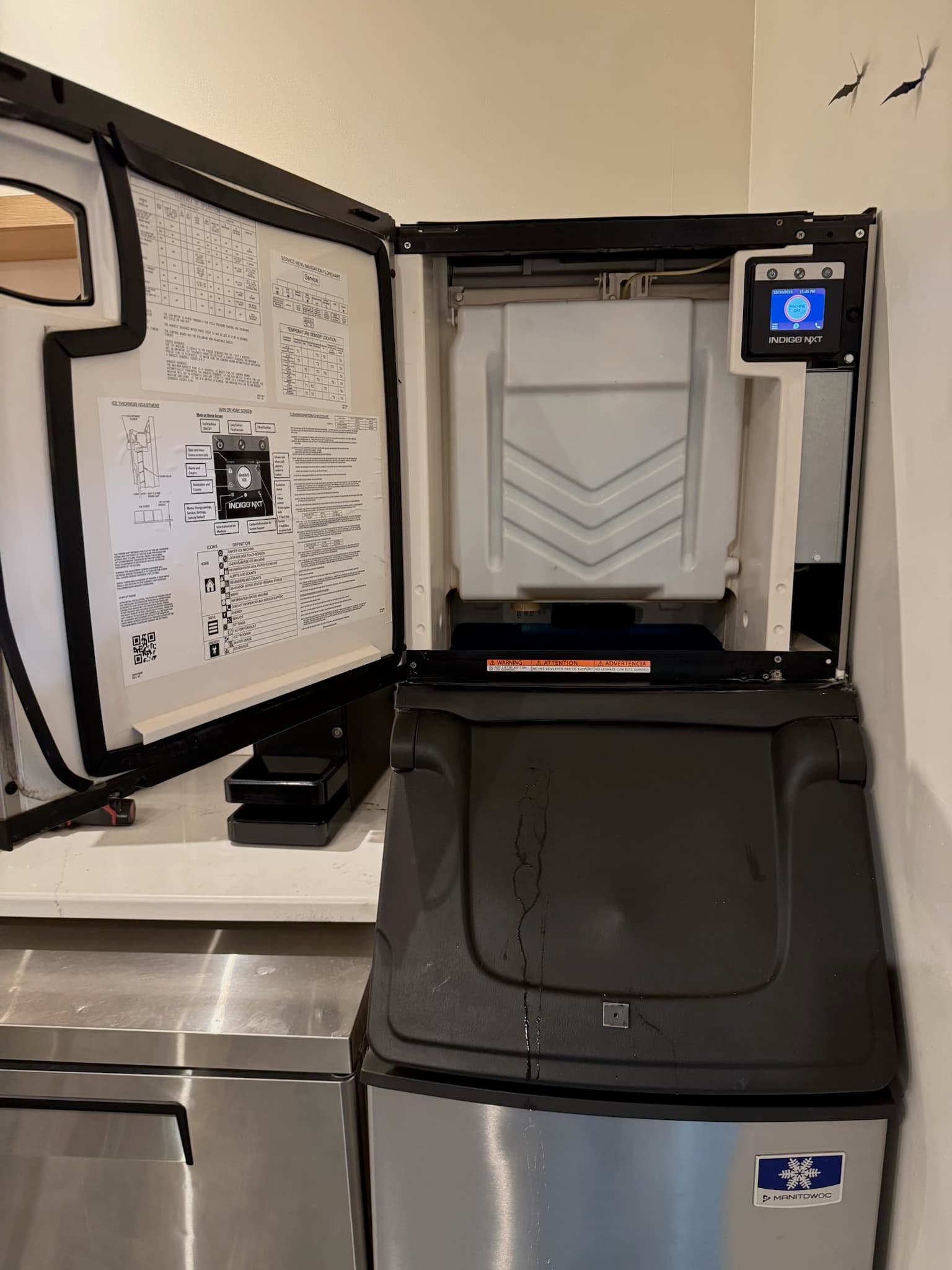
How ice machine service work plays out in San Diego
Ice in San Diego is a hospitality utility. Hotels along the Embarcadero and in Hotel Circle, bars in the Gaslamp, rooftop venues in East Village and stadium-adjacent restaurants near Petco Park all run machines that are expected to produce without pause through convention weeks, summer weekends and game days. In practice, many of those machines live in hot back-of-house corridors, on mezzanines above kitchens or in storage rooms with no dedicated airflow, and their output falls just as demand rises.
Two local conditions make this worse. San Diego's imported water supply is hard, so evaporator plates and distribution tubes scale quickly if filtration is neglected, and nugget and flake machines in particular lose production as scale builds. Near the bay, salt air corrodes air-cooled condensers and exposed fasteners, and remote condensers on bayfront roofs suffer the same fate as rooftop units. We service for production and sanitation together: descaling, cleaning and sanitizing cycles, condenser cleaning, water filter verification, bin and chute inspection and a check of actual harvest against rated output.
The records matter as much as the work in this market. Hospitality groups managing several properties want to show that every machine was cleaned and sanitized on a documented schedule, and a County health inspection goes faster when the history is easy to produce. Each machine gets a QR-coded record so a manager can scan the unit and see its last service. When a machine is undersized for a venue's real demand or sited where it will never cool properly, we say so and discuss relocation or remote condensing rather than returning every month. The commercial ice machine guide covers the maintenance cycle in detail.
San Diego's climate and what it does to this equipment
San Diego's climate is mild on paper and punishing in the details. Near the bay and the coast, the marine layer brings persistent humidity and salt-laden air that attacks coil fins, fan housings, electrical enclosures and rooftop cabinet seams, so condenser coils on waterfront roofs fail earlier than the same models inland. Mesas such as Kearny Mesa and Mira Mesa sit a little warmer and drier. Late-summer and early-fall heat events, along with the occasional Santa Ana wind period, push cooling equipment hard just when many owners assume the season is over.
For the equipment background behind this page, read our commercial ice machine guide or the full Ice Machines — Service & Sanitation service page.
- Downtown and Gaslamp QuarterRestaurants, bars, hotels and mixed-use towers with rooftop equipment, shared riser systems, and kitchens that run late and hard through weekends and convention weeks.
- Kearny Mesa and Mira MesaA dense grid of flex-industrial, office and light manufacturing buildings along the Convoy, Ruffin and Miramar corridors, with large inventories of aging rooftop units.
- Sorrento Valley and Torrey Pines MesaLife-science and technology buildings where lab exhaust, tight temperature bands and documented control sequences matter as much as raw capacity.
- Port, Barrio Logan and the bayfrontMarine-industrial shops, cold storage, food distribution and support facilities exposed to salt air, with equipment that corrodes faster than anywhere inland.
- Scale removal, deep sanitation, and filter change-out programs
- Bin sensors, harvest cycles, pumps, and valves checked
- OEM-spec readings taken against manufacturer PM intervals
- DaVinci Portal: photo-logged cleanings and reminder scheduling
What a ice machine service visit includes, and the problems we most often find
- Check ice quality, production rate, and bin sensor operation
- Full descale of water lines and evaporator plate
- Sanitize all food-contact surfaces per manufacturer spec
- Inspect water filtration and replace if due
- Photo-document the cleaning for your compliance records
- Scale buildup from hard water slowing production and clouding ice
- Bin sensors misreading and causing over- or under-production
- Water filters overdue for change, affecting both taste and machine health
- Visible slime or mold in the bin — the most common health-inspection flag
Ice Machine Service in San Diego: questions we get
Our East Village rooftop bar runs out of ice on event nights at Petco Park. Is the machine failing or just small?
Usually one of three things: the machine is sized for an average night rather than a peak, it is sitting in a warm space that cuts its production, or scale has quietly reduced output over months. We measure harvest weight and cycle time against the manufacturer rating at the actual room temperature, check the condenser and water quality, and then tell you whether service restores capacity or whether a second machine or a remote-condenser unit is the real fix.
How often should a hotel ice machine near the Embarcadero be descaled and sanitized?
Manufacturers typically call for cleaning and sanitizing at least twice a year, and in San Diego's hard water with heavy hospitality use, quarterly is the realistic standard for busy machines. Bayfront machines also need their condensers inspected for salt corrosion on the same visit. Your filter change interval depends on water volume, so we log it per machine and schedule it in the Portal instead of relying on memory.
How often should ice machines be sanitized?
Most manufacturers recommend sanitizing every six months minimum, more often in high-mineral water areas. We'll set the interval based on your machine and water supply.
Can you fix low production without a full replacement?
Often, yes. Scale buildup, refrigerant charge, and water filtration are the most common causes of low ice production and are usually repairable.