RTU & Split Installs in San Diego, CA
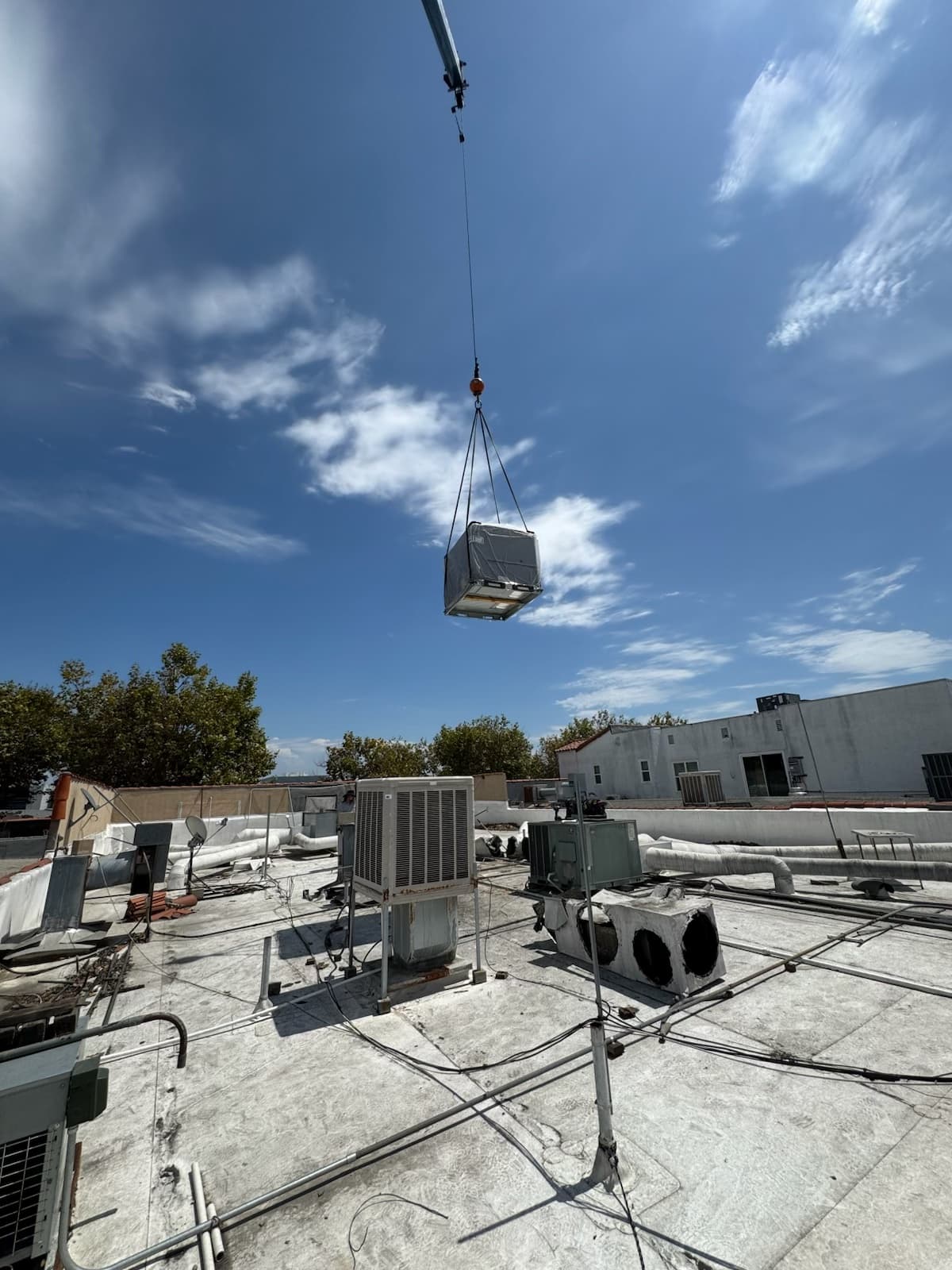
Rooftop replacement across San Diego usually means matching new packaged units to existing curbs on flat-roofed Kearny Mesa and Mira Mesa buildings, often with a crane day coordinated around tenants and neighboring businesses. Coastal and bayfront roofs need corrosion-resistant coil options considered up front rather than after the first failure. Permits, load calculations and Title 24 compliance are handled as part of scope, and the old units are removed and documented so facility managers have a clean before-and-after record.
A large, varied commercial market spanning downtown and Gaslamp hospitality, Kearny Mesa and Mira Mesa industrial space, Sorrento Valley life-science buildings, and the marine-industrial waterfront around the Port and Barrio Logan.
How rtu & split installs work plays out in San Diego
The typical San Diego rooftop replacement is not a single unit. It is a flat-roofed Mira Mesa or Kearny Mesa industrial building with six to twenty packaged units that have aged together, and an owner trying to decide whether to replace the worst three now or stage the whole roof over two budget cycles. Our role is to make that decision a clean one: inventory every unit, match curbs and electrical, identify which units are undersized for the current tenant and which are oversized, and lay out phases that fit a crane day without blocking the loading dock. Miramar Road buildings sit under approach paths for MCAS Miramar, so crane lift planning sometimes carries extra notice requirements; confirm current rules before the lift date.
Downtown and Little Italy change the physics. Podium roofs on mixed-use buildings, narrow streets that need a traffic control plan for a crane, and units that have to be set early on a weekend morning before restaurant deliveries arrive. Permits run through the City of San Diego Development Services Department, and replacements have to satisfy current Title 24 requirements including economizer, fan control and acceptance testing where applicable. Our commercial RTU replacement process is built so the paperwork and the lift plan are finished before the old unit comes off.
On coastal and bayfront roofs from Point Loma through Barrio Logan, the specification matters more than the brand. Coated coils, stainless or treated hardware and attention to cabinet drainage buy years of life in salt air, and we raise those choices in the proposal rather than after the first corrosion complaint. A finished project leaves the owner with start-up readings, permit sign-off and a QR-coded asset record for every unit set, so the building's history begins on day one instead of in someone's truck.
San Diego's climate and what it does to this equipment
San Diego's climate is mild on paper and punishing in the details. Near the bay and the coast, the marine layer brings persistent humidity and salt-laden air that attacks coil fins, fan housings, electrical enclosures and rooftop cabinet seams, so condenser coils on waterfront roofs fail earlier than the same models inland. Mesas such as Kearny Mesa and Mira Mesa sit a little warmer and drier. Late-summer and early-fall heat events, along with the occasional Santa Ana wind period, push cooling equipment hard just when many owners assume the season is over.
For the equipment background behind this page, read our commercial rooftop unit guide or the full RTU & Split System Installs service page.
- Downtown and Gaslamp QuarterRestaurants, bars, hotels and mixed-use towers with rooftop equipment, shared riser systems, and kitchens that run late and hard through weekends and convention weeks.
- Kearny Mesa and Mira MesaA dense grid of flex-industrial, office and light manufacturing buildings along the Convoy, Ruffin and Miramar corridors, with large inventories of aging rooftop units.
- Sorrento Valley and Torrey Pines MesaLife-science and technology buildings where lab exhaust, tight temperature bands and documented control sequences matter as much as raw capacity.
- Port, Barrio Logan and the bayfrontMarine-industrial shops, cold storage, food distribution and support facilities exposed to salt air, with equipment that corrodes faster than anywhere inland.
- Site survey covering load, airflow balancing, and duct condition
- Clean rigging with code-correct gas, electrical, and condensate work
- Startup readings documented and stored in the Portal
- DaVinci Portal included: asset QR tag + warranty paperwork on file
What a rtu & split installs visit includes, and the problems we most often find
- Site survey — existing curb/duct compatibility, load, and airflow requirements
- Equipment selection sized to actual load and hours of operation, not just square footage
- Crane scheduling and rigging coordinated for roof access
- Install with code-correct gas, electrical, and condensate work
- Startup readings taken and documented; warranty registered in the Portal
- Undersized or oversized replacement units causing short-cycling or poor comfort
- Curb mismatches that turn a 'simple swap' into a bigger job mid-install
- Duct transitions that don't match the new unit's airflow requirements
- Aging units on refrigerant types that are getting harder and more expensive to service