Maintenance Plans in San Diego, CA
A maintenance program in San Diego has to account for where the building sits. Waterfront and coastal properties benefit from more frequent coil inspections and cleanings because salt and humidity shorten intervals, while Kearny Mesa and Mira Mesa industrial buildings are better served by filter and belt routines tied to dust and tenant load. Our plans are structured quarterly, bi-annual or annual, and every visit lands in the DaVinci Portal so a property manager across several buildings can see what was done and what is coming.
A large, varied commercial market spanning downtown and Gaslamp hospitality, Kearny Mesa and Mira Mesa industrial space, Sorrento Valley life-science buildings, and the marine-industrial waterfront around the Port and Barrio Logan.
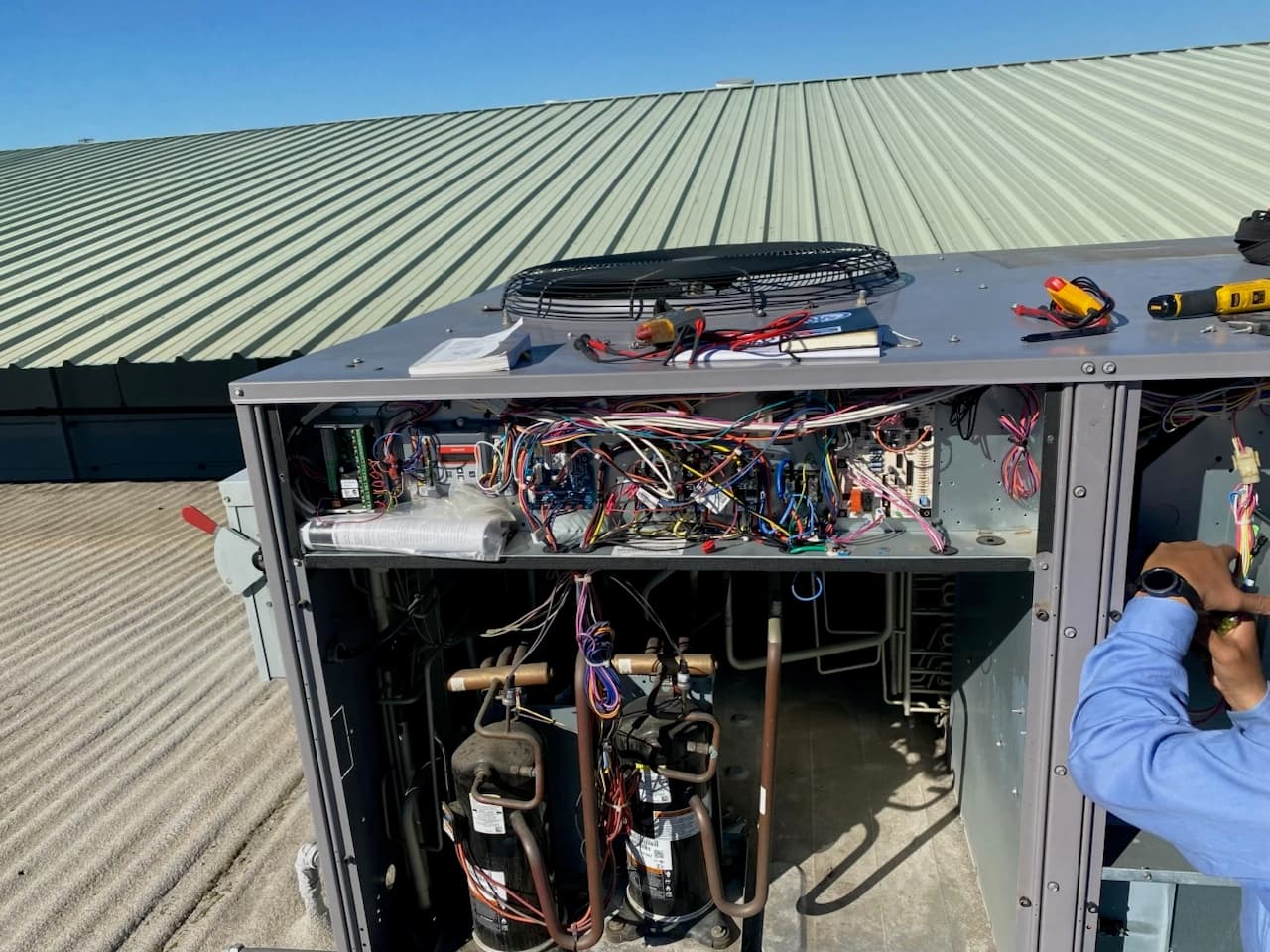
How maintenance plans work plays out in San Diego
The maintenance calendar in San Diego runs backward from what newcomers expect. The hottest, most equipment-punishing weeks are usually in September and early October, after the marine layer thins and before the first Santa Ana period, so a program that finishes its cooling-season checks in May has left the hardest stretch uncovered. We schedule coil cleaning, refrigerant verification and electrical inspection so that rooftop and refrigeration equipment is in its best condition going into late summer, with a second look before the fall heat.
Geography sets the interval. A Kearny Mesa or Mira Mesa flex building with light-manufacturing tenants and roofs full of packaged units does well on a bi-annual rhythm with filters and belts handled in between, because dust and tenant load are the main enemies. A Gaslamp restaurant group, a Hillcrest medical office or a Convoy Street market needs quarterly attention because kitchens, refrigeration and ice run continuously and failure is immediate. Waterfront properties in Barrio Logan, Point Loma and along Harbor Drive need coil rinsing and corrosion checks added to whatever tier they sit in, because salt does not wait for the next scheduled visit.
What makes a program work across a city this spread out is documentation. A property manager with buildings in Mission Valley, University City and downtown cannot stand on every roof, so every visit is recorded in the DaVinci Portal with readings, photos and open items against each QR-tagged asset. Plans run quarterly, bi-annual or annual depending on the property, and the preventive maintenance program guide explains how we decide which tier fits a given building. Life-science and medical sites get tighter documentation by default because their auditors expect it.
San Diego's climate and what it does to this equipment
San Diego's climate is mild on paper and punishing in the details. Near the bay and the coast, the marine layer brings persistent humidity and salt-laden air that attacks coil fins, fan housings, electrical enclosures and rooftop cabinet seams, so condenser coils on waterfront roofs fail earlier than the same models inland. Mesas such as Kearny Mesa and Mira Mesa sit a little warmer and drier. Late-summer and early-fall heat events, along with the occasional Santa Ana wind period, push cooling equipment hard just when many owners assume the season is over.
For the equipment background behind this page, read our preventive maintenance program guide or the full Commercial Maintenance Plans service page.
- Downtown and Gaslamp QuarterRestaurants, bars, hotels and mixed-use towers with rooftop equipment, shared riser systems, and kitchens that run late and hard through weekends and convention weeks.
- Kearny Mesa and Mira MesaA dense grid of flex-industrial, office and light manufacturing buildings along the Convoy, Ruffin and Miramar corridors, with large inventories of aging rooftop units.
- Sorrento Valley and Torrey Pines MesaLife-science and technology buildings where lab exhaust, tight temperature bands and documented control sequences matter as much as raw capacity.
- Port, Barrio Logan and the bayfrontMarine-industrial shops, cold storage, food distribution and support facilities exposed to salt air, with equipment that corrodes faster than anywhere inland.
- Free diagnostic on repairs for plan members
- Included labor per tier, with a member rate for anything over
- Photo-logged reports with temps, pressures, and amp draws
- DaVinci Portal included with QR tracking and self-service scheduling
What a maintenance plans visit includes, and the problems we most often find
- Walk every covered asset — RTUs, refrigeration, ice machines, water heaters
- Take and log readings against each unit's history, not a generic checklist
- Flag anything trending toward failure before it becomes a breakdown
- Deliver a photo-logged report after every visit
- Free diagnostic on any repair that comes out of the visit
- Equipment that 'seemed fine' failing without any maintenance history to catch the trend
- Multiple pieces of equipment aging out around the same time with no replacement plan
- Surprise repair costs that a documented PM history would have flagged months earlier
- Multi-location accounts with no consistent record across sites
Maintenance tiers for San Diego properties
Plans for San Diego properties are built around exposure: more frequent coil and drain attention for waterfront and coastal buildings, filter and belt routines for the Kearny Mesa and Mira Mesa industrial grid, and tighter documentation for life-science and medical space.
See maintenance plan tiers