Commercial Refrigeration in Carlsbad, CA
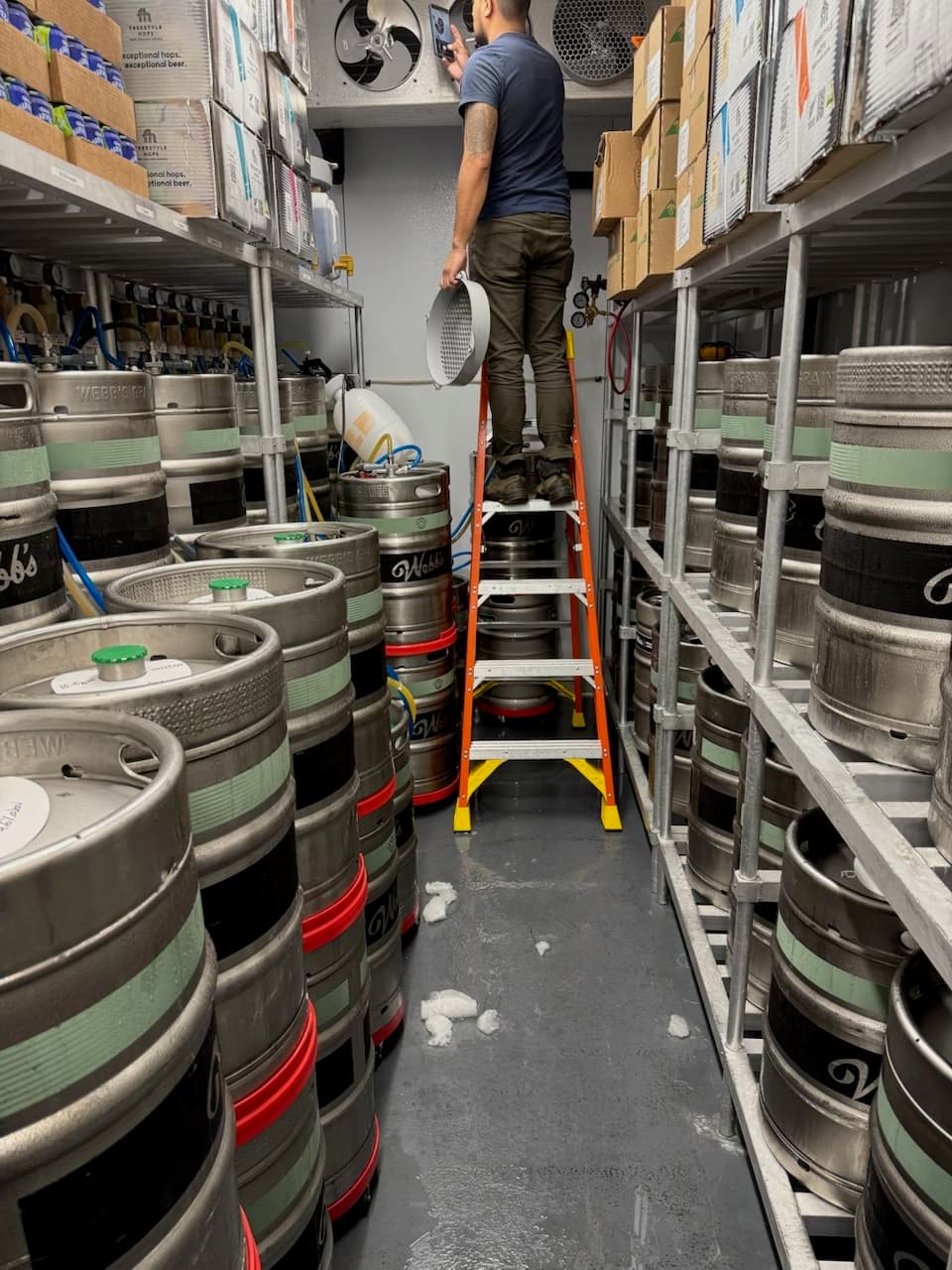
In Carlsbad Village, walk-in coolers are often small, tucked into alley enclosures or converted back rooms with limited airflow around the condensing units. Humid marine air makes condenser coil maintenance and defrost performance a recurring theme. Resort kitchens and grocery operations near the coast add larger systems with more demanding schedules. We diagnose temperature swings, ice buildup and short cycling at the source and keep readings on record for health inspections and food-safety audits.
Coastal North County city known for life-science and golf and outdoor-industry campuses, a walkable Village restaurant core, and business space near McClellan-Palomar Airport.
How commercial refrigeration work plays out in Carlsbad
The refrigeration that matters in Carlsbad lives in two very different kinds of buildings. In the Village, restaurants and bars along State Street, Carlsbad Village Drive and Grand Avenue run compact walk-ins and reach-ins, often in alley enclosures, converted storage rooms or under stairs, with condensing units squeezed onto small roofs beside kitchen exhaust. A block or two from the beach, the air is damp and salty, so these units ice up in humid weather, lose fins to corrosion and run hot when the condenser shares a roof with a hood fan.
On the other side of the city, life-science and medical device buildings along Faraday Avenue and in the Carlsbad Research Center carry cold rooms, reach-in laboratory refrigerators and sometimes ultra-low freezers whose contents are worth far more than the equipment. Resort kitchens around La Costa and Aviara, grocery anchors in the El Camino Real centers and food service at the larger attractions near the lagoon add commercial-scale walk-ins and display cases with long operating hours and real traffic.
Each setting gets diagnosed on its own terms. For a Village box, that means checking condenser clearance and cleanliness, verifying defrost timing against the actual humidity, testing door gaskets and heaters and finding the leak rather than topping off. For a lab cold room, it means confirming temperature uniformity, alarm function and the redundancy the tenant assumes it has. For a grocery or resort kitchen, it means readings logged against each case and box so the operator has a history for a County of San Diego food-facility inspection. All of it goes into the DaVinci Portal, and the walk-in cooler and freezer guide explains what we look for and why.
Carlsbad's climate and what it does to this equipment
Carlsbad sits close enough to the Pacific that its weather is dominated by the marine layer: cool, damp mornings, moderate afternoons and humid air that carries salt well inland along the lagoon corridors. Summers rarely produce extreme heat, which can lull owners into skipping coil care, yet the constant moisture and salt exposure corrode fan motors, cabinets and electrical connections steadily. Occasional inland heat or Santa Ana wind events briefly stress cooling equipment on the eastern edges of the city. Equipment near the lagoons and the shoreline tends to age faster than similar models only a few miles inland.
For the equipment background behind this page, read our walk-in cooler and freezer guide or the full Refrigeration: Walk-In & Reach-In Coolers/Freezers service page.
- Palomar Airport Road and Faraday Avenue corridorLife-science, medical device and technology campuses and business parks with single-story buildings, rooftop equipment and tight temperature requirements.
- Carlsbad VillageA walkable grid of restaurants, bars and shops with compact kitchens, alley-side coolers and equipment exposed to marine air a few blocks from the beach.
- McClellan-Palomar Airport areaHangar-style and light-industrial buildings, flex space and aviation-related tenants with large open volumes and mixed heating and cooling needs.
- Coastal resort and retail areasHotels, resort properties and shopping destinations near the shoreline that need quiet, reliable comfort and hot water through peak visitor periods.
- Evaporator/condenser coil cleaning and defrost checks
- TXV/EEV, superheat, subcool, and pressure readings logged
- Door seals, drains, heaters, and fan packages inspected
- DaVinci Portal: temps and pressures logged by asset over time
What a commercial refrigeration visit includes, and the problems we most often find
- Check current box temperature against setpoint and recent trend
- Inspect door seals, drains, and evaporator/condenser coils for buildup
- Take superheat, subcool, and pressure readings against manufacturer spec
- Address the root cause — not just a temporary recharge
- Log readings to the asset so drift is caught early next visit
- Door seals and hinges that no longer hold a tight close
- Evaporator coils iced over from a defrost cycle issue
- Condenser coils caked with grease or debris, especially near kitchen exhaust
- Slow refrigerant leaks that show up as gradual temperature drift, not sudden failure