Maintenance Plans in Oceanside, CA
A plan for an Oceanside shopping center looks different from one for a harbor restaurant or a hospital-adjacent medical office. Coastal properties need closer attention to coils, drains and electrical protection, while inland industrial buildings benefit from steady filter and belt programs. Our quarterly, bi-annual and annual plans are tailored to the property, with every visit recorded in the DaVinci Portal for easy review by owners and managers.
A harbor and downtown city on the north coast with hospitals, light-industrial space along the Oceanside Boulevard and Mission Avenue corridors, and an economy shaped by neighboring Camp Pendleton.
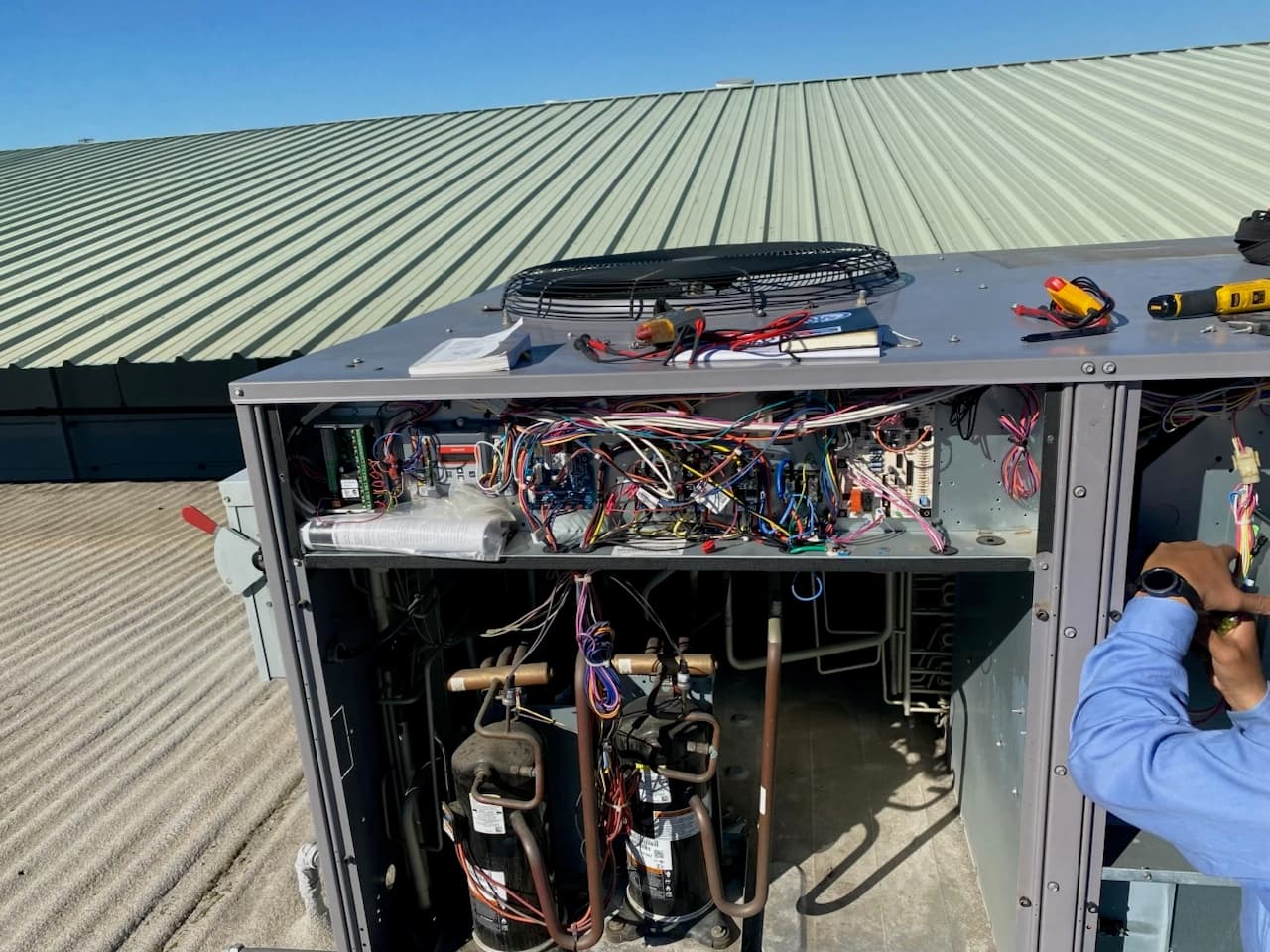
How maintenance plans work plays out in Oceanside
The maintenance calendar in Oceanside is set by the marine layer more than the thermometer. Along the coast, cooling demand is moderate for most of the year, so rooftop units can look healthy while corrosion quietly eats coils, fan guards and electrical terminals. A plan for a harbor-area hotel, a Coast Highway restaurant or a beachfront mixed-use building therefore leans toward coil rinsing and treatment, inspection of panel seals and disconnects, and condensate drain service, with filter and belt work as the routine layer underneath. The visit count is set by the load: quarterly for kitchens and hospitality, bi-annual for professional space.
Move inland to the Rancho del Oro and Ocean Ranch business parks and the retail along College Boulevard and Oceanside Boulevard, and the plan looks more conventional. Longer run times on warm afternoons, dust from open land and construction, and tenants who change every few years mean filters, belts, economizer checks and thermostat schedules do the heavy lifting. Medical office buildings around the Tri-City Medical Center area add tighter expectations: temperature logs, documented filter changes and a record a practice administrator can hand to an auditor without explanation.
Property managers with several Oceanside buildings get the most from a plan when every roof is in one system. Each unit carries a QR tag, every visit uploads readings and photos to the DaVinci Portal, and the repair-versus-replace picture across the portfolio becomes visible instead of anecdotal. Our preventive maintenance program guide covers what belongs in each tier, and the plans page describes the quarterly, bi-annual and annual structures.
Oceanside's climate and what it does to this equipment
Oceanside's weather follows the coast: cool, damp mornings under the marine layer, mild afternoons and persistent humidity. Salt carried inland by onshore breezes works on equipment near the harbor and the beach, corroding coils, housings and electrical terminals more quickly than in nearby inland cities. Summers are comfortable by Southern California standards, but the eastern, inland parts of the city can warm noticeably on days when the marine layer retreats. Equipment therefore faces two different problems depending on the street: salt and moisture near the water, and longer, hotter run times farther east.
For the equipment background behind this page, read our preventive maintenance program guide or the full Commercial Maintenance Plans service page.
- Downtown and Oceanside HarborRestaurants, hotels and mixed-use buildings near the pier and harbor, where kitchens and rooftop equipment live in salt air and tight service access.
- Oceanside Boulevard and Mission Avenue corridorsShopping centers, professional offices and older retail with aging rooftop units and tenants that change faster than the equipment is updated.
- Rancho del Oro and the inland industrial areasLight-industrial, warehouse and flex buildings serving local trades and distribution, with large open volumes and a mix of heating and cooling needs.
- Medical campusesHospital and medical office buildings that depend on continuous cooling, reliable hot water and documented maintenance records.
- Free diagnostic on repairs for plan members
- Included labor per tier, with a member rate for anything over
- Photo-logged reports with temps, pressures, and amp draws
- DaVinci Portal included with QR tracking and self-service scheduling
What a maintenance plans visit includes, and the problems we most often find
- Walk every covered asset — RTUs, refrigeration, ice machines, water heaters
- Take and log readings against each unit's history, not a generic checklist
- Flag anything trending toward failure before it becomes a breakdown
- Deliver a photo-logged report after every visit
- Free diagnostic on any repair that comes out of the visit
- Equipment that 'seemed fine' failing without any maintenance history to catch the trend
- Multiple pieces of equipment aging out around the same time with no replacement plan
- Surprise repair costs that a documented PM history would have flagged months earlier
- Multi-location accounts with no consistent record across sites
Maintenance tiers for Oceanside properties
Oceanside plans pair well with the city's mix of properties: tighter coil and corrosion checks for harbor and coastal sites, and steady filter, belt and controls routines for inland retail, industrial and medical buildings.
See maintenance plan tiers