Maintenance Plans in Escondido, CA
A good plan in Escondido front-loads the cooling season. Coil cleaning, electrical component checks and refrigerant verification in spring prevent the failures that cluster in the first heat wave, while fall visits prepare heating equipment and check economizers. We build quarterly, bi-annual and annual programs around the property and its tenants, with each visit documented in the DaVinci Portal.
An inland North County city with a downtown core, auto-dealer and big-box corridors, a major hospital campus, and agriculture and food-related light industrial space exposed to real valley heat.
How maintenance plans work plays out in Escondido
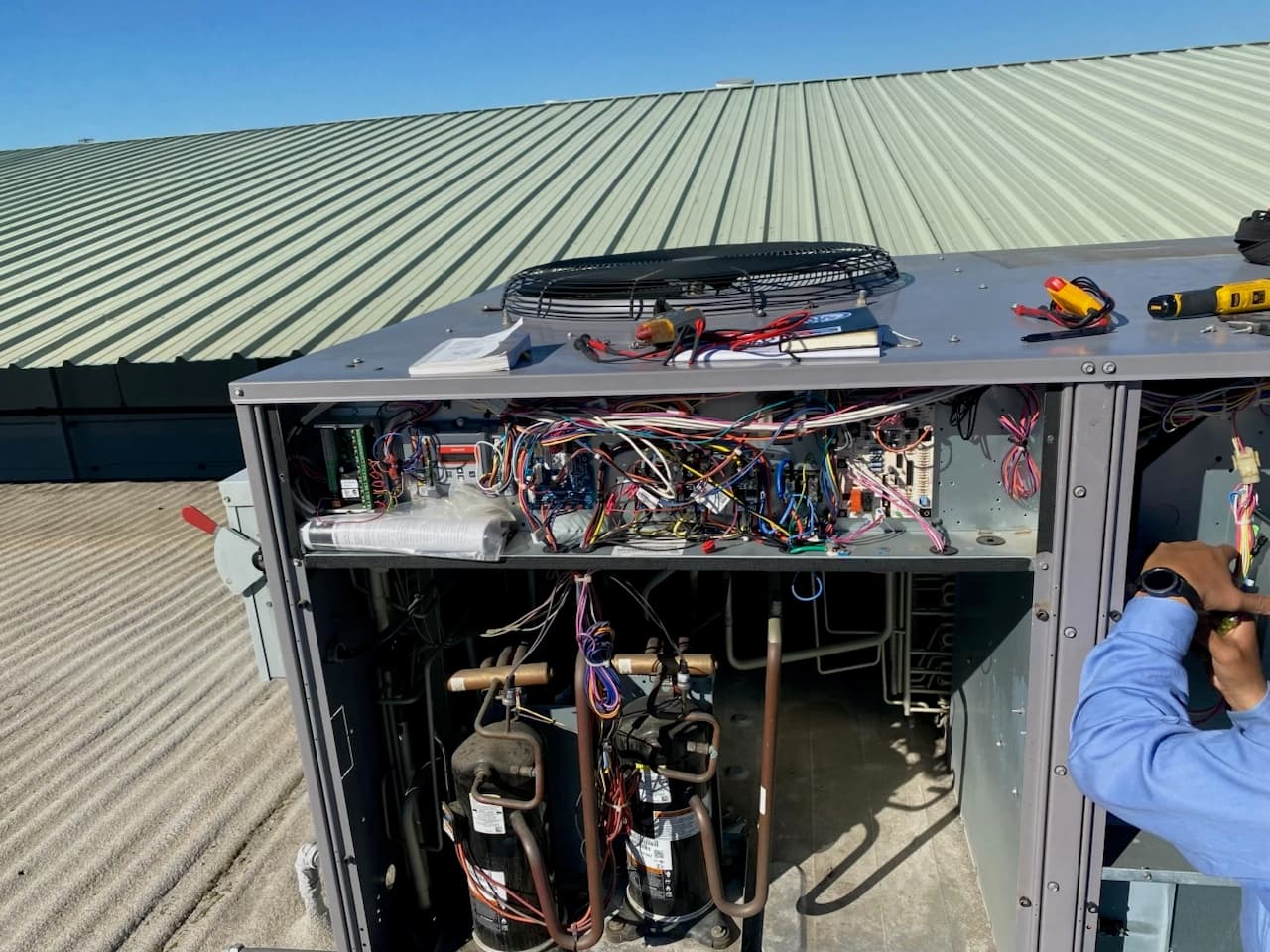
If a maintenance program in Escondido does one thing well, it should be getting every piece of cooling equipment ready before the first hot week. The spring visit on a dealership, retail center or medical office building carries most of the year's value: condenser coils cleaned of winter dust, refrigerant charge verified, capacitors and contactors checked, condenser fan motors tested, drains cleared and economizers confirmed to close when outdoor air is too hot to use. A unit that passes that inspection in April rarely becomes an August emergency.
The second visit depends on the property. Food-related buildings and restaurants need a midsummer check because dust and heat shorten every interval, and their refrigeration cannot go a full season between condenser cleanings. Offices and medical suites take a fall visit that shifts attention to heating, economizer operation in the mild months and thermostat schedules. Large roofs on the Auto Park Way and Interstate 15 corridors benefit from a quarterly rhythm simply because of the number of units and the consequences of finding ten failures at once.
Escondido owners with buildings in several parts of the city, or managers with sites across North County, use the DaVinci Portal to see all of it in one place: which units are aging, which condensers load fastest, which roofs need replacement planning. The plans page describes the quarterly, bi-annual and annual tiers, and the maintenance program guide explains what belongs in each visit.
Escondido's climate and what it does to this equipment
Escondido's inland valley setting produces hot, dry summers, with afternoon temperatures that regularly run well above coastal levels and long cooling seasons stretching from late spring into fall. The marine layer reaches the valley only weakly, so humidity is low most of the year, and dust and agricultural debris load coils and filters quickly. Santa Ana wind events can add intense, dry heat in autumn. Rooftop units, condensers and refrigeration systems here run harder and longer than their coastal counterparts, which makes capacity margins, clean coils and healthy electrical components central to reliability.
For the equipment background behind this page, read our preventive maintenance program guide or the full Commercial Maintenance Plans service page.
- Downtown EscondidoRestaurants, civic and arts buildings, and older commercial blocks with mixed rooftop equipment and renovation history.
- Auto-dealer and big-box corridorsLarge flat-roofed showrooms, service buildings and retail centers whose rooftop units run long hours through valley heat.
- Hospital and medical districtA major hospital campus with surrounding medical offices that require continuous cooling, hot water and documented maintenance.
- Agricultural and light-industrial areasFood-related light industrial, packing and storage buildings, and warehouses where refrigeration and temperature-controlled space matter.
- Free diagnostic on repairs for plan members
- Included labor per tier, with a member rate for anything over
- Photo-logged reports with temps, pressures, and amp draws
- DaVinci Portal included with QR tracking and self-service scheduling
What a maintenance plans visit includes, and the problems we most often find
- Walk every covered asset — RTUs, refrigeration, ice machines, water heaters
- Take and log readings against each unit's history, not a generic checklist
- Flag anything trending toward failure before it becomes a breakdown
- Deliver a photo-logged report after every visit
- Free diagnostic on any repair that comes out of the visit
- Equipment that 'seemed fine' failing without any maintenance history to catch the trend
- Multiple pieces of equipment aging out around the same time with no replacement plan
- Surprise repair costs that a documented PM history would have flagged months earlier
- Multi-location accounts with no consistent record across sites
Maintenance tiers for Escondido properties
Escondido plans should front-load the cooling season with spring coil, refrigerant and electrical checks, followed by fall heating and economizer verification for dealerships, medical offices and food-related buildings.
See maintenance plan tiers