Ice Machine Service in Carlsbad, CA
Hotels, resorts, beachfront restaurants and bars in Carlsbad lean heavily on ice, particularly on warm weekends and during event season. Salt-laden air accelerates corrosion on exposed machines and their condensers, and local supply water can leave scale on evaporator plates. We handle descaling, sanitizing, filter and water-quality checks, and verify that ice production matches the demand of the venue, with service records that stand up to a manager's or inspector's questions.
Coastal North County city known for life-science and golf and outdoor-industry campuses, a walkable Village restaurant core, and business space near McClellan-Palomar Airport.
How ice machine service work plays out in Carlsbad
Summer weekends define the ice problem in Carlsbad. Beachfront restaurants along Carlsbad Boulevard, Village bars, the resort properties around La Costa and Aviara and food service at the attractions near the lagoon all see demand spike with visitors, and the machines that kept up in March fall behind in July. The usual culprits are a machine sited in a hot, enclosed back room, scale that has quietly cut harvest capacity over months and a condenser corroded by salt air on a roof or patio a few hundred yards from the surf.
Hospitality here also brings a quality expectation. Resort guests notice cloudy ice and off flavors, and a hotel that runs several machines across bars, banquet kitchens and guest floors needs them all cleaned and sanitized on a documented cycle. Carlsbad's supply water is hard, so evaporator plates and distribution tubes scale predictably, and filter changes have to be logged per machine rather than guessed. Business park cafeterias and life-science break rooms add smaller machines that are easy to forget until an inspection or a complaint.
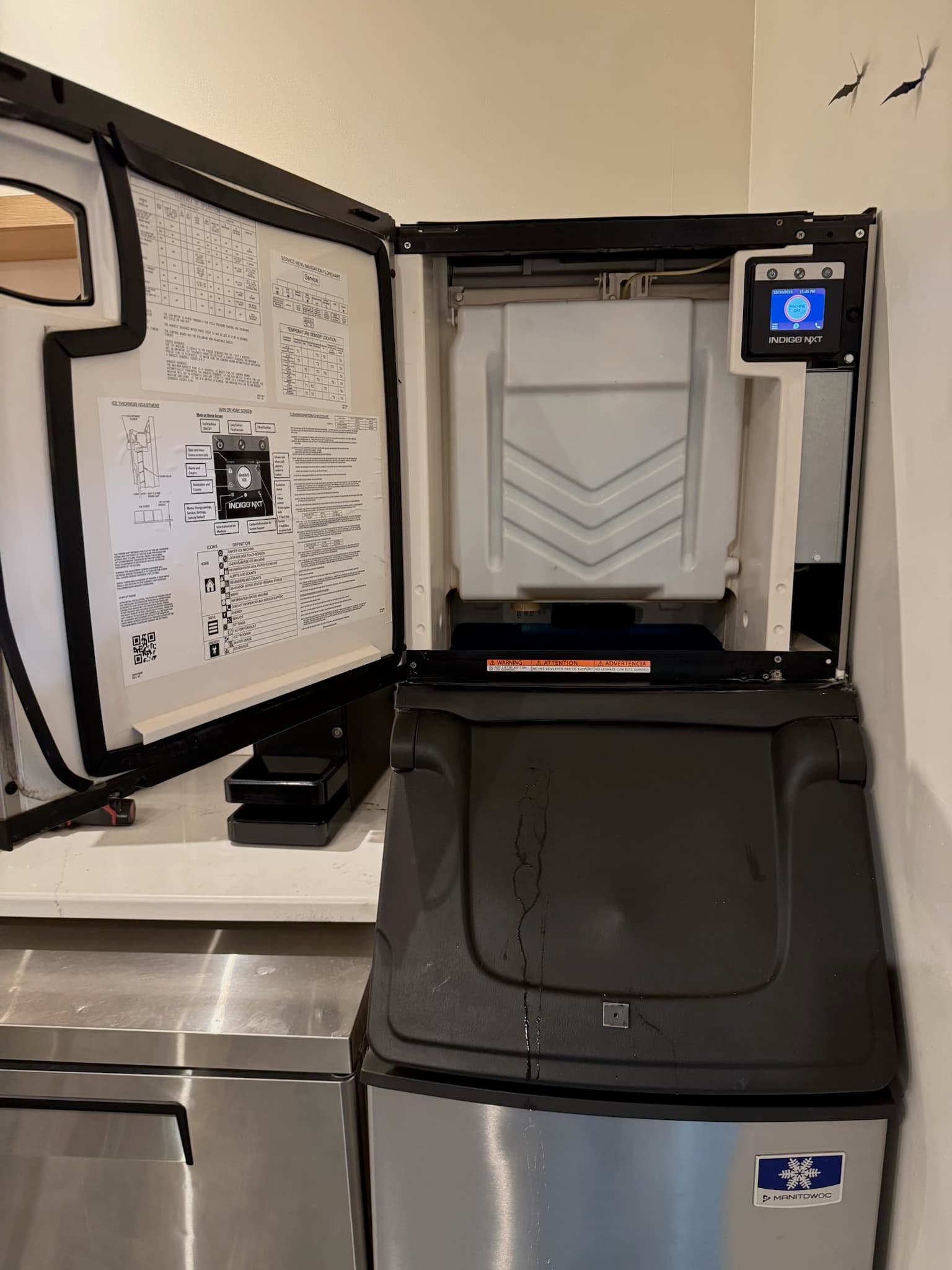
We service for output and sanitation together: descaling, cleaning and sanitizing cycles, condenser cleaning, water filter verification, bin and chute inspection and a measured harvest against the manufacturer rating at the actual room temperature. Each machine carries a QR tag so a manager can scan it and see its last service and next due date. When a machine is simply too small for a venue's peak or is sitting where it will never cool properly, we say so and discuss relocation, a remote condenser or a second unit rather than returning every month to clean a machine that cannot keep up. The commercial ice machine guide covers the full maintenance cycle.
Carlsbad's climate and what it does to this equipment
Carlsbad sits close enough to the Pacific that its weather is dominated by the marine layer: cool, damp mornings, moderate afternoons and humid air that carries salt well inland along the lagoon corridors. Summers rarely produce extreme heat, which can lull owners into skipping coil care, yet the constant moisture and salt exposure corrode fan motors, cabinets and electrical connections steadily. Occasional inland heat or Santa Ana wind events briefly stress cooling equipment on the eastern edges of the city. Equipment near the lagoons and the shoreline tends to age faster than similar models only a few miles inland.
For the equipment background behind this page, read our commercial ice machine guide or the full Ice Machines — Service & Sanitation service page.
- Palomar Airport Road and Faraday Avenue corridorLife-science, medical device and technology campuses and business parks with single-story buildings, rooftop equipment and tight temperature requirements.
- Carlsbad VillageA walkable grid of restaurants, bars and shops with compact kitchens, alley-side coolers and equipment exposed to marine air a few blocks from the beach.
- McClellan-Palomar Airport areaHangar-style and light-industrial buildings, flex space and aviation-related tenants with large open volumes and mixed heating and cooling needs.
- Coastal resort and retail areasHotels, resort properties and shopping destinations near the shoreline that need quiet, reliable comfort and hot water through peak visitor periods.
- Scale removal, deep sanitation, and filter change-out programs
- Bin sensors, harvest cycles, pumps, and valves checked
- OEM-spec readings taken against manufacturer PM intervals
- DaVinci Portal: photo-logged cleanings and reminder scheduling
What a ice machine service visit includes, and the problems we most often find
- Check ice quality, production rate, and bin sensor operation
- Full descale of water lines and evaporator plate
- Sanitize all food-contact surfaces per manufacturer spec
- Inspect water filtration and replace if due
- Photo-document the cleaning for your compliance records
- Scale buildup from hard water slowing production and clouding ice
- Bin sensors misreading and causing over- or under-production
- Water filters overdue for change, affecting both taste and machine health
- Visible slime or mold in the bin — the most common health-inspection flag