Ice Machine Service in Chula Vista, CA
Restaurants, hotels and event venues across Chula Vista, from Otay Ranch to the bayfront, use ice heavily during warm months. Machines near the water see salt exposure, and inland machines contend with high ambient temperatures in kitchens. We descale, sanitize, clean condensers, replace filters and verify production, with service records that show the machine was kept in good order.
South Bay's largest city, mixing Otay Ranch and EastLake retail and office, a bayfront redevelopment area, hospitals, and Otay Mesa industrial and logistics space tied to the border.
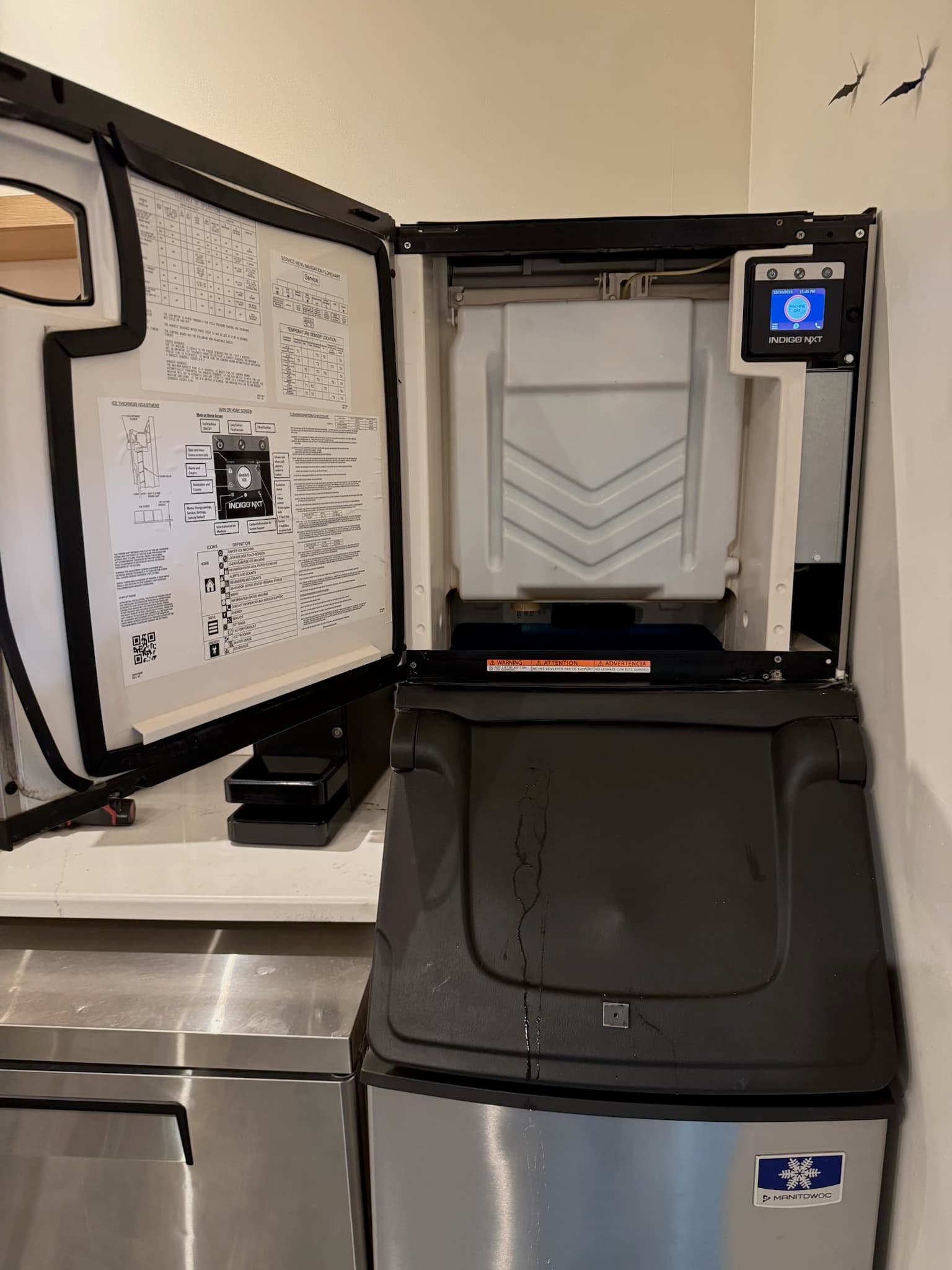
How ice machine service work plays out in Chula Vista
Ice demand in Chula Vista peaks in two very different places. Along the bayfront, the resort and convention development, the marina restaurants and the hospitality that surrounds them run bar, restaurant and banquet ice at volume through summer and event schedules, in salt-tinged air that corrodes air-cooled condensers. Across the eastern retail centers, from Otay Ranch to EastLake and Millenia, restaurants, quick-service operators and entertainment venues draw hard on machines sitting in kitchens that get warm in the inland afternoons. Both groups lose production slowly to scale, dirty condensers and old filters, and both discover it on the busiest Saturday of the year.
A service visit covers the machine, cleaning and sanitizing, descaling, condenser cleaning, filter replacement and a production check against the nameplate, and then it covers the room. Many Chula Vista kitchens put the ice machine next to the dish machine or behind the line where the condenser pulls hot, greasy air, and near the bay the same condenser also sees salt. We tell owners plainly whether they have a maintenance problem, a location problem or a machine that has simply reached the end.
The hospitals and medical campuses, the school and college facilities and the civic buildings have smaller dispensers and undercounter units where sanitation records matter more than peak production. For those we set a cleaning interval that accounts for use and water quality and document each service in the DaVinci Portal. The commercial ice machine guide explains what a thorough service includes and how to read a production test.
Chula Vista's climate and what it does to this equipment
Chula Vista runs from coastal to near-inland within a few miles. Properties near the bay sit in marine air with moderate temperatures, humidity and salt exposure that corrodes coils and enclosures over time. Move east toward Otay Ranch and EastLake and the marine layer thins, summers get warmer and afternoon cooling loads climb. Otay Mesa is exposed, windy and dusty, with warm summers and sun-baked roofs that load rooftop equipment heavily. Heat events and late-season Santa Ana winds can push all of these areas beyond ordinary design conditions, especially for older or undersized systems.
For the equipment background behind this page, read our commercial ice machine guide or the full Ice Machines — Service & Sanitation service page.
- Otay Ranch and EastLakeNewer retail, restaurant, medical and professional buildings, many with rooftop equipment approaching mid-life and warmer inland exposure.
- Bayfront redevelopment areaA shoreline transitioning from industrial to hospitality, civic and mixed-use, with new construction alongside older buildings exposed to bay air.
- Otay Mesa industrial and logisticsWarehouses, distribution and light manufacturing buildings with large open volumes, loading docks and ventilation or cooling needs tied to cross-border logistics.
- Medical campusesHospitals and surrounding medical offices that rely on continuous cooling, reheat, hot water and well-documented maintenance.
- Scale removal, deep sanitation, and filter change-out programs
- Bin sensors, harvest cycles, pumps, and valves checked
- OEM-spec readings taken against manufacturer PM intervals
- DaVinci Portal: photo-logged cleanings and reminder scheduling
What a ice machine service visit includes, and the problems we most often find
- Check ice quality, production rate, and bin sensor operation
- Full descale of water lines and evaporator plate
- Sanitize all food-contact surfaces per manufacturer spec
- Inspect water filtration and replace if due
- Photo-document the cleaning for your compliance records
- Scale buildup from hard water slowing production and clouding ice
- Bin sensors misreading and causing over- or under-production
- Water filters overdue for change, affecting both taste and machine health
- Visible slime or mold in the bin — the most common health-inspection flag