Ice Machine Service in Escondido, CA
Restaurants, bars, convenience operators and food businesses in Escondido use ice heavily through long summers. Air-cooled machines in hot kitchens and outdoor-adjacent rooms lose output, and dust loads condensers quickly. We clean condensers, descale, sanitize, check water filtration and verify production, advising when a machine is struggling because of its location instead of its condition.
An inland North County city with a downtown core, auto-dealer and big-box corridors, a major hospital campus, and agriculture and food-related light industrial space exposed to real valley heat.
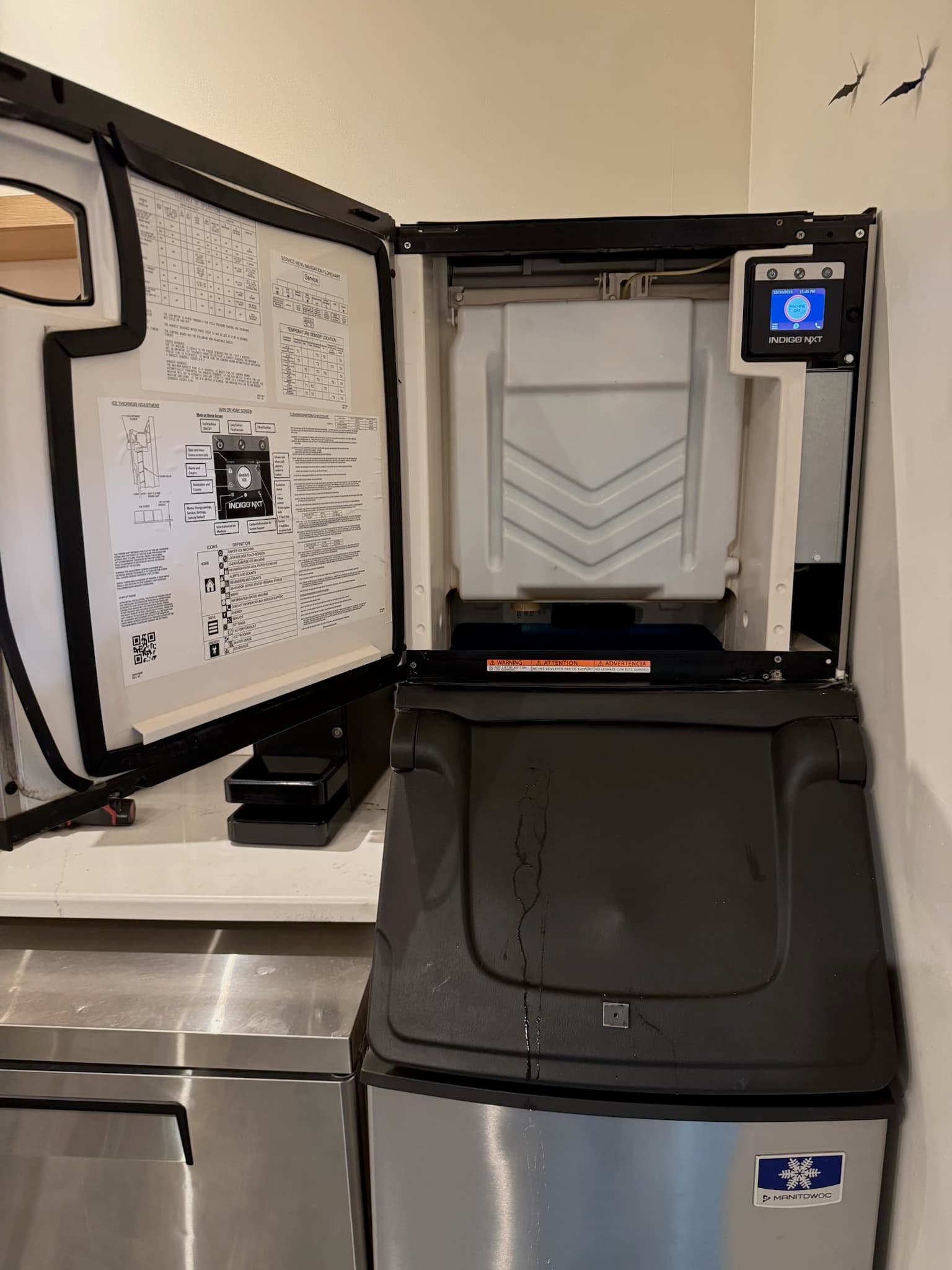
How ice machine service work plays out in Escondido
Ice production in Escondido drops in the same weeks demand peaks. An air-cooled machine rated at a comfortable indoor temperature loses a significant share of its output when the kitchen it sits in runs hot, and downtown restaurant kitchens, convenience and food operators along East Valley Parkway and the concession and hospitality spaces around the city's venues all run hot from June into October. Add dust pulled through the condenser and hard water scaling the evaporator plate, and a machine that looked fine in spring is short by the first long heat run.
The service visit here is as much about the room as the machine. Descaling, sanitizing, a condenser cleaning, water filtration and a production test against the nameplate restore what the machine can do, but we also look at where it lives: whether the condenser is pulling air from behind a fryer line, whether the room has any ventilation, whether a remote condenser or a water-cooled option would remove the heat problem entirely. Owners get a direct answer about whether they have a maintenance problem or a location problem.
Medical offices around the hospital campus, the civic buildings downtown and the larger retail and dealership break rooms have smaller dispensers and undercounter machines where cleanliness and documentation matter more than peak output. For those we set a cleaning and sanitizing interval that accounts for the mineral content of local water and record each service. The commercial ice machine guide explains what a complete service covers.
Escondido's climate and what it does to this equipment
Escondido's inland valley setting produces hot, dry summers, with afternoon temperatures that regularly run well above coastal levels and long cooling seasons stretching from late spring into fall. The marine layer reaches the valley only weakly, so humidity is low most of the year, and dust and agricultural debris load coils and filters quickly. Santa Ana wind events can add intense, dry heat in autumn. Rooftop units, condensers and refrigeration systems here run harder and longer than their coastal counterparts, which makes capacity margins, clean coils and healthy electrical components central to reliability.
For the equipment background behind this page, read our commercial ice machine guide or the full Ice Machines — Service & Sanitation service page.
- Downtown EscondidoRestaurants, civic and arts buildings, and older commercial blocks with mixed rooftop equipment and renovation history.
- Auto-dealer and big-box corridorsLarge flat-roofed showrooms, service buildings and retail centers whose rooftop units run long hours through valley heat.
- Hospital and medical districtA major hospital campus with surrounding medical offices that require continuous cooling, hot water and documented maintenance.
- Agricultural and light-industrial areasFood-related light industrial, packing and storage buildings, and warehouses where refrigeration and temperature-controlled space matter.
- Scale removal, deep sanitation, and filter change-out programs
- Bin sensors, harvest cycles, pumps, and valves checked
- OEM-spec readings taken against manufacturer PM intervals
- DaVinci Portal: photo-logged cleanings and reminder scheduling
What a ice machine service visit includes, and the problems we most often find
- Check ice quality, production rate, and bin sensor operation
- Full descale of water lines and evaporator plate
- Sanitize all food-contact surfaces per manufacturer spec
- Inspect water filtration and replace if due
- Photo-document the cleaning for your compliance records
- Scale buildup from hard water slowing production and clouding ice
- Bin sensors misreading and causing over- or under-production
- Water filters overdue for change, affecting both taste and machine health
- Visible slime or mold in the bin — the most common health-inspection flag
Ice Machine Service in Escondido: questions we get
Does Escondido water cause more scale in ice machines than other areas?
Water hardness varies with the source and the season, and much of inland North County sees enough mineral content to scale evaporators and water lines faster than coastal areas. The practical answer is a properly selected filter or treatment system, a descaling interval set by inspection rather than the calendar, and attention to any change in ice quality, which is often the first sign of scale. We adjust the interval after the first service once we see the actual buildup.
Would a remote condenser fix our ice machine's summer production loss in a hot Escondido kitchen?
Often, yes. Moving the condenser to the roof or an exterior wall takes the heat rejection out of the kitchen, and the machine no longer fights its own environment. The trade-offs are the refrigerant line run, roof penetrations, landlord approval and the fact that the roof itself is hot in August. For many downtown kitchens it is still the better option compared with running a machine at reduced output for five months a year.
How often should ice machines be sanitized?
Most manufacturers recommend sanitizing every six months minimum, more often in high-mineral water areas. We'll set the interval based on your machine and water supply.
Can you fix low production without a full replacement?
Often, yes. Scale buildup, refrigerant charge, and water filtration are the most common causes of low ice production and are usually repairable.