Chiller & Central Plant Service in Chula Vista, CA
Hospitals, larger medical campuses and some institutional or hospitality buildings in Chula Vista depend on chillers, pumps and cooling towers or air-cooled plants. Bay-area plants face corrosion and water-treatment concerns, while inland plants run longer and hotter. We evaluate each plant as a system, advise on repair versus replacement, and plan work to keep critical areas cooled.
South Bay's largest city, mixing Otay Ranch and EastLake retail and office, a bayfront redevelopment area, hospitals, and Otay Mesa industrial and logistics space tied to the border.
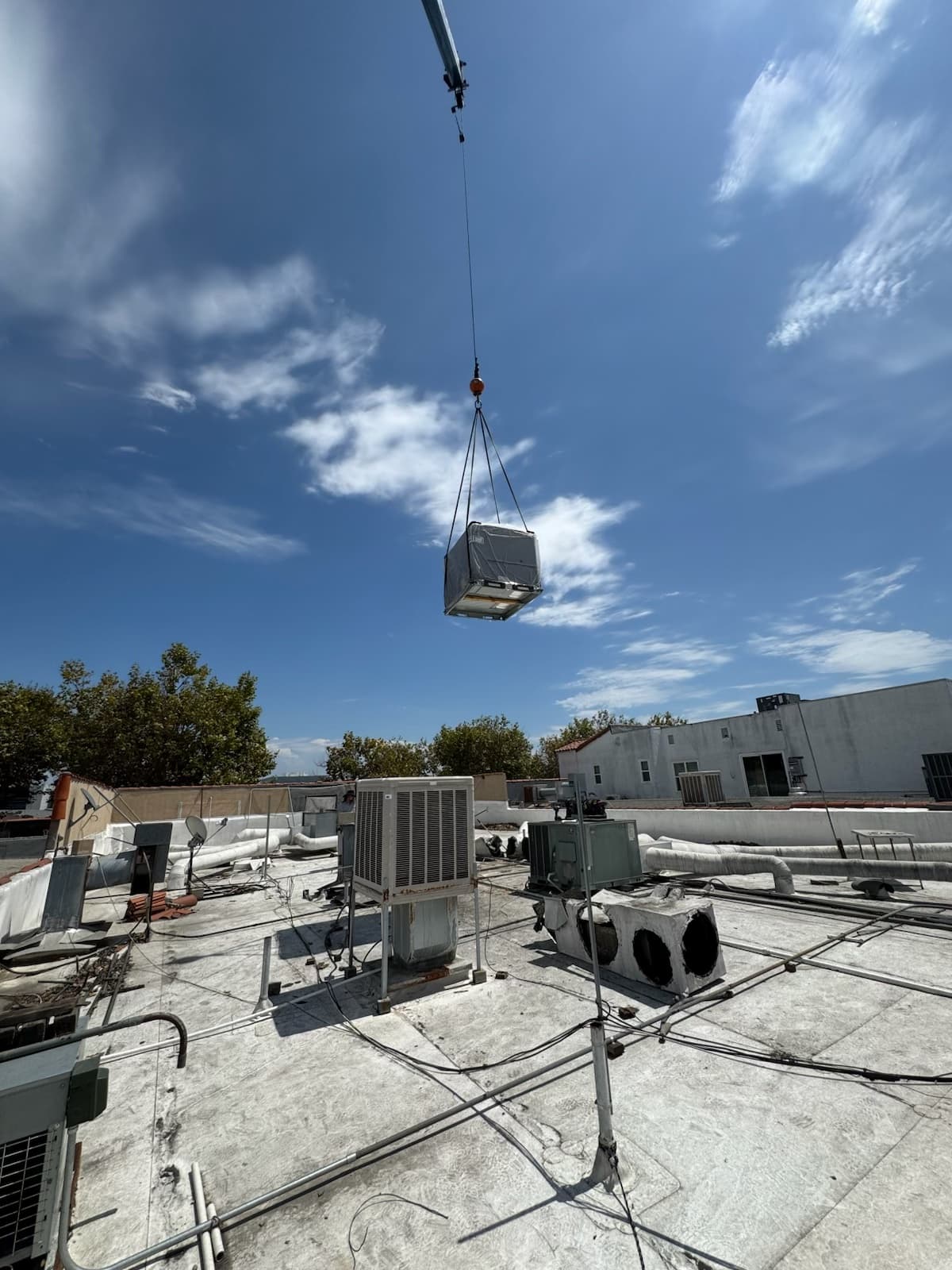
How chiller & central plant service work plays out in Chula Vista
Central plants in Chula Vista belong to a short list of owners: the two hospital campuses, the bayfront resort and convention development, the community college and larger school facilities, and some civic buildings. Each one is a continuous-operation facility where plant work is scheduled around patients, guests or students rather than around the contractor. We begin every engagement by confirming what redundancy actually exists, because a plant that has two chillers on paper may have one that can carry the load and one that has been nursed for years.
Geography shapes the plant problems. Bayfront equipment sees salt in cooling tower water and on air-cooled condenser coils, so water treatment, fill inspection and coil condition get closer attention than inland. Eastern plants near Otay Lakes Road and in the medical campuses run longer hours in warmer air, and air-cooled machines lose capacity on hot afternoons. Dust and wind in the southern industrial areas add a cleaning burden to any outdoor coil. Pumps, variable frequency drives and control sensors are frequent root causes of a chiller that appears to be failing but is really responding to bad inputs.
Major repairs and replacements run through formal procurement, often with public or health-system rules, prevailing wage and project labor agreements. We support those processes with operating logs and condition assessments from the DaVinci Portal, sequence the work so critical areas stay cooled and coordinate with the owner's engineer. The bid projects page, the hospitals and health systems sector page and the chillers and hydronic systems guide describe this work.
Chula Vista's climate and what it does to this equipment
Chula Vista runs from coastal to near-inland within a few miles. Properties near the bay sit in marine air with moderate temperatures, humidity and salt exposure that corrodes coils and enclosures over time. Move east toward Otay Ranch and EastLake and the marine layer thins, summers get warmer and afternoon cooling loads climb. Otay Mesa is exposed, windy and dusty, with warm summers and sun-baked roofs that load rooftop equipment heavily. Heat events and late-season Santa Ana winds can push all of these areas beyond ordinary design conditions, especially for older or undersized systems.
For the equipment background behind this page, read our chillers and hydronic systems guide or the full Chillers & Central Plant Service service page.
- Otay Ranch and EastLakeNewer retail, restaurant, medical and professional buildings, many with rooftop equipment approaching mid-life and warmer inland exposure.
- Bayfront redevelopment areaA shoreline transitioning from industrial to hospitality, civic and mixed-use, with new construction alongside older buildings exposed to bay air.
- Otay Mesa industrial and logisticsWarehouses, distribution and light manufacturing buildings with large open volumes, loading docks and ventilation or cooling needs tied to cross-border logistics.
- Medical campusesHospitals and surrounding medical offices that rely on continuous cooling, reheat, hot water and well-documented maintenance.
- Chiller, tower, pump, and VFD service with logged operating data
- Trend-based diagnosis: approach, delta-T, amp draw, and pressures
- Replacement planning with rigging, power, and temporary cooling considered
- Water-treatment and Legionella-control coordination for water-cooled plants
What a chiller & central plant service visit includes, and the problems we most often find
- Review the plant: chillers, pumps, towers, controls, and recent operating history
- Take full operating readings and compare against design and prior visits
- Inspect and test safeties, strainers, VFDs, valves, and control sequences
- Report findings with prioritized repairs and a forward capital outlook
- Document the plant by asset in the DaVinci Portal for the next visit
- Falling delta-T pushing chillers to run more than the load requires
- Fouled condenser tubes or coils raising approach temperature and amp draw
- Neglected water treatment causing scale, corrosion, and biological growth
- Controls overridden to manual and never returned to automatic
Chiller & Central Plant Service in Chula Vista: questions we get
Can you assess the chiller plant at our Chula Vista facility while it stays online?
Yes. A condition assessment uses operating data, approach temperatures, refrigerant and oil analysis, electrical readings and a review of alarm and control history, none of which requires shutting down a machine. If the plant has a second chiller that can carry the load for a window, a deeper internal inspection of the weaker machine can be scheduled on a mild day. The result is a written picture of condition, repair options and whether replacement planning should start.
Our bayfront plant's cooling tower needs more attention than the one at our eastern campus. Why?
Salt. A cooling tower is an efficient air scrubber, and tidal bay air carries salt that concentrates in the tower water along with the usual minerals and biological load. That raises conductivity, speeds fill fouling and corrodes basins and structure faster than inland. The treatment program, blowdown settings and inspection interval need to account for it. The eastern campus tower faces drier air and dust instead, which is a different but usually gentler problem.
Do you service both air-cooled and water-cooled chillers?
Yes. We work on air-cooled and water-cooled plants and the equipment around them: pumps, towers, VFDs, valves, and controls.
Can you help plan a chiller replacement?
Yes. Replacement planning covers load verification, refrigerant choice, rigging and power, temporary cooling, and phasing so the building stays comfortable.
Do you bid central plant projects?
Yes, as prime or mechanical subcontractor, in Orange County and beyond on a project-by-project basis.