Chiller & Central Plant Service in Escondido, CA
The hospital campus and larger institutional or commercial buildings in Escondido depend on central plants that face long, hot cooling seasons. Cooling towers in dry inland air lose water quickly and need disciplined treatment, while air-cooled chillers lose capacity as ambient temperatures rise. We evaluate the whole plant, plan repairs and replacements around operational needs, and verify controls, pumps and staging.
An inland North County city with a downtown core, auto-dealer and big-box corridors, a major hospital campus, and agriculture and food-related light industrial space exposed to real valley heat.
How chiller & central plant service work plays out in Escondido
The hospital campus on the west side of Escondido and the handful of larger institutional, civic and hospitality buildings are the central-plant market here, and they face a long cooling season that the coast never sees. Chillers run from late spring deep into October, so annual service that would be adequate at the beach leaves inland machines running thousands more hours between inspections. Condition monitoring, trending of approach temperatures and refrigerant and oil analysis earn their place on these plants because the equipment simply works harder.
Dry valley air changes the cooling tower conversation. Evaporation rates are high, which means heavy make-up water use, faster concentration of minerals and a treatment program that has to keep pace. Scale on fill and in condenser tubes shows up quickly when treatment slips, and the chiller pays for it in approach temperature and energy. Air-cooled chillers and the condensing sections of packaged plants lose capacity as the ambient climbs, so a plant sized without inland margin struggles exactly when the building needs it most. Dust from surrounding land adds a cleaning burden to every coil.
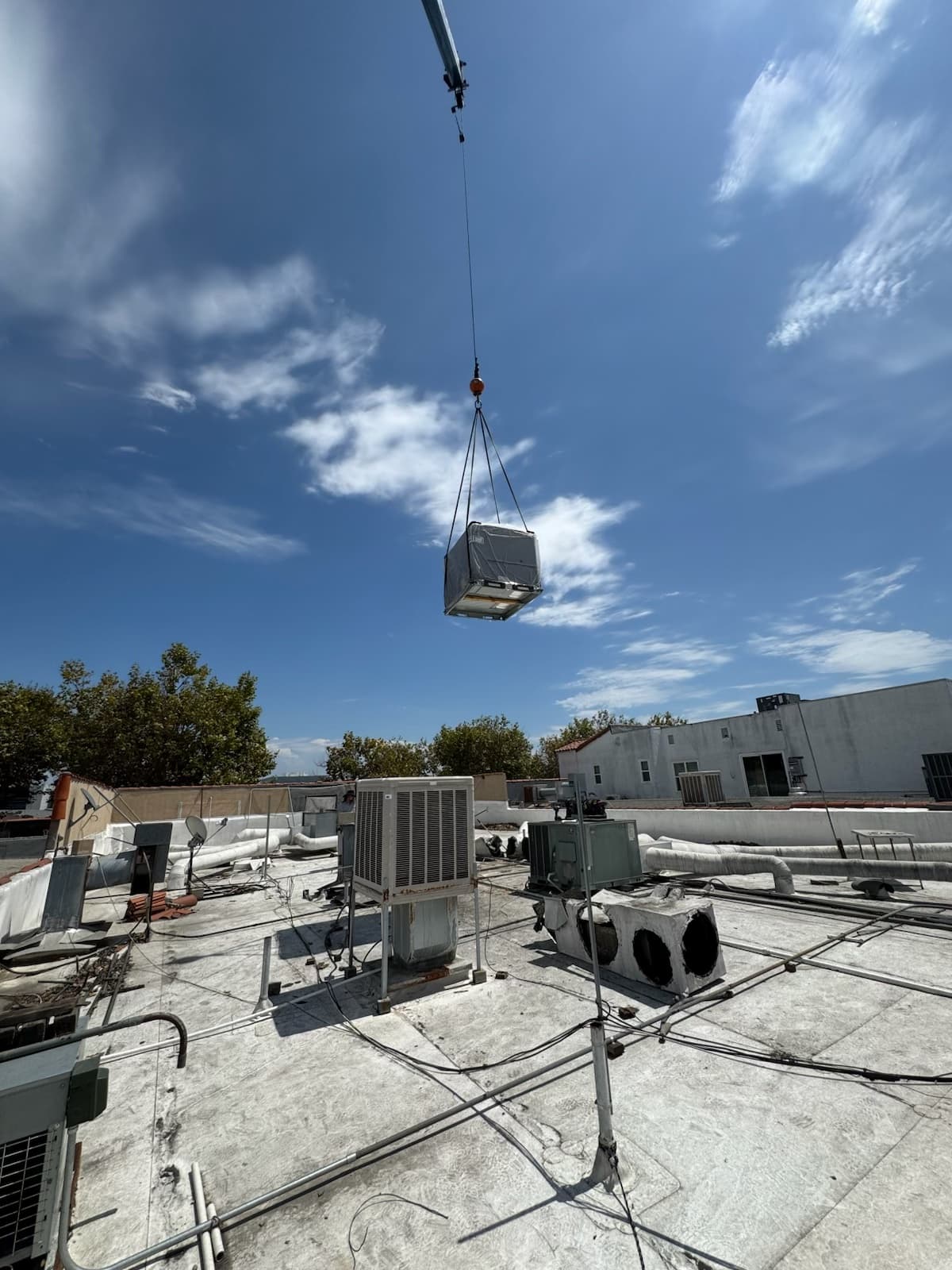
Replacement and major repair at these facilities is a formal, engineered process, often with public or health-system procurement rules. We bring operating logs and a condition assessment from the DaVinci Portal, work within prevailing wage and project labor requirements, and plan the sequence so critical areas stay cooled. The bid projects page and the chillers and hydronic systems guide describe how we structure that work.
Escondido's climate and what it does to this equipment
Escondido's inland valley setting produces hot, dry summers, with afternoon temperatures that regularly run well above coastal levels and long cooling seasons stretching from late spring into fall. The marine layer reaches the valley only weakly, so humidity is low most of the year, and dust and agricultural debris load coils and filters quickly. Santa Ana wind events can add intense, dry heat in autumn. Rooftop units, condensers and refrigeration systems here run harder and longer than their coastal counterparts, which makes capacity margins, clean coils and healthy electrical components central to reliability.
For the equipment background behind this page, read our chillers and hydronic systems guide or the full Chillers & Central Plant Service service page.
- Downtown EscondidoRestaurants, civic and arts buildings, and older commercial blocks with mixed rooftop equipment and renovation history.
- Auto-dealer and big-box corridorsLarge flat-roofed showrooms, service buildings and retail centers whose rooftop units run long hours through valley heat.
- Hospital and medical districtA major hospital campus with surrounding medical offices that require continuous cooling, hot water and documented maintenance.
- Agricultural and light-industrial areasFood-related light industrial, packing and storage buildings, and warehouses where refrigeration and temperature-controlled space matter.
- Chiller, tower, pump, and VFD service with logged operating data
- Trend-based diagnosis: approach, delta-T, amp draw, and pressures
- Replacement planning with rigging, power, and temporary cooling considered
- Water-treatment and Legionella-control coordination for water-cooled plants
What a chiller & central plant service visit includes, and the problems we most often find
- Review the plant: chillers, pumps, towers, controls, and recent operating history
- Take full operating readings and compare against design and prior visits
- Inspect and test safeties, strainers, VFDs, valves, and control sequences
- Report findings with prioritized repairs and a forward capital outlook
- Document the plant by asset in the DaVinci Portal for the next visit
- Falling delta-T pushing chillers to run more than the load requires
- Fouled condenser tubes or coils raising approach temperature and amp draw
- Neglected water treatment causing scale, corrosion, and biological growth
- Controls overridden to manual and never returned to automatic