Chiller & Central Plant Service in Oceanside, CA
Hospitals and some larger medical, hospitality and institutional buildings in Oceanside rely on central plant equipment where downtime is not acceptable. Coastal conditions affect cooling towers and air-cooled chillers in different ways, from scale and water-treatment issues to condenser corrosion. We evaluate the full plant, plan repairs or replacements around operational constraints, and verify controls and staging.
A harbor and downtown city on the north coast with hospitals, light-industrial space along the Oceanside Boulevard and Mission Avenue corridors, and an economy shaped by neighboring Camp Pendleton.
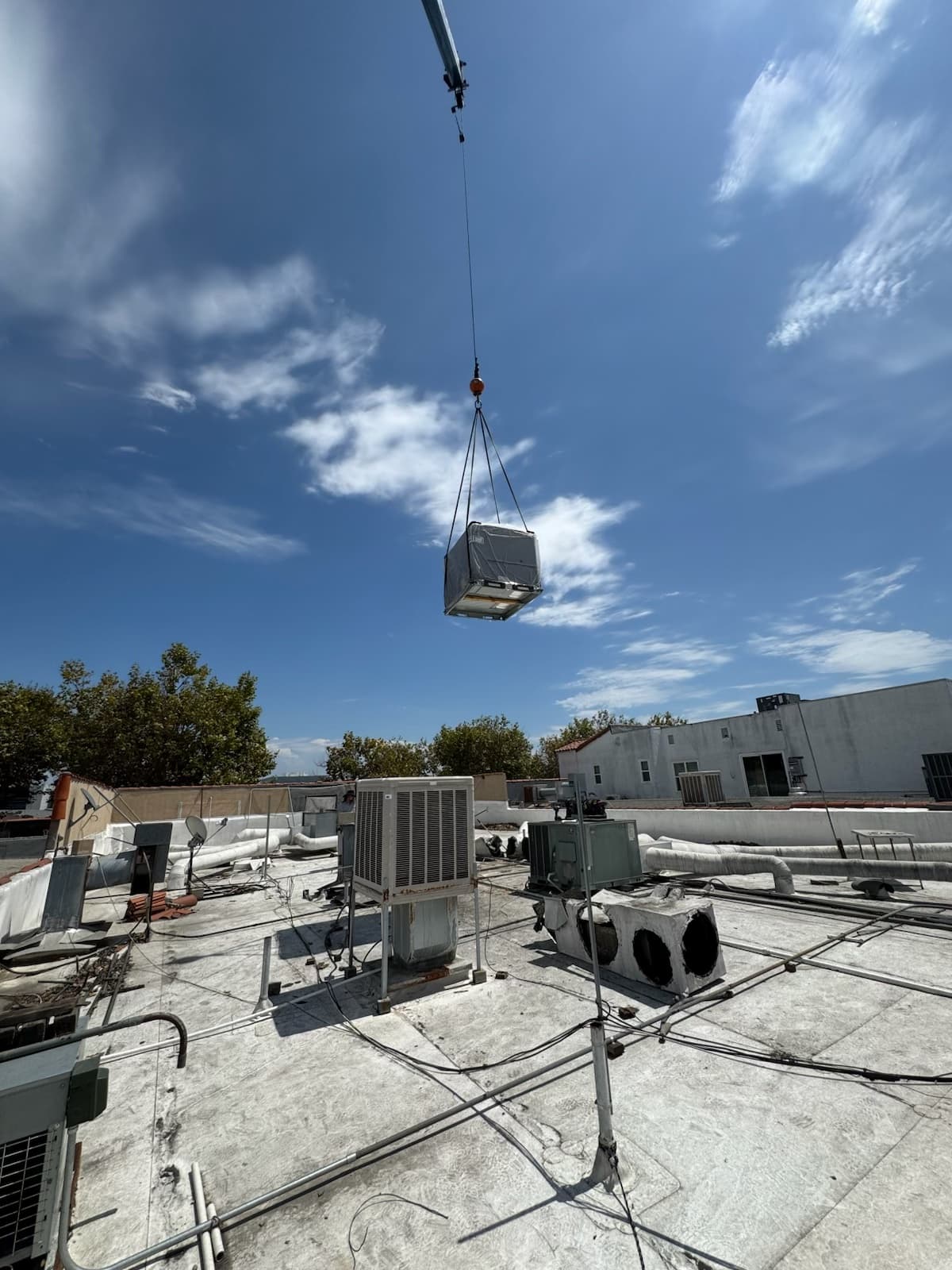
How chiller & central plant service work plays out in Oceanside
Central plant equipment in Oceanside is concentrated in a few places: the hospital and medical campus area, the larger hotels and the handful of institutional buildings including civic facilities and the MiraCosta College campus. None of them can tolerate casual downtime. A chiller problem at a hospital-adjacent building is a sequence of controlled steps: confirm the redundancy actually exists, isolate the failing machine, verify the backup carries the load, and only then begin invasive work. We plan those steps with facility staff in writing before the first panel comes off.
The coastal environment reaches central plants in specific ways. Cooling towers near the water pick up salt along with the usual scale and biological load, so water treatment and fill condition need closer review than inland. Air-cooled chillers and the condensing sections of packaged plants show the same coil and cabinet corrosion as rooftop units, just at a larger scale and with a larger consequence. Pumps, variable frequency drives and control panels in open mechanical yards also see the damp air; a failing drive or a corroded sensor connection is a common root cause of a chiller that appears to be at fault.
Replacement planning in Oceanside tends to be a bid-level, documented process involving an engineer, a facility director and sometimes a public agency. We support that process with current readings, operating logs and a clear condition assessment from the DaVinci Portal, and we work within prevailing wage and PLA requirements where they apply. See bid projects and the chillers and hydronic systems guide for how we approach that work.
Oceanside's climate and what it does to this equipment
Oceanside's weather follows the coast: cool, damp mornings under the marine layer, mild afternoons and persistent humidity. Salt carried inland by onshore breezes works on equipment near the harbor and the beach, corroding coils, housings and electrical terminals more quickly than in nearby inland cities. Summers are comfortable by Southern California standards, but the eastern, inland parts of the city can warm noticeably on days when the marine layer retreats. Equipment therefore faces two different problems depending on the street: salt and moisture near the water, and longer, hotter run times farther east.
For the equipment background behind this page, read our chillers and hydronic systems guide or the full Chillers & Central Plant Service service page.
- Downtown and Oceanside HarborRestaurants, hotels and mixed-use buildings near the pier and harbor, where kitchens and rooftop equipment live in salt air and tight service access.
- Oceanside Boulevard and Mission Avenue corridorsShopping centers, professional offices and older retail with aging rooftop units and tenants that change faster than the equipment is updated.
- Rancho del Oro and the inland industrial areasLight-industrial, warehouse and flex buildings serving local trades and distribution, with large open volumes and a mix of heating and cooling needs.
- Medical campusesHospital and medical office buildings that depend on continuous cooling, reliable hot water and documented maintenance records.
- Chiller, tower, pump, and VFD service with logged operating data
- Trend-based diagnosis: approach, delta-T, amp draw, and pressures
- Replacement planning with rigging, power, and temporary cooling considered
- Water-treatment and Legionella-control coordination for water-cooled plants
What a chiller & central plant service visit includes, and the problems we most often find
- Review the plant: chillers, pumps, towers, controls, and recent operating history
- Take full operating readings and compare against design and prior visits
- Inspect and test safeties, strainers, VFDs, valves, and control sequences
- Report findings with prioritized repairs and a forward capital outlook
- Document the plant by asset in the DaVinci Portal for the next visit
- Falling delta-T pushing chillers to run more than the load requires
- Fouled condenser tubes or coils raising approach temperature and amp draw
- Neglected water treatment causing scale, corrosion, and biological growth
- Controls overridden to manual and never returned to automatic