Chiller & Central Plant Service in Carlsbad, CA
Larger Carlsbad campuses, resort complexes and some hospitality properties rely on chillers, pumps and cooling towers or air-cooled plants to carry steady loads. Mild weather means plants run at partial load for much of the year, which exposes issues with staging, controls and short cycling. We evaluate plant equipment as a system, advise on repair versus replacement, and plan work so occupied buildings remain comfortable.
Coastal North County city known for life-science and golf and outdoor-industry campuses, a walkable Village restaurant core, and business space near McClellan-Palomar Airport.
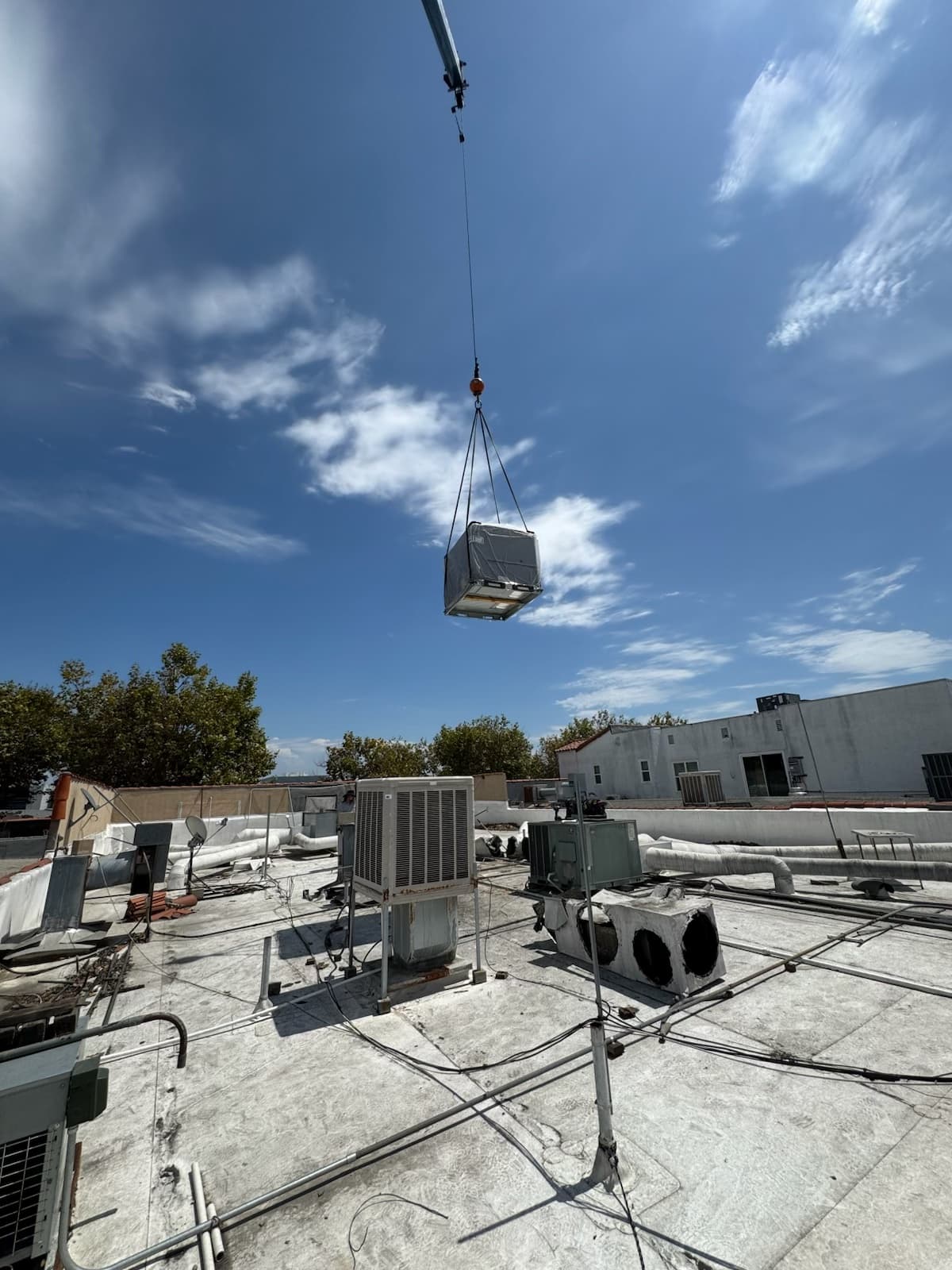
How chiller & central plant service work plays out in Carlsbad
Central plants in Carlsbad are concentrated in a handful of places: the larger life-science and technology campuses along Palomar Airport Road and in the Carlsbad Research Center, the resort complexes around La Costa and Aviara and a few larger medical and institutional buildings. These plants spend most of the year at low part load because the climate rarely demands full capacity, and that is exactly where their problems hide. Short cycling, poor staging, pumps running at full speed against closed valves and chillers that have never been tested near design conditions are common findings in a plant that seems to be working fine.
The marine environment adds its own layer. Cooling towers within reach of the lagoon and ocean air take on salt along with the minerals in hard supply water, so treatment has to be disciplined and fill, basins and drift eliminators inspected more often than an inland tower would need. Air-cooled chillers sitting on a roof a mile from the surf give up condenser fin area to salt corrosion year by year, and the capacity goes with it. When an inland heat event or a Santa Ana period finally pushes a Carlsbad plant toward full load, whatever has degraded over years of easy running shows up all at once.
For lab campuses, a plant evaluation has to respect the tenants inside: we sequence testing and repair work around shutdown windows, keep at least one machine serving the load at every step and verify controls after each change. Larger plant replacements are generally bid-level projects, and for campus owners or public institutions we come prepared with the documentation and payroll practices described on our bid projects page. The chillers and hydronic systems guide outlines the evaluation sequence we follow before anyone talks about replacement.
Carlsbad's climate and what it does to this equipment
Carlsbad sits close enough to the Pacific that its weather is dominated by the marine layer: cool, damp mornings, moderate afternoons and humid air that carries salt well inland along the lagoon corridors. Summers rarely produce extreme heat, which can lull owners into skipping coil care, yet the constant moisture and salt exposure corrode fan motors, cabinets and electrical connections steadily. Occasional inland heat or Santa Ana wind events briefly stress cooling equipment on the eastern edges of the city. Equipment near the lagoons and the shoreline tends to age faster than similar models only a few miles inland.
For the equipment background behind this page, read our chillers and hydronic systems guide or the full Chillers & Central Plant Service service page.
- Palomar Airport Road and Faraday Avenue corridorLife-science, medical device and technology campuses and business parks with single-story buildings, rooftop equipment and tight temperature requirements.
- Carlsbad VillageA walkable grid of restaurants, bars and shops with compact kitchens, alley-side coolers and equipment exposed to marine air a few blocks from the beach.
- McClellan-Palomar Airport areaHangar-style and light-industrial buildings, flex space and aviation-related tenants with large open volumes and mixed heating and cooling needs.
- Coastal resort and retail areasHotels, resort properties and shopping destinations near the shoreline that need quiet, reliable comfort and hot water through peak visitor periods.
- Chiller, tower, pump, and VFD service with logged operating data
- Trend-based diagnosis: approach, delta-T, amp draw, and pressures
- Replacement planning with rigging, power, and temporary cooling considered
- Water-treatment and Legionella-control coordination for water-cooled plants
What a chiller & central plant service visit includes, and the problems we most often find
- Review the plant: chillers, pumps, towers, controls, and recent operating history
- Take full operating readings and compare against design and prior visits
- Inspect and test safeties, strainers, VFDs, valves, and control sequences
- Report findings with prioritized repairs and a forward capital outlook
- Document the plant by asset in the DaVinci Portal for the next visit
- Falling delta-T pushing chillers to run more than the load requires
- Fouled condenser tubes or coils raising approach temperature and amp draw
- Neglected water treatment causing scale, corrosion, and biological growth
- Controls overridden to manual and never returned to automatic